
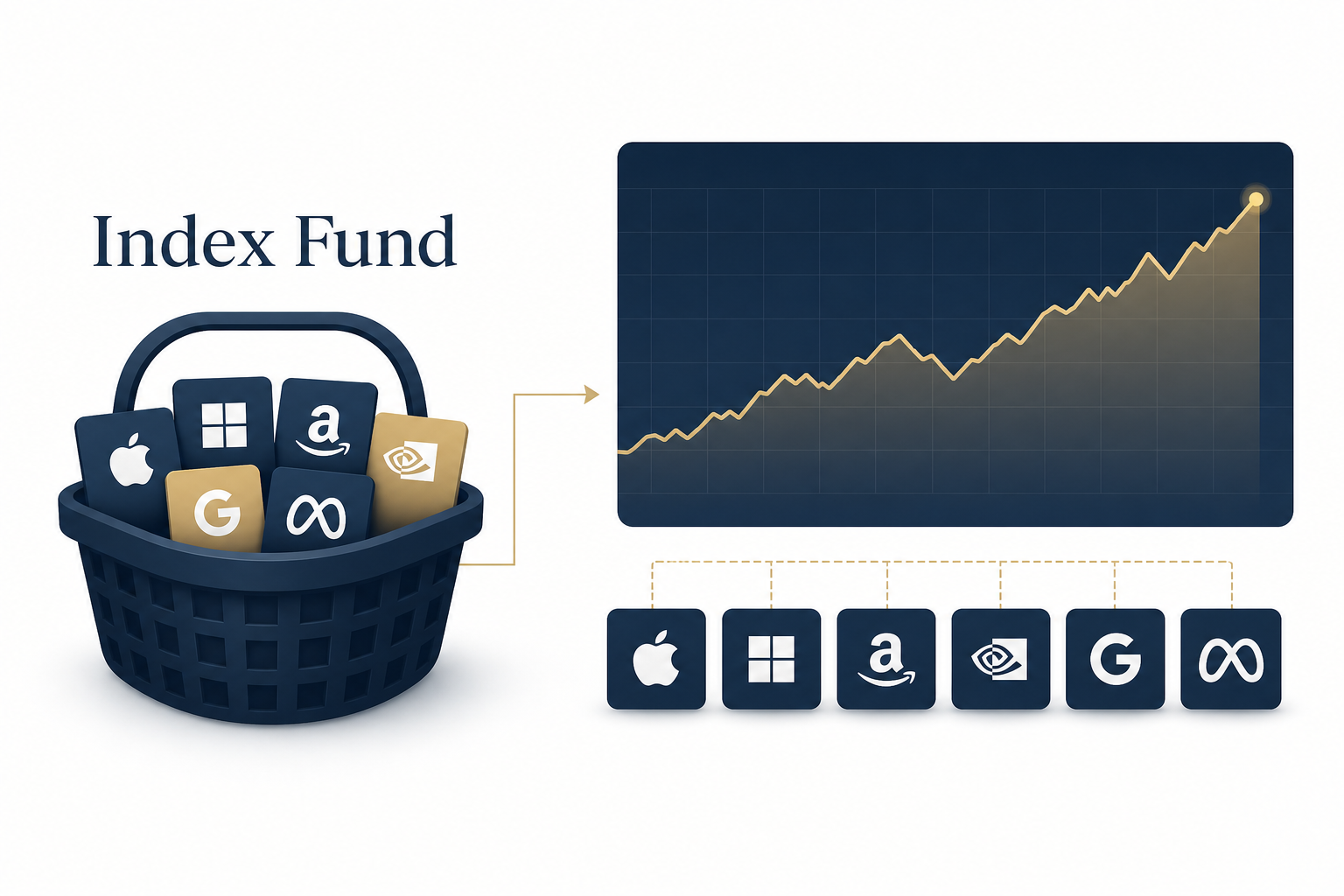
What is an index fund? It is a fund designed to follow a market index instead of asking a manager to pick every investment. The index supplies the rules; the fund tries to hold the same market segment and deliver a similar return before costs.
I invest in index ETFs for the long term, but I do not buy them simply because I “trust the index.” I look at the companies inside. I own some of those businesses individually too, and the fund appeals to me because it spreads one purchase across many companies rather than forcing me to choose only one winner.
Because I keep adding for the long term, I do not check every daily price move. That does not mean the price is irrelevant or the index is safe. It means my conviction comes from understanding the businesses, the weighting method, and the role the fund plays in my portfolio.
Educational disclaimer: This article is for general education only. It is not personal financial, tax, legal, or investment advice. Index funds can lose value and do not guarantee diversification or profit.
What Is an Index Fund? Key Takeaways
- An index fund tracks a market index instead of relying on active stock picking.
- Index funds can offer broad diversification, low costs, and simple long-term exposure.
- They can be structured as mutual funds or ETFs, which affects how investors buy and sell them.
- The most important details to compare are the index tracked, expense ratio, diversification, and tax fit.
- An index fund can still lose value when the market it tracks falls.
What Is an Index Fund?
An index fund is a pooled investment that tries to copy the performance of a specific benchmark. A benchmark is simply a measuring stick for a market. For example, the S&P 500 is a well-known index that tracks 500 large U.S. companies. An S&P 500 index fund tries to follow that index as closely as possible.
Instead of asking a fund manager to choose which companies might outperform, an index fund uses rules. If a company belongs in the index, the fund may hold it. If a company leaves the index, the fund may remove it. That rules-based approach is why index funds are often called passive investments.
The word “passive” does not mean nothing happens inside the fund. The fund still needs to rebalance, handle cash flows, track changes in the index, and manage trading costs. Passive simply means the fund is not trying to make frequent judgment calls about which stocks are better than others.
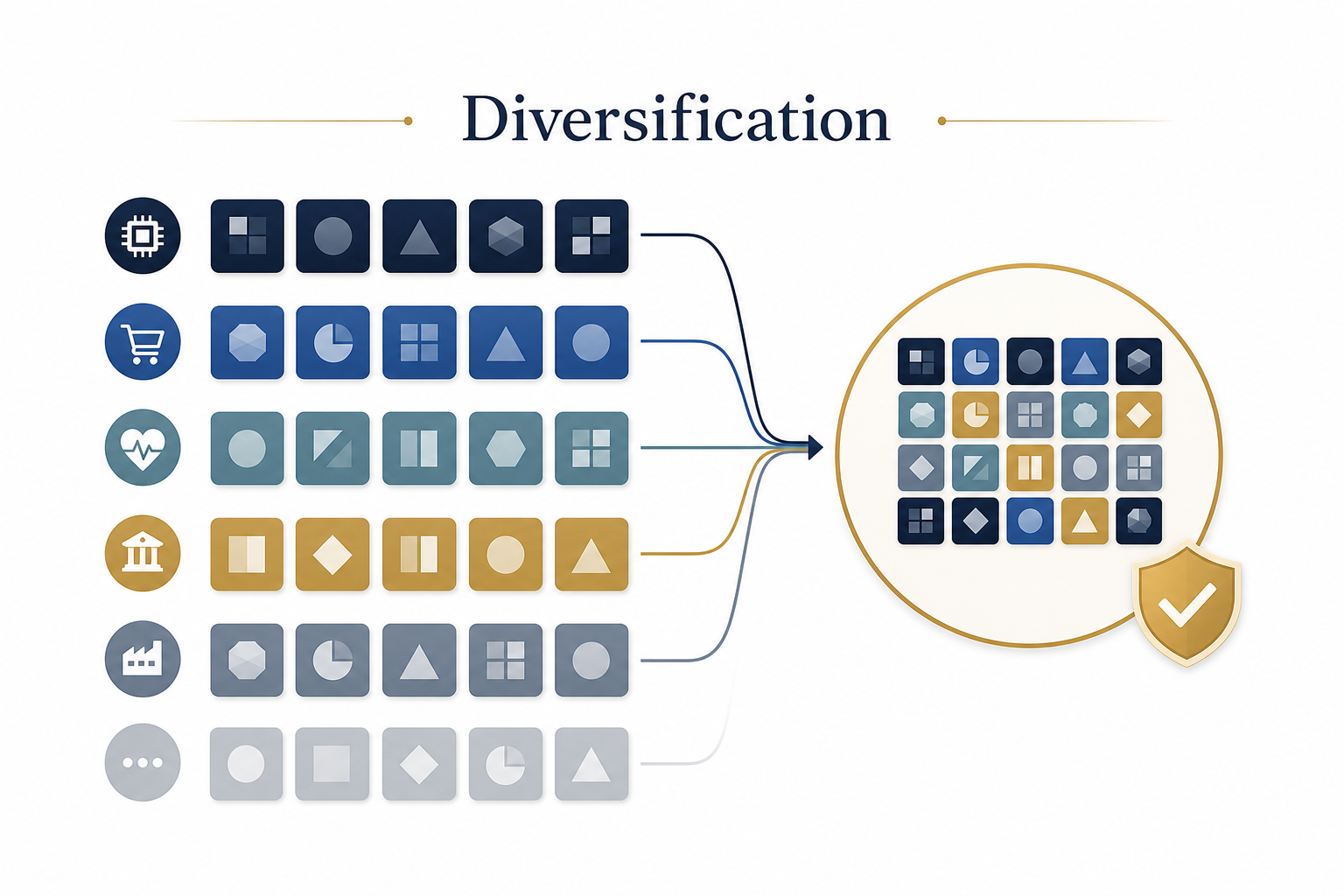
For beginners, the appeal is straightforward. One purchase can give exposure to hundreds or even thousands of companies. That makes an index fund different from buying one stock, where the outcome depends heavily on a single business.
How an Index Fund Works
An index fund begins with a target index. The index provider defines the rules: which securities qualify, how often the index is updated, and how each holding is weighted. The fund company then builds a portfolio intended to match that index.
Some funds use full replication, meaning they try to hold every security in the index. This can work well for indexes with a manageable number of holdings. Other funds use sampling, meaning they hold a representative group of securities that behaves similarly to the index. Sampling is more common when an index is very large or difficult to replicate exactly.
Most investors experience the result as a simple product. They buy shares of the fund, and the fund gives them exposure to the underlying index. If the index rises, the fund usually rises in a similar pattern. If the index falls, the fund usually falls too.
The match is not always perfect. Small differences can come from expenses, trading costs, cash inside the fund, and timing. This gap is often called tracking difference. A well-run index fund should keep that gap small over time.
Index Fund vs Active Fund
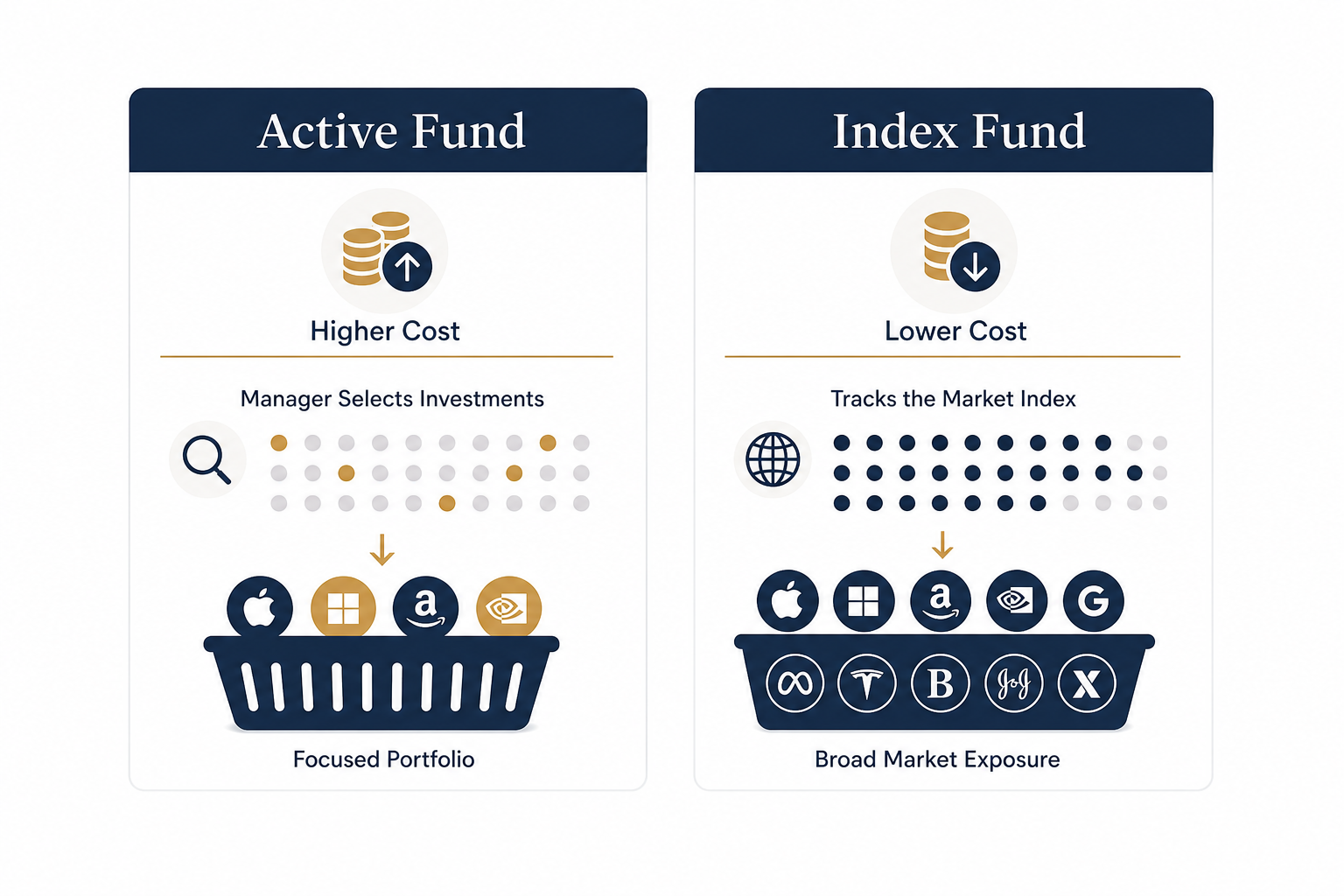
The biggest difference between an index fund and an active fund is the goal. An index fund tries to track a benchmark. An active fund tries to beat a benchmark. That one difference affects cost, turnover, taxes, and expectations.
| Feature | Index Fund | Active Fund |
|---|---|---|
| Main goal | Track a market index | Beat a market index |
| Investment style | Rules-based | Manager-driven |
| Typical cost | Often lower | Often higher |
| Portfolio turnover | Usually lower | Can be higher |
| Best fit | Simple long-term market exposure | Investors seeking manager selection |
Neither structure guarantees a better result. Some active funds outperform for certain periods. Many do not, especially after fees. The practical question for a beginner is whether the higher cost and manager risk are worth it. For many long-term investors, a low-cost index fund is easier to understand and easier to stick with.
Why I Look Through the Index Fund Label
“It tracks an index” sounds reassuring, but which index? A broad U.S. market fund, a growth-stock fund, and a semiconductor fund can all follow indexes while behaving very differently.
When I began with SPYG, the companies inside were more important to me than the technical distinction between an index fund and an ETF. That instinct still guides me. I want to know the top holdings, how heavily they are weighted, and whether the fund is truly broad or concentrated in a few familiar names.
This matters because owning hundreds of stocks does not automatically mean every stock has equal influence. In a market-cap-weighted index, the largest companies can drive much of the movement. I may believe in those companies and still need to know how dependent the fund has become on them.
For a beginner, the label is a starting point. Open the holdings page. Read the benchmark name. Ask whether you would still want the fund if its most popular sector struggled for several years.
The Main Benefits of Index Funds
The first benefit is cost. Because index funds follow a rules-based approach, they often charge lower expense ratios than actively managed funds. Fees may look small, but they matter because they come out of investor returns every year. A lower fee leaves more of the market return in the investor’s account.
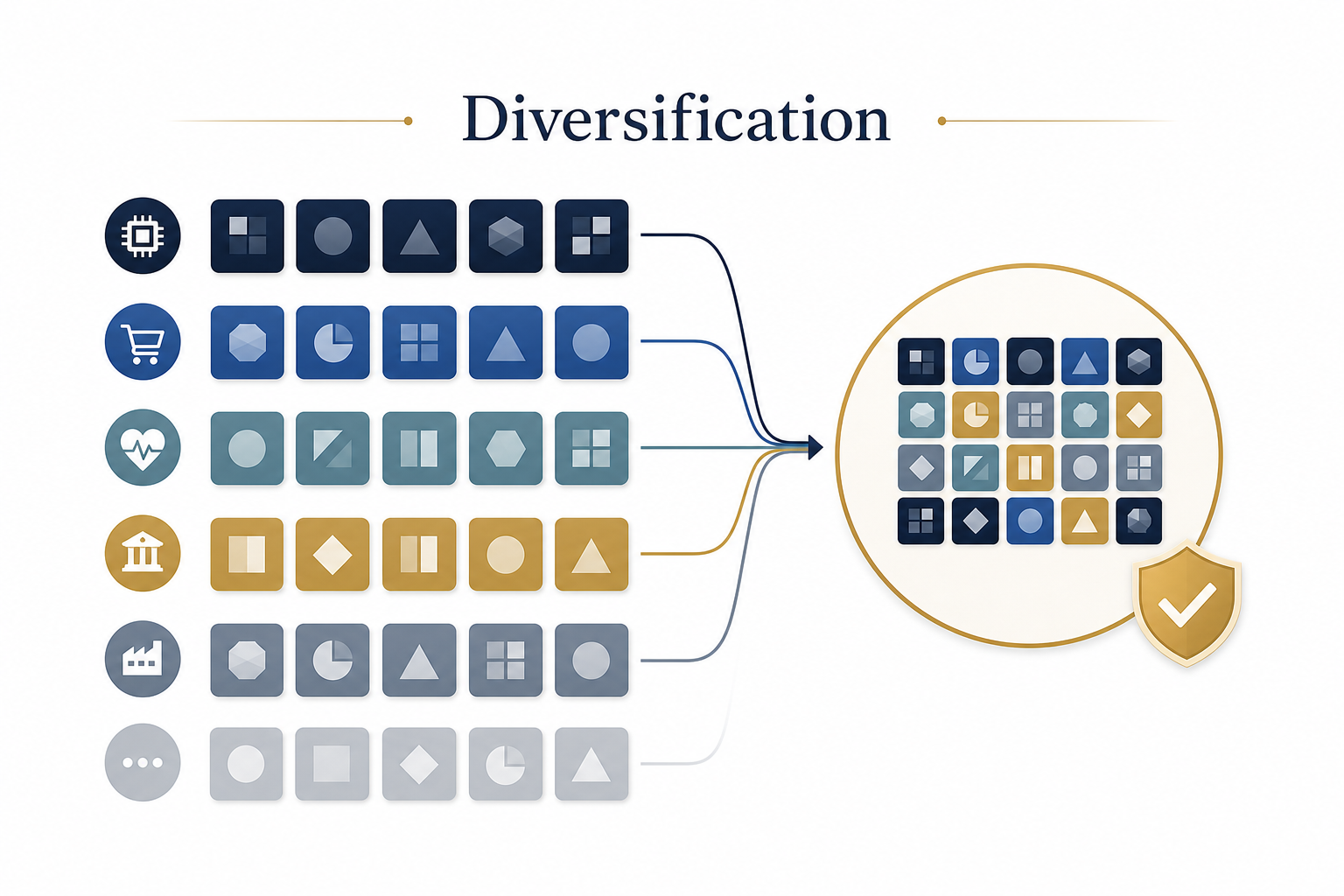
The second benefit is broad exposure. A total market index fund may hold thousands of stocks. An S&P 500 index fund holds exposure to many large U.S. companies. A bond index fund may hold many bonds across maturities and issuers. This broad reach can help investors build a portfolio without managing every holding themselves.
The third benefit is simplicity. Simple does not mean unsophisticated. It means the strategy is understandable. A beginner can explain an index fund in one sentence: it tracks a market index. That clarity can help investors avoid unnecessary complexity.
The fourth benefit is consistency. An index fund will not suddenly become a completely different strategy because a manager changed opinions. It follows the index rules. That can make portfolio planning cleaner and easier to maintain.
The Risks and Limits of Index Funds
An index fund is not risk-free. If the market index falls, the fund can fall too. A stock index fund can experience major declines during bear markets. A bond index fund can lose value when interest rates rise or credit conditions worsen. Investors should never confuse diversification with safety.
Another limit is that an index fund accepts the index. If the index becomes heavily concentrated in a few large companies, the fund may become concentrated too. This is especially important for market-cap-weighted indexes, where bigger companies receive larger weights. Understanding market capitalization helps explain why some companies dominate major indexes.
There is also no downside protection built into a standard index fund. It does not move to cash because the market looks expensive. It does not avoid a sector because headlines look scary. The fund follows the index through both strong and weak markets.
Finally, not every index is broad or beginner friendly. Some indexes are narrow, thematic, leveraged, or concentrated. A fund can be an index fund and still carry high risk. The label “index” is not enough. Investors still need to understand what the index actually tracks.
Index Fund vs ETF: Are They the Same?
An index fund can be a mutual fund or an ETF. The index part describes the strategy. The mutual fund or ETF part describes the wrapper. This is where beginners often get confused, especially when comparing index funds vs ETFs.
A mutual fund usually trades once per day after the market closes. Investors buy or sell at the fund’s net asset value. An ETF trades on an exchange during the day, like a stock. Many ETFs are index funds, but not every ETF is broad or low risk. If you want a deeper introduction to how ETFs work, the guide on index ETFs is a useful next step.
| Question | Mutual Fund Index Fund | Index ETF |
|---|---|---|
| When does it trade? | End of day | During market hours |
| Can price move intraday? | No | Yes |
| Common use | Retirement plans and automatic investing | Brokerage accounts and flexible trading |
| Strategy | Can track an index | Can track an index |
For long-term investors, the best choice often depends on account type, available funds, costs, and how they prefer to invest. The wrapper matters, but the underlying index and expense ratio usually matter more.
How to Choose an Index Fund
Start with the index. Ask what market the fund tracks. Is it large U.S. companies, the total U.S. market, international stocks, bonds, or a narrow sector? A fund is only as diversified as the index behind it.
Next, check the expense ratio. This is the annual cost of owning the fund, expressed as a percentage of assets. Lower is not the only factor, but it is an important one because cost is one of the few things investors can control.
Then look at tracking history. A fund that tracks its benchmark closely is doing its core job. Large differences between the fund and index may be a warning sign, especially if they persist over time.
Also consider tax location. Some funds are more tax-efficient than others, and some accounts are better suited for certain assets. A taxable brokerage account, traditional IRA, Roth IRA, and workplace retirement plan can each have different trade-offs.
Finally, ask whether you can stick with the fund. The best index fund on paper is not helpful if its swings make you abandon the plan. A good long-term portfolio should match your time horizon and comfort with risk.
What Is an Index Fund? Frequently Asked Questions
What is an index fund in simple terms?
An index fund is a fund that tries to copy a market index. Instead of picking individual winners, it holds investments based on the index rules.
Can beginners invest in index funds?
Yes. Many beginners use index funds because they are simple, diversified, and often low cost. Investors should still understand the risks before buying.
Can an index fund lose money?
Yes. If the market or asset class tracked by the fund falls, the index fund can lose value too.
Is an ETF the same as an index fund?
No. An ETF is a trading structure, while an index fund is an investment strategy. Many ETFs are index funds, but the terms are not identical.
What is an index fund expense ratio?
It is the annual fee charged by the fund. Lower expense ratios can help investors keep more of their long-term returns.
Final Thoughts on What Is an Index Fund
What is an index fund in practical terms? It is a rules-based way to own a market segment without selecting every security yourself. That simplicity can be valuable, but the word “index” should never replace looking inside.
I hold index ETFs because I believe in the collection of companies and want to keep adding over time. I am not expecting the label to protect me from losses. A concentrated index can fall hard, and even a broad index will decline during difficult markets.
Before buying, ask: Which companies actually move this fund? Then check the index rules, weights, expense ratio, and overlap with what you already own. A fund becomes easier to hold when you understand more than its name.