
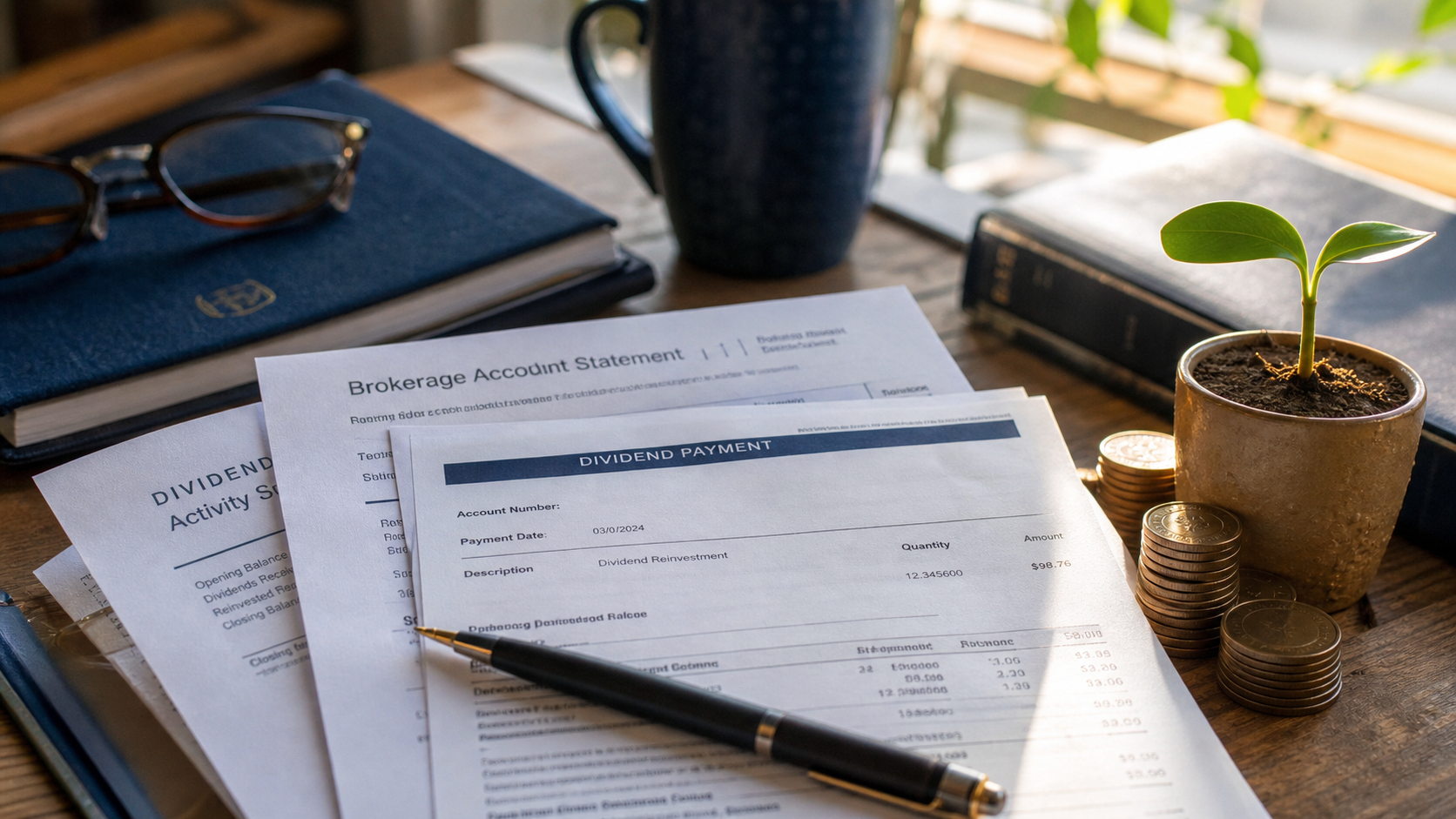
When a dividend arrived in your account, did you know what you wanted it to do next? I did not. That is where dividend reinvestment begins: deciding to put the payment back to work instead of letting it sit as cash.
From the publisher: Looking back, I was simply uninformed. I noticed stock prices, but I did not think of a dividend as a small piece of capital that could buy more shares and produce more future income. The payment arrived, sat in the account, and had no real job.
My thinking has changed. I now search for companies with meaningful dividends, study dividend stocks from a long-term perspective, and am building a plan for roughly $20,000 in available cash—about 30 million won in my local currency. My long-term goal is not one exciting payment. It is to grow the portfolio until it can eventually produce an average of about $700 a month, roughly 1 million won, in dividends.
That goal will take much more than choosing the stock with the highest yield. It requires enough capital, sustainable companies, diversification, patience, and a clear decision about whether each payment should be reinvested or kept as income. Before making that choice, it helps to understand how ETF dividend payments work. This guide then explains the reinvestment decision in simple terms.
Key Takeaways
- Dividend reinvestment means using a dividend payment to buy more investments instead of leaving it as cash.
- Reinvested dividends can increase share count and help compounding over long periods.
- Dividend reinvestment does not avoid taxes in a taxable account.
- Taking dividends as cash may make sense when you need income, want to rebalance, or want to avoid adding to an overweight position.
- The best choice depends on your goal, account type, tax situation, and portfolio plan.
What Is Dividend Reinvestment?
Dividend reinvestment means giving the payment another job: buying more shares. You can automatically buy the same stock or fund, or keep the dividend as cash and manually direct it toward another holding in your portfolio.
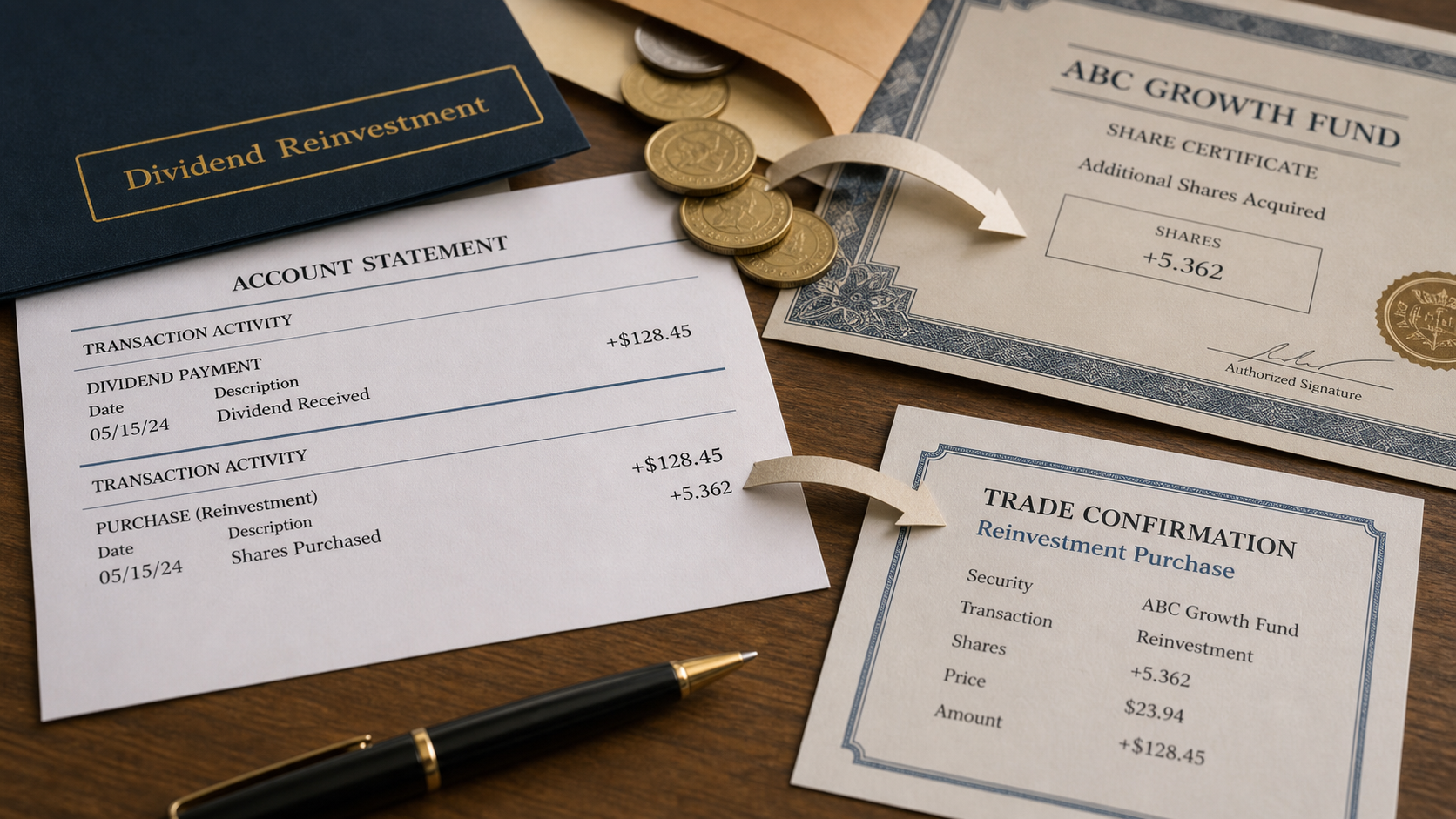
For example, suppose a fund pays a $40 dividend. If dividend reinvestment is turned on, that $40 may be used to purchase more shares or fractional shares of the fund. Your cash balance may not increase, but your ownership can increase.
Investor.gov defines dividends as payments that companies may make to shareholders from earnings. Those payments are not guaranteed. A company can raise, reduce, suspend, or eliminate a dividend depending on its finances and board decisions.
How Dividend Reinvestment Works
The mechanics are usually straightforward. An investment declares and pays a dividend. Your brokerage account receives the dividend. If dividend reinvestment is enabled, the broker uses the payment to buy more shares according to the account’s rules.
Those new shares may be whole shares or fractional shares. Fractional shares matter because dividends are often small. Without fractional shares, a $25 dividend could sit as cash if the investment trades at a much higher price. With fractional shares, the full dividend can often be put back to work.
Automatic reinvestment can happen quietly, but automatic does not mean risk-free. The reinvested money usually buys the same investment that paid the dividend. If that holding is already too large in your portfolio, reinvesting can make concentration worse over time.
This is why the reinvestment setting should connect to your broader plan. GSV’s guide to dividend stocks explains why dividend-paying companies can still carry business risk, market risk, and valuation risk.
Why Dividend Reinvestment Can Help Compounding
Dividend reinvestment can support compounding because new shares may generate their own future dividends. Over time, the process can create a feedback loop: dividends buy shares, those shares may pay dividends, and those future dividends may buy still more shares.
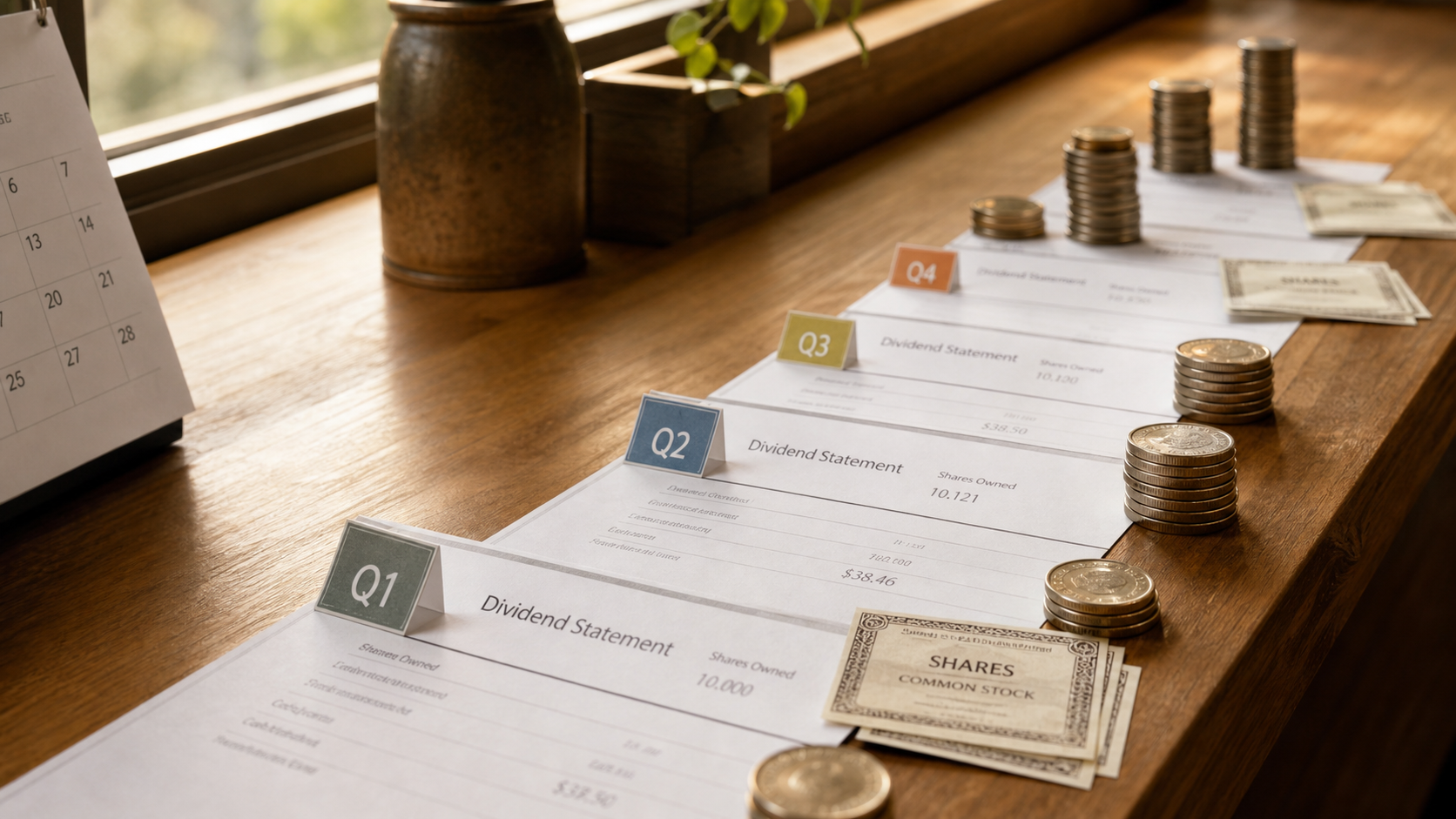
The effect is usually quiet at first. A small account may only buy a tiny fraction of a share each quarter. That can feel unimpressive. But compounding often rewards consistency more than drama.
GSV’s guide to compound interest explains the same basic engine: money earns a return, and the return has the chance to earn more return. dividend reinvestment is one practical way investors try to keep that engine running.
What Would $1,000 a Month Require?
My personal target of 1 million won works out to roughly $700 a month, but that is an awkward example for an international reader. So let’s use a round goal of $1,000 per month, or $12,000 per year. The capital required depends on the portfolio’s dividend yield—the annual dividend divided by the amount invested.
| Average Annual Yield | Capital for $12,000 a Year | $20,000 Could Produce |
|---|---|---|
| 3% | About $400,000 | About $50 per month |
| 4% | About $300,000 | About $67 per month |
| 5% | About $240,000 | About $83 per month |
| 6% | About $200,000 | About $100 per month |
These are simple pre-tax averages, not promises. A stock may pay quarterly rather than monthly, exchange rates can change, taxes reduce what reaches the account, and companies can cut dividends. “$1,000 a month” is therefore better treated as an annual-income target of $12,000, not a guarantee that exactly the same amount will arrive every month.
The table also shows why I see roughly $20,000 as a starting point rather than the finish line. At a 4% yield, it would produce about $800 a year before tax. Reinvesting that income, adding new savings, and allowing time for dividend growth are the parts that could move the portfolio closer to the larger goal.
Your starting amount and target will probably be different from mine. Instead of doing the math repeatedly, enter your investment amount, expected yield, and payment schedule in GSV’s Dividend Calculator. It can show the estimated annual and monthly income, making it easier to see the distance between today’s portfolio and your goal. Treat the result as a planning estimate, because real dividends can change.
Be careful with the temptation to solve the gap by chasing a 10% or 12% yield. A very high yield can appear because the share price collapsed or because investors expect the dividend to be cut. The target should never make a weak company look safe.
Dividend Reinvestment vs Taking Cash
dividend reinvestment is not always better than taking dividends as cash. The right choice depends on what you need the dividend to do.

Taking cash may make sense if you rely on portfolio income for spending. Retirees, near-retirees, or investors building a cash reserve may prefer dividends to stay in cash rather than automatically buying more shares.
Taking cash can also help with rebalancing. If one holding becomes too large, receiving dividends as cash allows you to direct money toward another part of the portfolio. GSV’s guide to portfolio rebalancing explains why maintaining a target mix can matter.
dividend reinvestment may fit better when the goal is long-term accumulation. A younger investor who does not need current income may prefer to keep reinvesting so the account can continue buying more shares automatically.
| Choice | Potential Benefit | Main Tradeoff |
|---|---|---|
| Dividend reinvestment | Builds share count automatically | May add to an overweight holding |
| Take dividends as cash | Creates flexibility for spending or rebalancing | Cash may sit idle if not used intentionally |
| Manual reinvestment | Lets you choose where the money goes | Requires more attention and discipline |
Taxes Still Matter
One beginner mistake is assuming dividend reinvestment avoids tax. In a taxable brokerage account, reinvested dividends are generally still taxable in the year they are paid. The fact that the cash was reinvested does not necessarily erase the tax event.
Qualified dividends may receive different tax treatment than ordinary dividends when IRS rules are met. GSV’s guide to qualified dividends explains why holding periods and dividend classification can matter.
Tax-advantaged accounts can change the experience. Inside an IRA or 401(k), dividends may not create the same current taxable event they would in a taxable account. But those accounts have their own contribution, withdrawal, and tax rules.
This is why dividend reinvestment connects naturally with asset location. The same dividend-paying investment can feel different in a taxable brokerage account than in a retirement account.
Reinvest It or Keep It as Cash?
Reinvestment often fits investors who are still building the portfolio and do not need the income today. Taking cash can be more useful when the money is needed for spending, taxes, or rebalancing. Neither choice is automatically better.
The important part is intention. Reinvesting into a diversified fund is different from repeatedly adding to one risky stock. Keeping cash is also not useful if it sits forgotten for months. Decide what the payment is supposed to do before it arrives.
How I Would Give Each Dividend a Job
Before reinvesting, ask one question: Would I choose to buy this investment with new cash today? If the answer is yes and the position still fits the portfolio, reinvesting may be reasonable. If the holding is already too large or the business has weakened, automatic buying can quietly make the problem bigger.
For my own roughly $20,000 starting plan, I am not looking for one “perfect” high-yield stock. I want a portfolio in which no single dividend determines the entire result. That means comparing the health of the business, how reliably it can fund payments, the payout schedule, valuation, and how each holding fits with the others.
A payout ratio is useful here. It tells you how much of a company’s profit is being paid as dividends. A high number is not automatically bad, but if a company regularly pays more than it can comfortably earn or generate in cash, the dividend may be difficult to maintain.
You can also use dividends for rebalancing. Instead of automatically buying more of the company that made the payment, collect the cash and add it to an underweight part of the portfolio. That still keeps the dividend invested while giving you more control over concentration.
Common Mistakes
The first mistake is treating dividend reinvestment as guaranteed compounding. Dividends can be reduced, stock prices can fall, and reinvested shares can lose value.
The second mistake is ignoring taxes. Reinvested dividends in a taxable account can still show up on tax forms. Investors should not assume reinvestment makes the income invisible.
The third mistake is reinvesting into a weak investment just because it pays a dividend. A high yield can sometimes signal risk. GSV’s guide to dividend yield explains why yield should be interpreted carefully.
The fourth mistake is forgetting about allocation. dividend reinvestment can slowly add to a position without an intentional decision. That can be useful for accumulation but problematic if the holding becomes too large.
The fifth mistake is choosing cash and then doing nothing with it. Taking dividends as cash creates flexibility, but flexibility only helps if the cash has a purpose.
Frequently Asked Questions About Dividend Reinvestment
Is dividend reinvestment good for beginners?
dividend reinvestment can be useful for beginners who are investing for long-term accumulation and do not need dividend income today. It is not automatically right for every account or goal.
Does dividend reinvestment avoid taxes?
No. In a taxable account, reinvested dividends are generally still taxable in the year they are paid. Retirement accounts may have different tax treatment.
Can dividend reinvestment lose money?
Yes. Reinvested dividends buy investments that can fall in value. dividend reinvestment increases ownership, but it does not remove investment risk.
Should I reinvest dividends in an ETF?
It may make sense if the ETF fits your long-term plan and you do not need the cash. If the ETF is already too large in your portfolio, taking cash for rebalancing may be better.
Can I turn dividend reinvestment off later?
Usually, yes. Many brokerage platforms let investors turn dividend reinvestment on or off, though timing and account rules can vary.
Final Thoughts
I used to receive dividends without thinking about what happened next. Now I see every payment differently. It is not free money and it is not yet income I need to spend. It is a small decision: leave it idle, use it elsewhere, or let it buy another piece of a business.
My goal of averaging about $700 a month will not be reached by searching for the highest yield and hoping. The numbers make that clear. It will require more capital, steady additions, reliable holdings, reinvestment, and time.
If you are just starting, you do not need that same goal. Begin with the dividend that actually arrived. Ask what job you want it to do. I wish I had asked myself that much earlier.
Continue Learning
Ready for the next step? Explore these related investing guides.