

Traditional IRA deduction limits 2026 explain when a traditional IRA contribution may be tax-deductible, partly deductible, or not deductible based on income, filing status, and workplace retirement plan coverage. For 2026, the IRA contribution limit is $7,500, but the tax deduction can be reduced or eliminated for some taxpayers.
This is where many beginners get confused. A person may be allowed to contribute to a traditional IRA but may not be allowed to deduct the full contribution on their tax return. The contribution limit and the deduction limit are related, but they are not the same thing.
Educational disclaimer: This article is for general education only and is not personal tax, legal, retirement, or investment advice. IRA deduction rules can depend on your income, filing status, workplace plan coverage, spouse coverage, and tax details. Check official IRS guidance or a qualified tax professional for your own situation.
Key Takeaways
- The 2026 IRA contribution limit is $7,500, with a $1,100 catch-up contribution for people age 50 or older.
- Traditional IRA deduction limits 2026 depend heavily on whether you or your spouse is covered by a workplace retirement plan.
- If neither spouse is covered by a workplace plan, the IRS says the phase-outs of the deduction do not apply.
- If you are covered by a workplace plan, the deduction may phase out as income rises.
- A nondeductible traditional IRA contribution may still be possible, but it requires careful tax recordkeeping.
Traditional IRA Deduction Limits 2026: The Big Picture
Traditional IRA deduction limits 2026 are not just about the IRA contribution limit. The first question is how much you can contribute. The second question is whether that contribution is deductible. Those answers can be different.
For 2026, the IRS announced that the annual IRA contribution limit is $7,500. People age 50 or older may be eligible for an additional $1,100 catch-up contribution, for a total possible IRA contribution of $8,600. This annual IRA limit generally applies across traditional and Roth IRAs combined.
The deduction rule is separate. If you make a traditional IRA contribution, you may be able to deduct it on your tax return. But if you or your spouse is covered by a workplace retirement plan, the deduction may be phased out based on income and filing status.
That makes this topic different from our guide to Roth IRA contribution limits 2026. Roth IRAs focus on whether you can contribute directly based on income. Traditional IRAs focus on whether the contribution is deductible.
2026 Traditional IRA Deduction Phase-Out Ranges
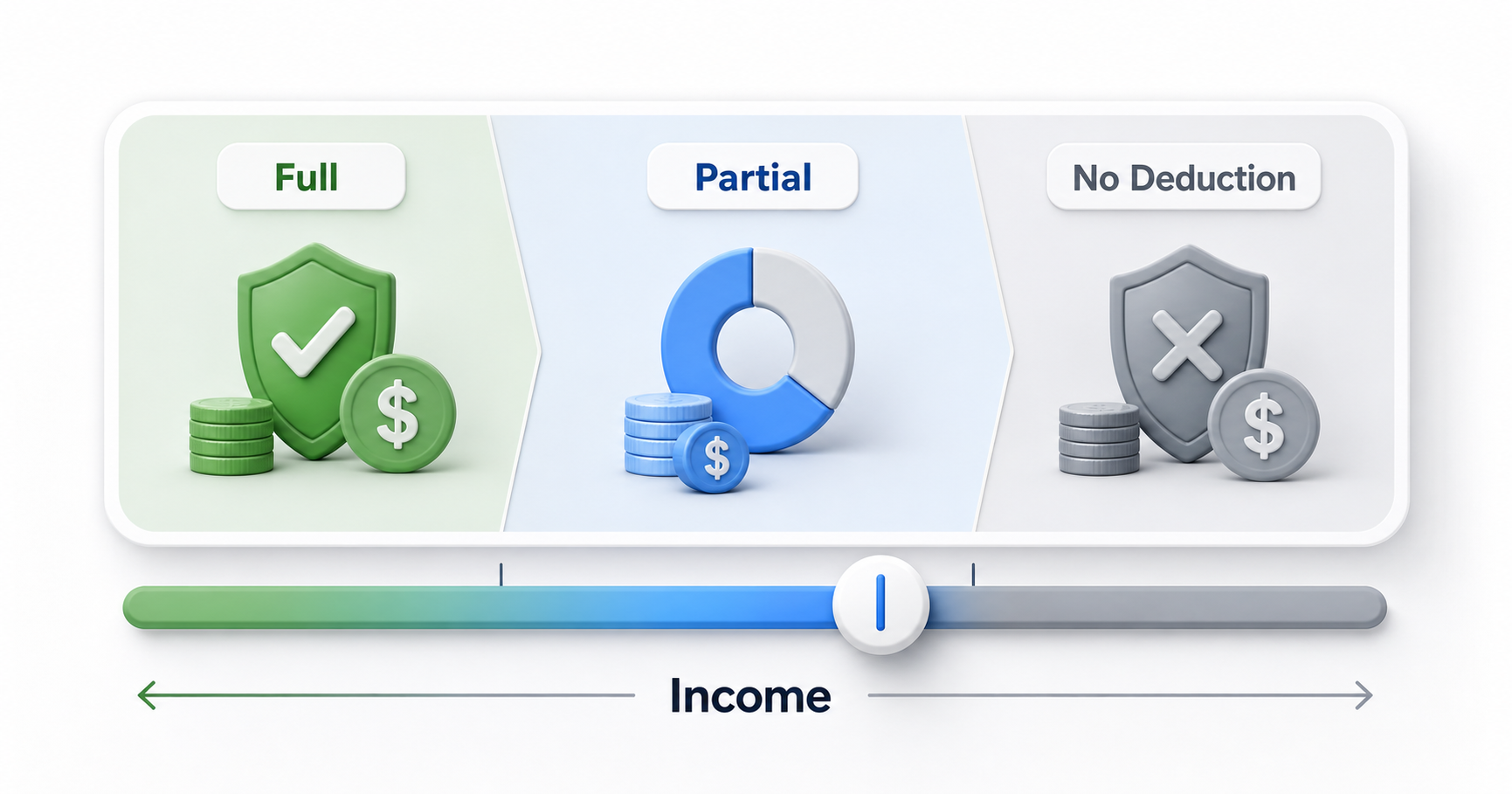
Traditional IRA deduction limits 2026 include several income phase-out ranges. A phase-out range means the deduction is gradually reduced as income moves through the range. Once income is above the top of the range, the deduction may be eliminated for that situation.
For single taxpayers covered by a workplace retirement plan, the 2026 phase-out range is $81,000 to $91,000. For married couples filing jointly, if the spouse making the IRA contribution is covered by a workplace retirement plan, the range is $129,000 to $149,000.
If an IRA contributor is not covered by a workplace retirement plan but is married to someone who is covered, the 2026 phase-out range is $242,000 to $252,000. For a married individual filing separately who is covered by a workplace retirement plan, the range remains $0 to $10,000.
| Situation | 2026 Deduction Phase-Out Range | What It Means |
|---|---|---|
| Single, covered by workplace plan | $81,000 to $91,000 | Deduction may be reduced inside this range |
| Married filing jointly, contributor covered | $129,000 to $149,000 | Deduction may be reduced inside this range |
| Contributor not covered, spouse covered | $242,000 to $252,000 | Spousal workplace coverage can affect deduction |
| Married filing separately, covered | $0 to $10,000 | Very limited deduction range |
These ranges are based on modified adjusted gross income, often called MAGI. The details of MAGI can be more technical than regular gross income, so the table should be treated as a planning guide, not a final tax calculation.
Why Workplace Retirement Plan Coverage Matters
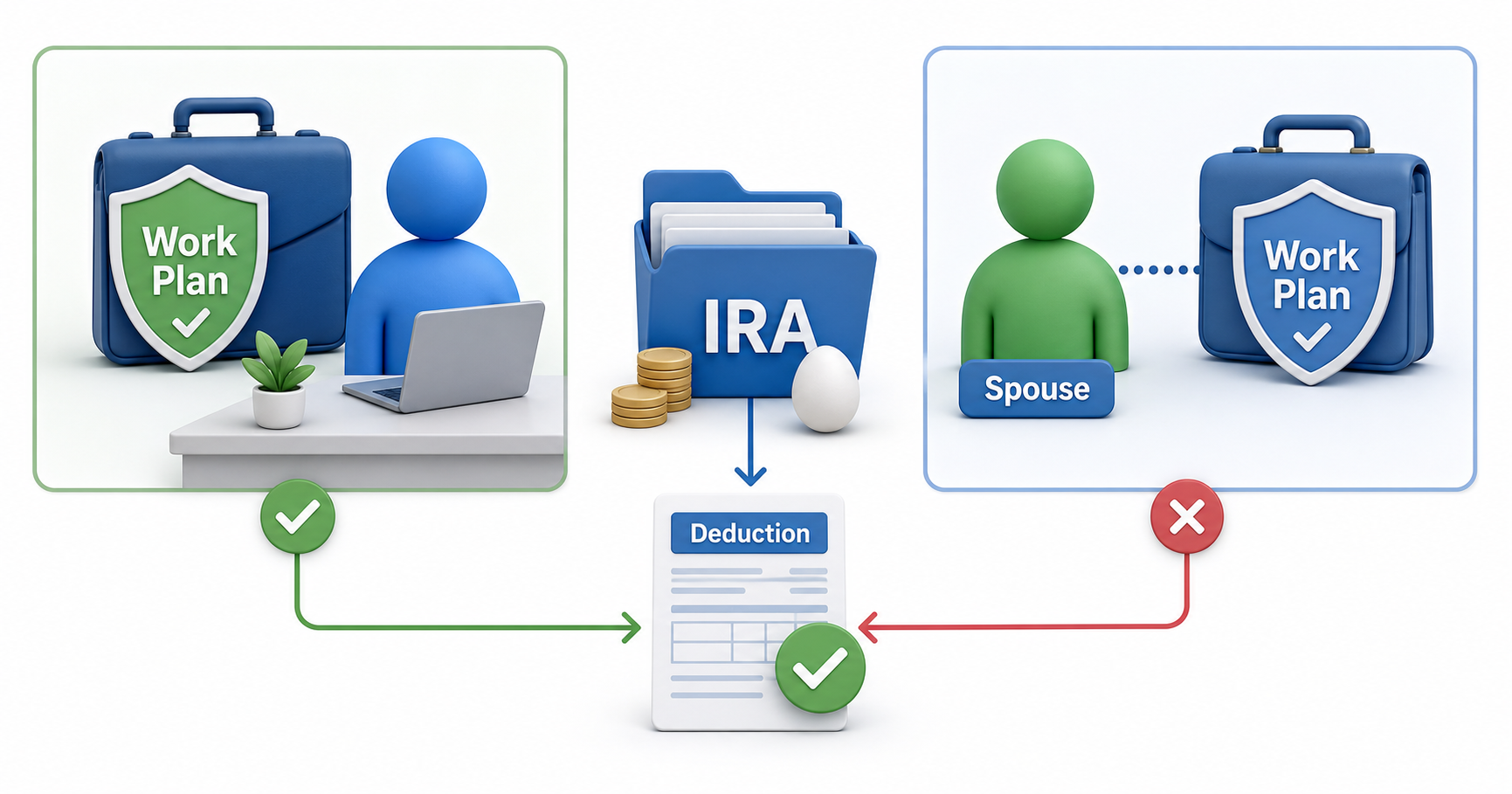
The key phrase in traditional IRA deduction rules is workplace retirement plan coverage. If you are covered by a retirement plan at work, such as a 401(k), your ability to deduct a traditional IRA contribution may be limited at higher income levels.
Coverage does not always mean you personally contributed to the plan. In some cases, being covered by the plan for the year can matter even if you contributed little or nothing. That is why it is important to check tax forms and plan information rather than guessing.
If neither you nor your spouse is covered by a workplace retirement plan, the IRS says the phase-outs of the deduction do not apply. That can make the traditional IRA deduction simpler for people without workplace plan coverage, assuming other contribution rules are satisfied.
Spouse coverage can also matter. If you are not covered by a workplace plan but your spouse is, the higher married-filing-jointly phase-out range may apply. This rule often surprises couples because the contributor may assume only their own workplace benefits matter.
Deductible vs Nondeductible Traditional IRA Contributions
A deductible contribution can reduce taxable income for the year, subject to the rules. A nondeductible contribution does not give the same upfront deduction, but it may still add after-tax basis to a traditional IRA.
Nondeductible contributions require careful recordkeeping. The IRS generally uses Form 8606 to track nondeductible IRA basis. Without good records, a person may have trouble proving which part of a future IRA distribution has already been taxed.
This is one reason beginners should avoid treating nondeductible IRA contributions casually. They can be part of a broader strategy, but they are not as simple as making a regular deductible contribution and moving on.
Traditional IRA deduction limits 2026 are also different from investment selection. The IRA is the account. The investments inside the account might include mutual funds, ETFs, bonds, or other available choices depending on the provider. If you need the account basics, our guide to a brokerage account helps explain how investment accounts hold assets.
Traditional IRA vs Roth IRA in 2026
A traditional IRA and a Roth IRA can both be retirement accounts, but the tax treatment is different. A traditional IRA may offer a deduction now, while withdrawals are generally taxed later. A Roth IRA is generally funded with after-tax money, and qualified withdrawals may be tax-free later.
The right comparison is not only “which account is better?” It is “which tax timing fits your situation?” A person who wants a current deduction may study traditional IRA rules. A person who expects a higher tax rate later may prefer Roth treatment, if eligible.
| Feature | Traditional IRA | Roth IRA |
|---|---|---|
| Upfront tax treatment | May be deductible | Usually not deductible |
| Income limits | Affect deduction when workplace plan coverage applies | Affect direct contribution eligibility |
| Withdrawal tax treatment | Generally taxable when withdrawn | Qualified withdrawals may be tax-free |
| Best beginner question | Can I deduct it? | Can I contribute directly? |
If you need a broader explanation of the account, start with what a traditional IRA is. If you are comparing Roth accounts, the guide to what a Roth IRA is gives the beginner foundation.
Examples of How the 2026 Deduction Rules Work
Example one: A single taxpayer is covered by a workplace retirement plan and has modified adjusted gross income below $81,000. Based on the 2026 phase-out range, that person may be able to deduct the full eligible traditional IRA contribution, assuming other rules are satisfied.
Example two: A single taxpayer covered by a workplace plan has income between $81,000 and $91,000. The deduction may be partial. This is where tax software, IRS worksheets, or a tax professional can help calculate the exact amount.
Example three: A married couple files jointly. The spouse making the IRA contribution is covered by a workplace retirement plan, and the couple’s income is above $149,000. In that situation, the traditional IRA deduction may be eliminated for that contribution, even though a contribution may still be possible.
Example four: A contributor is not covered by a workplace plan, but their spouse is covered. The relevant 2026 phase-out range is higher: $242,000 to $252,000. That rule is one of the main reasons married couples should check both spouses’ workplace plan coverage.
Checklist Before Planning a Traditional IRA Deduction
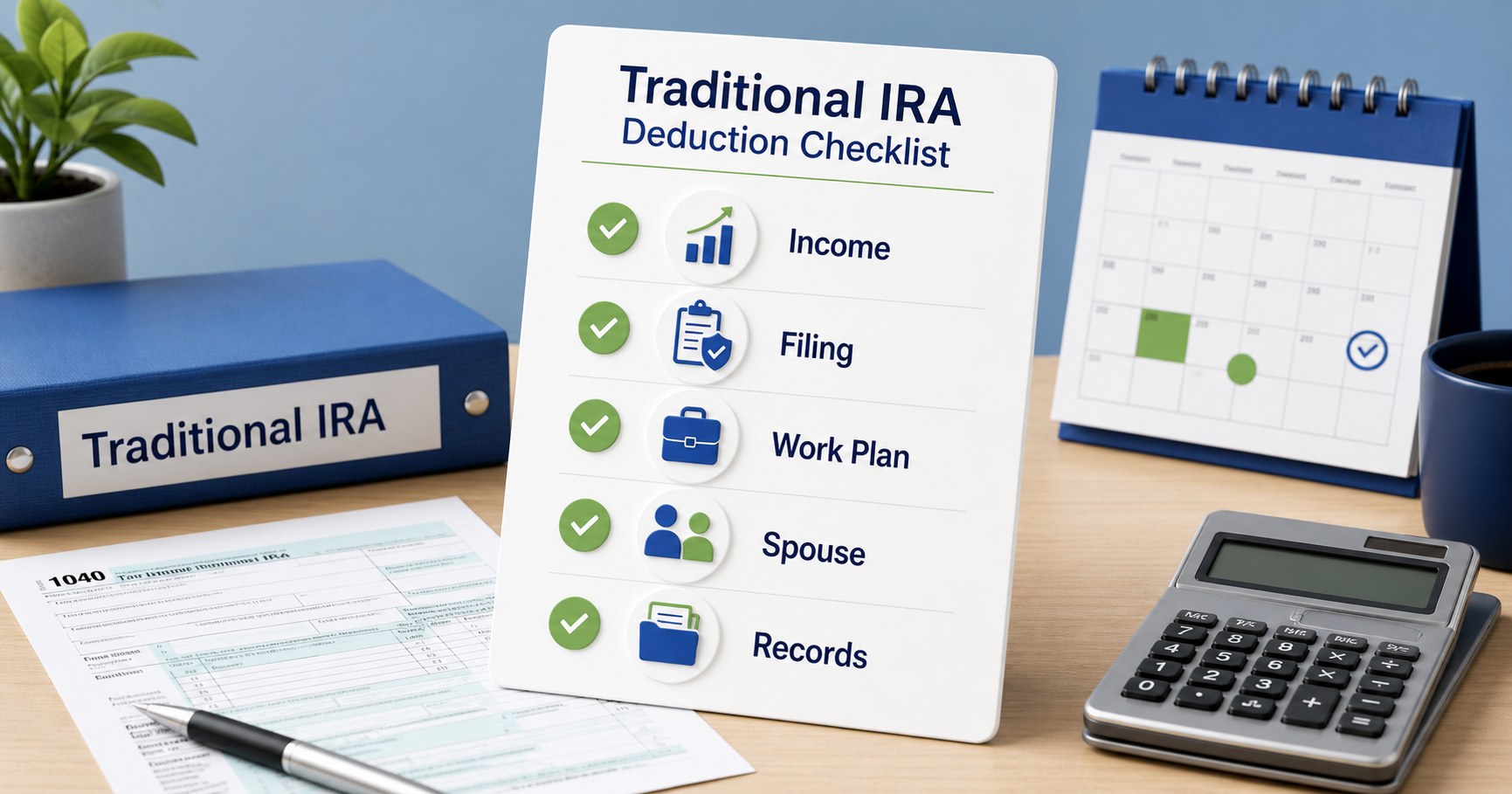
Before relying on a traditional IRA deduction, walk through a simple checklist. Traditional IRA deduction limits 2026 are easier to understand when you separate the moving parts.
- Confirm your 2026 taxable compensation.
- Check whether you are covered by a workplace retirement plan.
- Check whether your spouse is covered by a workplace retirement plan, if married.
- Estimate your modified adjusted gross income and filing status.
- Confirm whether your contribution is deductible, partially deductible, or nondeductible.
- Keep records if any contribution is nondeductible.
It also helps to compare the traditional IRA with other retirement options. A workplace plan may have a match, and our guide to 401(k) contribution limits 2026 explains the current workplace plan limits. Retirement accounts can work together, but each one has its own rules.
Frequently Asked Questions About Traditional IRA Deduction Limits 2026
What are the traditional IRA deduction limits 2026?
Traditional IRA deduction limits 2026 depend on filing status, income, and workplace retirement plan coverage. For example, single taxpayers covered by a workplace plan phase out between $81,000 and $91,000, while married joint filers with the contributor covered phase out between $129,000 and $149,000.
Can I contribute to a traditional IRA if I cannot deduct it?
In some cases, yes. A nondeductible traditional IRA contribution may be possible, but it requires careful tax recordkeeping and may not be the best choice for every person.
Do traditional IRA deduction limits affect Roth IRA contributions?
No. Traditional IRA deduction limits affect whether a traditional IRA contribution is deductible. Roth IRA income limits affect whether a direct Roth IRA contribution is allowed.
Does a 401(k) at work affect my traditional IRA deduction?
It can. If you or your spouse is covered by a workplace retirement plan, the traditional IRA deduction may phase out at higher income levels.
Is a traditional IRA deduction better than a Roth IRA?
Not always. A traditional IRA deduction may help now, while Roth treatment may help later. The better fit depends on tax rate, income, retirement timing, and personal circumstances.
Final Thoughts
Traditional IRA deduction limits 2026 are useful because they separate two questions: how much you can contribute and how much you can deduct. The annual IRA contribution limit gives one boundary, but workplace plan coverage and income determine whether the deduction is full, partial, or unavailable.
For beginners, the practical path is to check filing status, income, workplace coverage, spouse coverage, and recordkeeping before making assumptions. A traditional IRA can be useful, but the tax benefit depends on the rules that apply to your situation.