
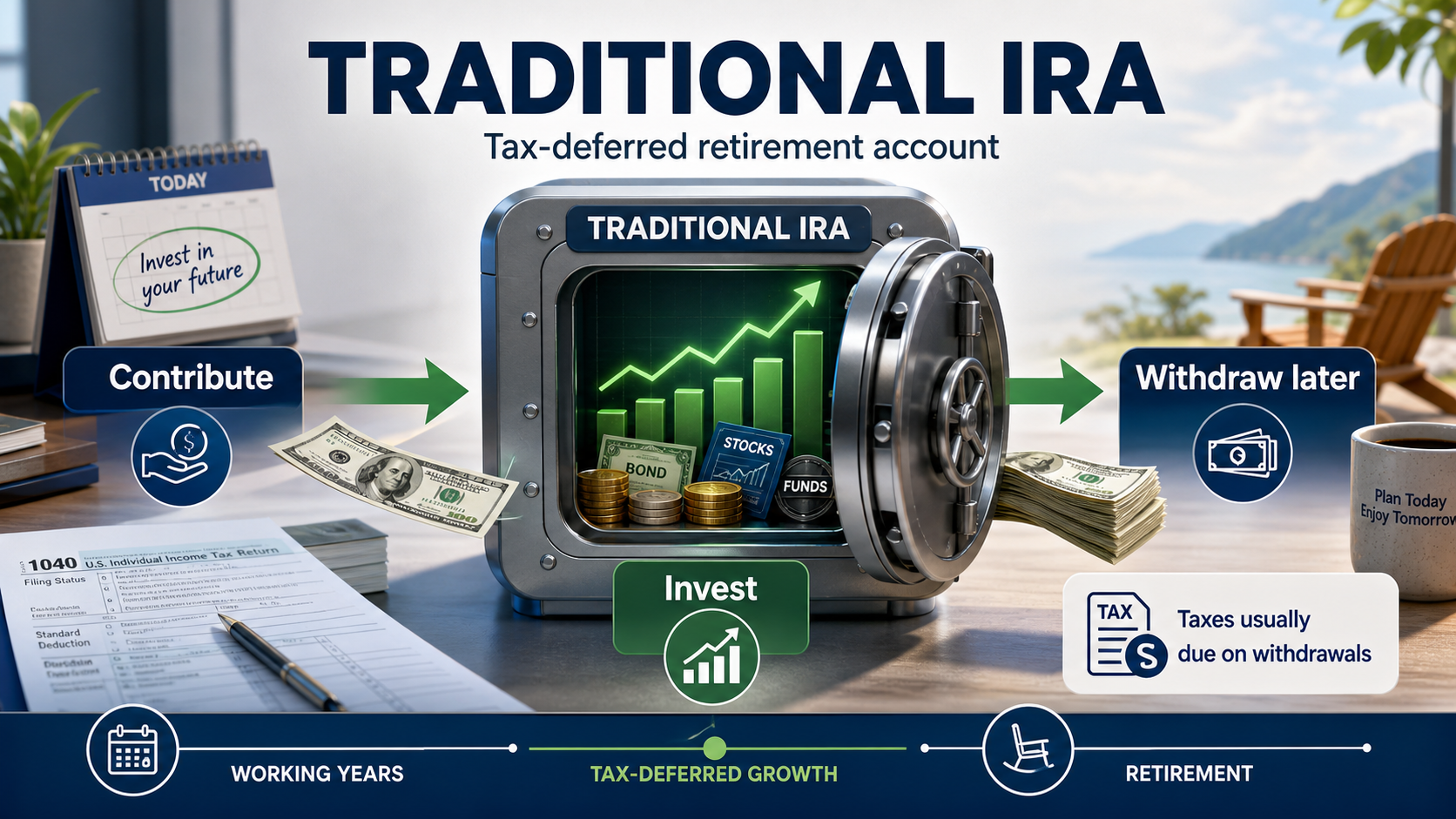
What is a traditional IRA? A traditional IRA is an individual retirement account that lets you save and invest for retirement with potential tax advantages. In many cases, contributions may be deductible, investments can grow tax-deferred, and withdrawals are usually taxed as income later.
The basic trade-off is timing. A traditional IRA may help reduce taxable income today, but it usually creates taxable retirement income later. That makes it different from a Roth IRA, where contributions are made with after-tax dollars and qualified withdrawals can be tax-free.
Traditional IRA Key Takeaways
- A traditional IRA is a retirement account you open outside an employer plan.
- Contributions may be tax-deductible, depending on income, filing status, and workplace retirement plan coverage.
- Investments inside the account can grow tax-deferred until money is withdrawn.
- Withdrawals are generally taxed as ordinary income, and early withdrawals may trigger additional tax.
- A traditional IRA can hold many investments, including mutual funds, ETFs, bonds, and cash-like options.
How a Traditional IRA Works
A traditional IRA works like a retirement container. The account itself is not an investment. It is the tax-advantaged account that holds investments. Once money is inside the IRA, you can usually choose from available investments such as stock funds, bond funds, target-date funds, individual stocks, ETFs, certificates of deposit, or cash sweep options depending on the provider.
The main appeal is tax deferral. If your contribution is deductible, you may lower taxable income for the year you contribute. Then the investments can compound without annual taxes on dividends, interest, or capital gains inside the account. Taxes are generally due when you take money out.
That tax timing is why a traditional IRA is often used by people who expect to be in a lower tax bracket in retirement than they are during their working years. It can also help people who want another retirement savings option beyond a 401k or who do not have access to a workplace plan.
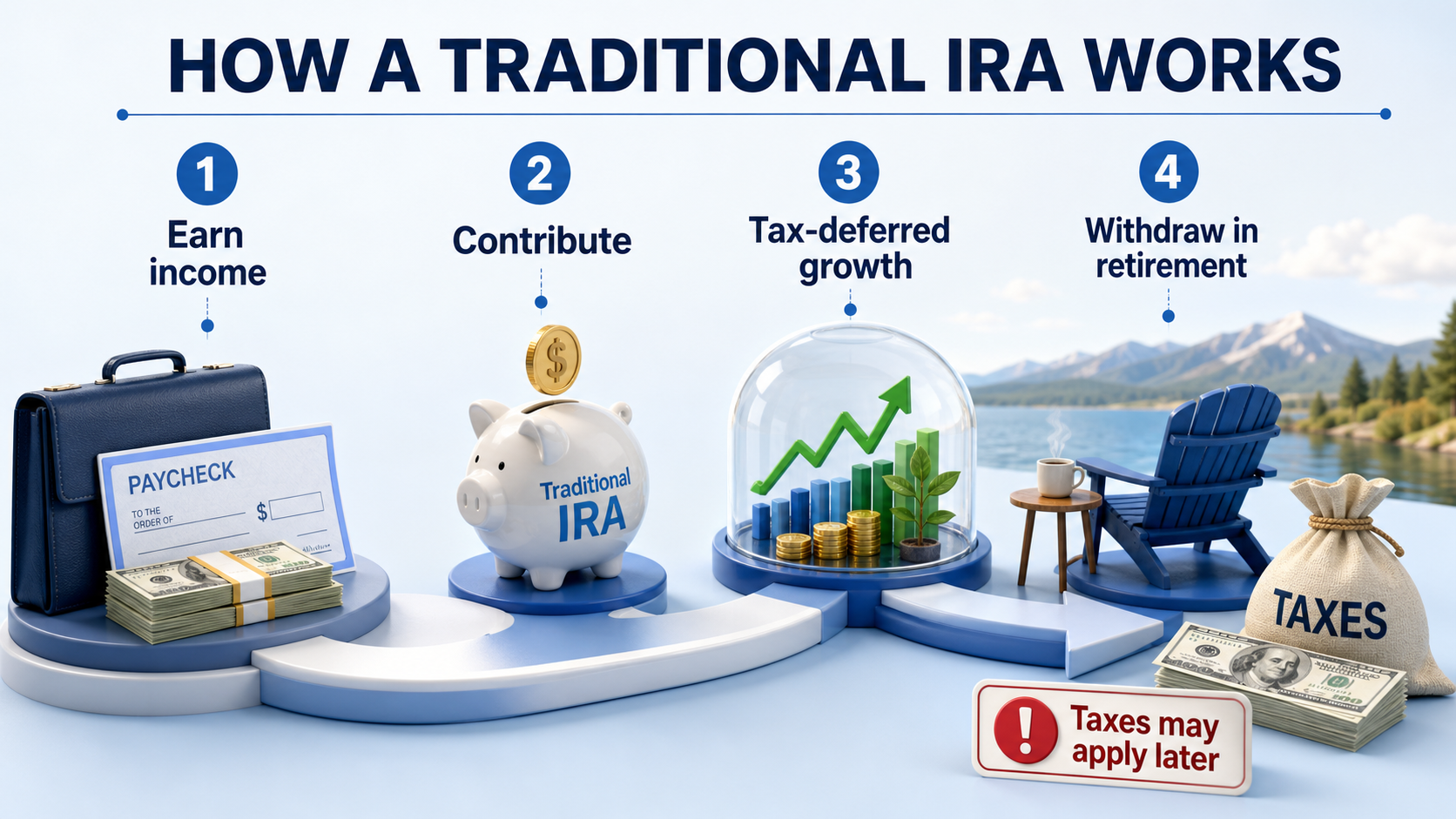
The account can be simple, but the rules matter. The IRS sets annual contribution limits, deduction rules, income phaseouts, early distribution rules, and required minimum distribution rules. These details can change, so beginners should treat official IRS pages as the source of truth for current limits and deadlines.
Traditional IRA vs Roth IRA
The most common comparison is a traditional IRA vs Roth IRA. Both are individual retirement accounts. Both can hold long-term investments. Both can help retirement savings grow more efficiently than a taxable account. The difference is when the tax benefit usually appears.
| Feature | Traditional IRA | Roth IRA |
|---|---|---|
| Contribution tax treatment | May be deductible | Made with after-tax dollars |
| Growth inside account | Tax-deferred | Tax-free if rules are met |
| Withdrawals | Usually taxable | Qualified withdrawals can be tax-free |
| Best fit | Possible higher tax rate now than later | Possible lower tax rate now than later |
| Required minimum distributions | Generally apply later in life | Generally not required for the original owner |
A traditional IRA is not automatically better because it may offer a deduction. A Roth IRA is not automatically better because tax-free retirement income sounds attractive. The better choice depends on your current tax rate, expected future tax rate, income eligibility, cash flow, retirement timeline, and how you want to manage tax diversification.
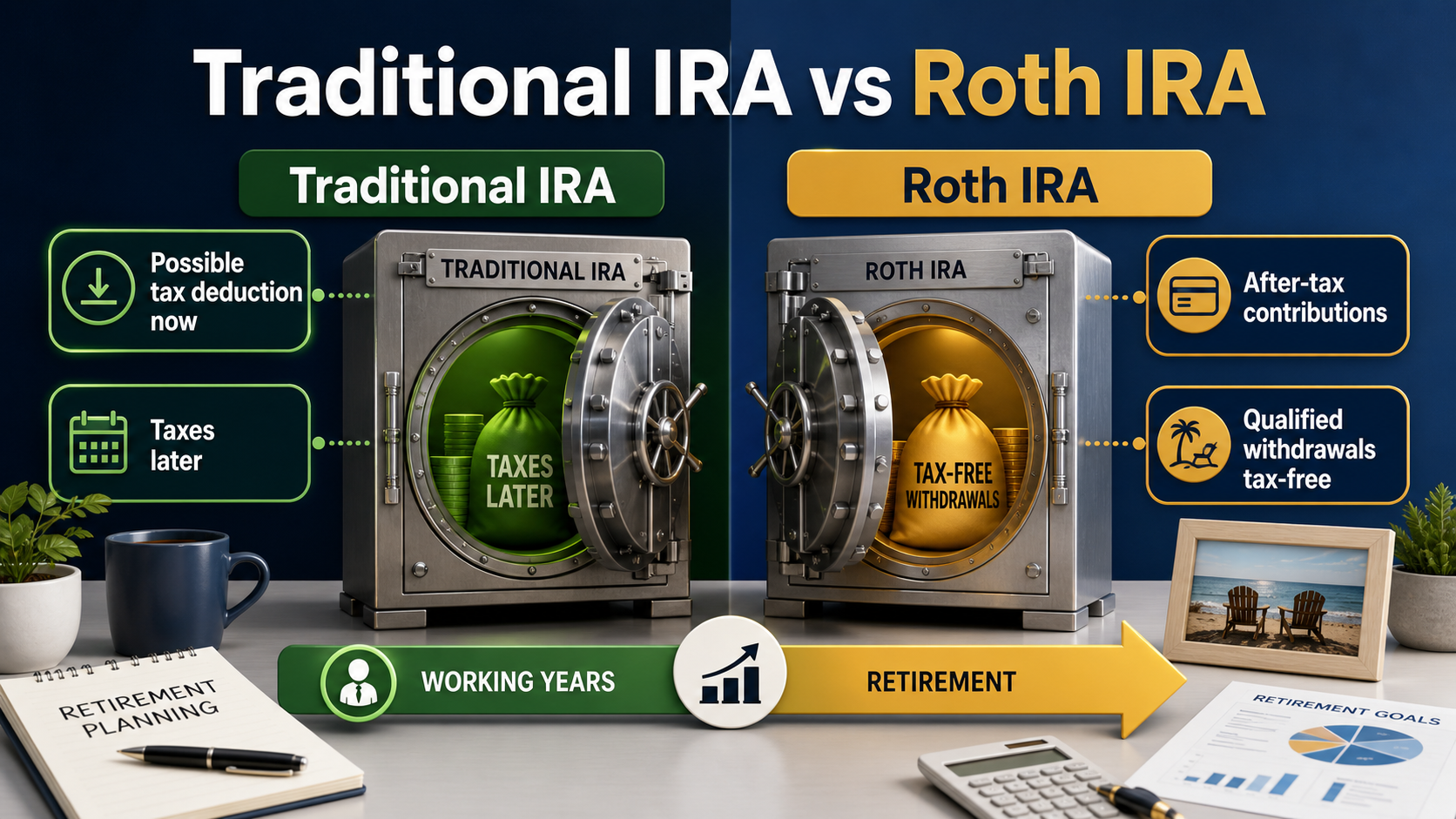
Many investors eventually use both types over time. A person may use a traditional IRA or pretax 401k during high-earning years, then use Roth contributions or conversions during lower-income years. The point is not to guess perfectly. The point is to understand the tax timing well enough to make a deliberate choice.
Who Can Contribute to a Traditional IRA?
In general, you need taxable compensation to contribute to an IRA. Wages, salaries, commissions, self-employment income, and similar earned income can count. Investment income alone does not usually qualify as compensation for IRA contribution purposes.
There are also spousal IRA rules that may help married couples when one spouse has little or no taxable compensation. The details depend on filing status and household income, so it is worth checking IRS rules before assuming you are eligible.
Deductibility is a separate question from eligibility. You may be allowed to contribute to a traditional IRA even if some or all of the contribution is not deductible. If you or your spouse is covered by a workplace retirement plan, IRS income limits can reduce or eliminate the deduction. That distinction matters because nondeductible contributions create basis that needs to be tracked for tax purposes.
What Can You Invest In With a Traditional IRA?
A traditional IRA can hold a wide range of investments, but your actual choices depend on the financial institution. A brokerage IRA often gives access to individual stocks, ETFs, mutual funds, bonds, and cash sweep products. A bank IRA may offer certificates of deposit or savings-style options. A robo-advisor IRA may use model portfolios built from ETFs.
For many beginners, the investment choice is more important than the account opening step. Opening a IRA does not automatically create a good retirement plan. The account needs investments that match your time horizon, risk tolerance, and long-term goals.
A broad index fund or diversified ETF can be a simple starting point for long-term retirement money. If you are still learning the basics, it helps to understand asset allocation before choosing investments. Your mix of stocks, bonds, and cash often matters more than picking the perfect fund.
IRA Tax Benefits and Trade-Offs
The headline benefit is the possible upfront tax deduction. If your contribution is deductible, it can reduce taxable income for the year. That can be valuable if you are currently in a higher tax bracket and expect a lower tax rate in retirement.
The second benefit is tax-deferred growth. Inside a IRA, dividends, interest, and realized capital gains do not usually create annual taxable events. This can help compounding work more efficiently because more money remains invested. If you want the basic math behind this idea, GSV’s guide to compound interest is a useful next read.
The trade-off is that withdrawals are generally taxable. A IRA can lower taxes now while increasing taxable income later. That can affect retirement tax brackets, Medicare premiums, Social Security taxation, and withdrawal planning. Beginners do not need to master every detail immediately, but they should understand that tax deferral is not tax elimination.
IRA Withdrawal Rules
IRA withdrawals are usually taxable as ordinary income. If you withdraw money before age 59 and a half, an additional 10% tax may apply unless an exception fits. IRS rules include several exceptions, but the important beginner lesson is simple: a IRA is designed for retirement, not casual short-term spending.
Later in life, IRAs generally become subject to required minimum distributions, often called RMDs. These rules require account owners to begin taking minimum withdrawals after reaching the applicable age. RMD rules can be complex, especially for inherited accounts, so official IRS guidance matters.
That is one reason cash planning matters. If every dollar is locked inside retirement accounts, an investor may be forced into awkward withdrawals during emergencies. A separate emergency fund can reduce the need to tap retirement savings early.
What to Check Before Opening a IRA
Before opening a IRA, check five things: contribution eligibility, deductibility, fees, investment choices, and withdrawal rules. The account may be easy to open online, but the best provider depends on what you plan to invest in and how much help you want.
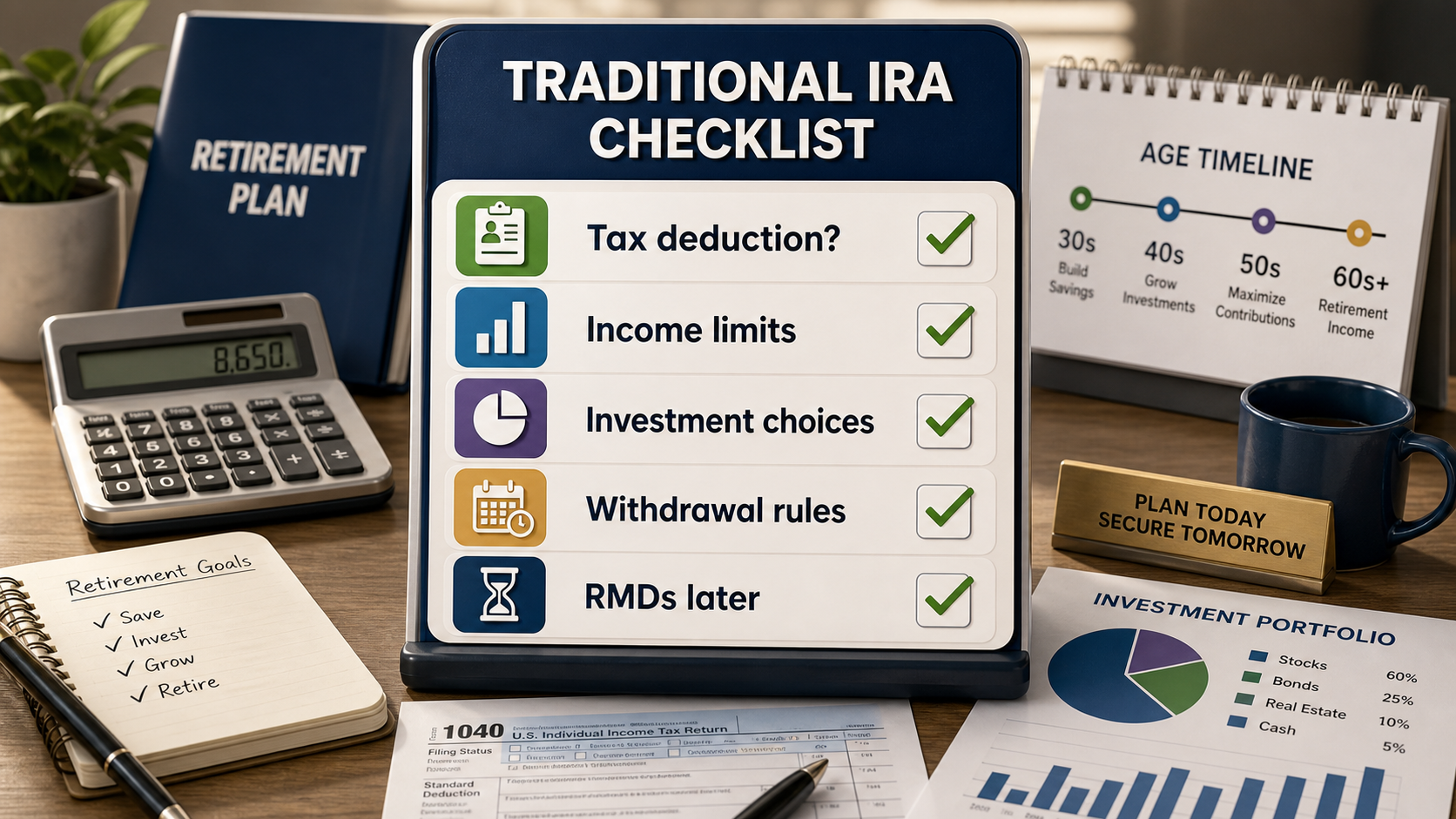
Fees deserve special attention. Some IRA providers charge account maintenance fees, trading costs, advisory fees, or fund expense ratios. Small fees can matter over long periods. If you use mutual funds or ETFs inside the account, compare costs carefully. GSV has separate fund guides that can help you compare pooled investment structures and costs.
Also think about how contributions will happen. Some investors contribute once near tax time. Others automate monthly contributions. Automation can pair well with dollar-cost averaging, especially if you invest consistently instead of trying to time every market move.
Common IRA Mistakes
One common mistake is assuming every IRA contribution is deductible. Deduction rules can depend on income, tax filing status, and workplace plan coverage. If you contribute without checking deductibility, you may be surprised at tax time.
A second mistake is leaving the account in cash for years by accident. Cash can be useful while you decide what to buy, and a money market fund can be a cash management tool. But long-term retirement money usually needs growth assets if your time horizon is measured in decades.
A third mistake is taking early withdrawals too casually. Early distributions can create taxes, penalties, and lost compounding. A IRA is powerful because money can stay invested for a long time. Pulling money out early weakens that advantage.
FAQ About IRAs
Is a IRA worth it?
A IRA can be worth it if you want tax-deferred retirement savings and may benefit from a current tax deduction. It is especially useful when you expect your tax rate in retirement to be lower than your tax rate today.
Can I have both a IRA and a Roth IRA?
Yes, you can have both, but combined annual contributions across IRAs must follow IRS limits. Your income and tax situation may affect whether contributions are deductible or whether Roth contributions are allowed.
Is a IRA the same as a 401k?
No. A IRA is an individual account you open yourself. A 401k is an employer-sponsored retirement plan. Both can offer pretax savings, but the rules, contribution limits, investment menu, and employer match possibilities are different.
Can a IRA lose money?
Yes. A IRA can lose money if the investments inside the account fall in value. The IRA is the account structure, not a guarantee. Risk depends on what you choose to hold inside it.
When do I pay taxes on a IRA?
You generally pay taxes when you withdraw money from a IRA. If you made nondeductible contributions, part of the withdrawal may be treated differently, which is why recordkeeping matters.
Final Thoughts on IRAs
A IRA is a flexible retirement account that can help investors save with potential tax advantages. The core idea is simple: contribute during working years, invest for long-term growth, and usually pay taxes when withdrawals happen later.
The best use of a IRA depends on your tax situation, retirement timeline, and investment plan. If the current deduction is valuable and you expect lower taxes later, a IRA may fit well. If tax-free qualified withdrawals later matter more, a Roth IRA may deserve a closer look. Either way, the IRA is one of the core building blocks beginners should understand when planning for retirement.
Official Sources
- IRS: IRAs
- IRS: IRA deduction limits
- IRS: IRA contribution limits
- IRS: Required minimum distributions FAQs