

What is an emergency fund? An emergency fund is cash set aside for unexpected expenses or income disruptions, such as a car repair, medical bill, urgent home repair, or temporary job loss.
The purpose is not to earn the highest possible return. The purpose is to make sure a surprise expense does not force you to use high-interest debt, sell investments at the wrong time, or interrupt long-term goals.
This beginner guide explains how an emergency fund works, how much to save, where to keep it, and how to build one without making your financial life feel impossible.
Key Takeaways
- An emergency fund is cash reserved for real surprises, not regular monthly spending.
- A starter emergency fund can be small, but many households eventually aim for three to six months of essential expenses.
- The best place for emergency cash is usually safe, liquid, and easy to access.
- Investing an emergency fund can create timing risk if markets fall right before you need money.
- An emergency fund supports long-term investing because it helps protect your portfolio from forced selling.
What Is an Emergency Fund?
What is an emergency fund in simple terms? It is a cash cushion. You build it before life demands it, so a surprise expense does not become a financial crisis.
An emergency fund is different from a vacation fund, holiday fund, or planned down payment. Those goals are known in advance. An emergency is something you did not schedule: a broken furnace, a sudden deductible, a lost paycheck, or an urgent family trip.
The Consumer Financial Protection Bureau explains that savings accounts are designed to hold money for future use. For emergency cash, that basic purpose matters more than chasing complicated products. A simple savings account can be powerful when it prevents a short-term problem from becoming long-term debt.
An emergency fund also protects your investing plan. If every unexpected bill forces you to sell stocks, ETFs, or bonds, your portfolio becomes a backup checking account. That can damage discipline. GSV’s guide to asset allocation explains why different parts of your money should have different jobs.
Why an Emergency Fund Matters
What is an emergency fund really buying you? It buys time. Time to handle a bill, search for work, make a careful decision, or avoid borrowing at a painful interest rate.
Without cash reserves, even a small surprise can push someone toward a credit card balance, payday loan, early retirement withdrawal, or rushed investment sale. Those choices can cost more than the original emergency.
Emergency savings can also reduce stress. Money is emotional because bills are immediate. A portfolio may look good on paper, but if rent is due next week, liquidity matters more than theoretical long-term returns.
This is why emergency savings and investing are partners, not enemies. A strong cash cushion can make it easier to keep investing through market volatility. If you are building long-term habits, the idea pairs naturally with dollar-cost averaging, where consistency matters more than perfect timing.
How Much Should Be in an Emergency Fund?

There is no perfect number for every household. A common rule of thumb is three to six months of essential expenses, but that should be treated as a starting framework, not a law.
A single person with stable income, low fixed expenses, and family support may need less than someone with dependents, variable income, medical costs, or one household paycheck. A freelancer or small business owner may want a larger cushion because income can arrive unevenly.
Instead of getting stuck on a huge target, think in layers. The first layer may be $500 to $1,000 for small shocks. The second layer may be one month of essential bills. The full layer may be three to six months of essentials.
| Emergency Fund Stage | Possible Target | What It Helps Cover |
|---|---|---|
| Starter fund | $500 to $1,000 | Small repairs, urgent travel, minor bills |
| One-month cushion | One month of essentials | Rent, food, utilities, insurance, minimum payments |
| Core fund | Three months of essentials | Short income gaps or multiple surprise expenses |
| Extended fund | Six months or more | Variable income, dependents, job risk, larger obligations |
The right amount should reflect essential expenses, not lifestyle spending. Include housing, utilities, food, insurance, transportation, minimum debt payments, and basic healthcare. Exclude vacations, extra shopping, and normal entertainment.
What is an emergency fund target for a beginner who feels behind? It is the next realistic milestone. A $1,000 cushion is not perfect, but it can keep a flat tire or urgent bill from becoming credit card debt. After that, each extra month of essential expenses gives you more breathing room.
Where to Keep an Emergency Fund
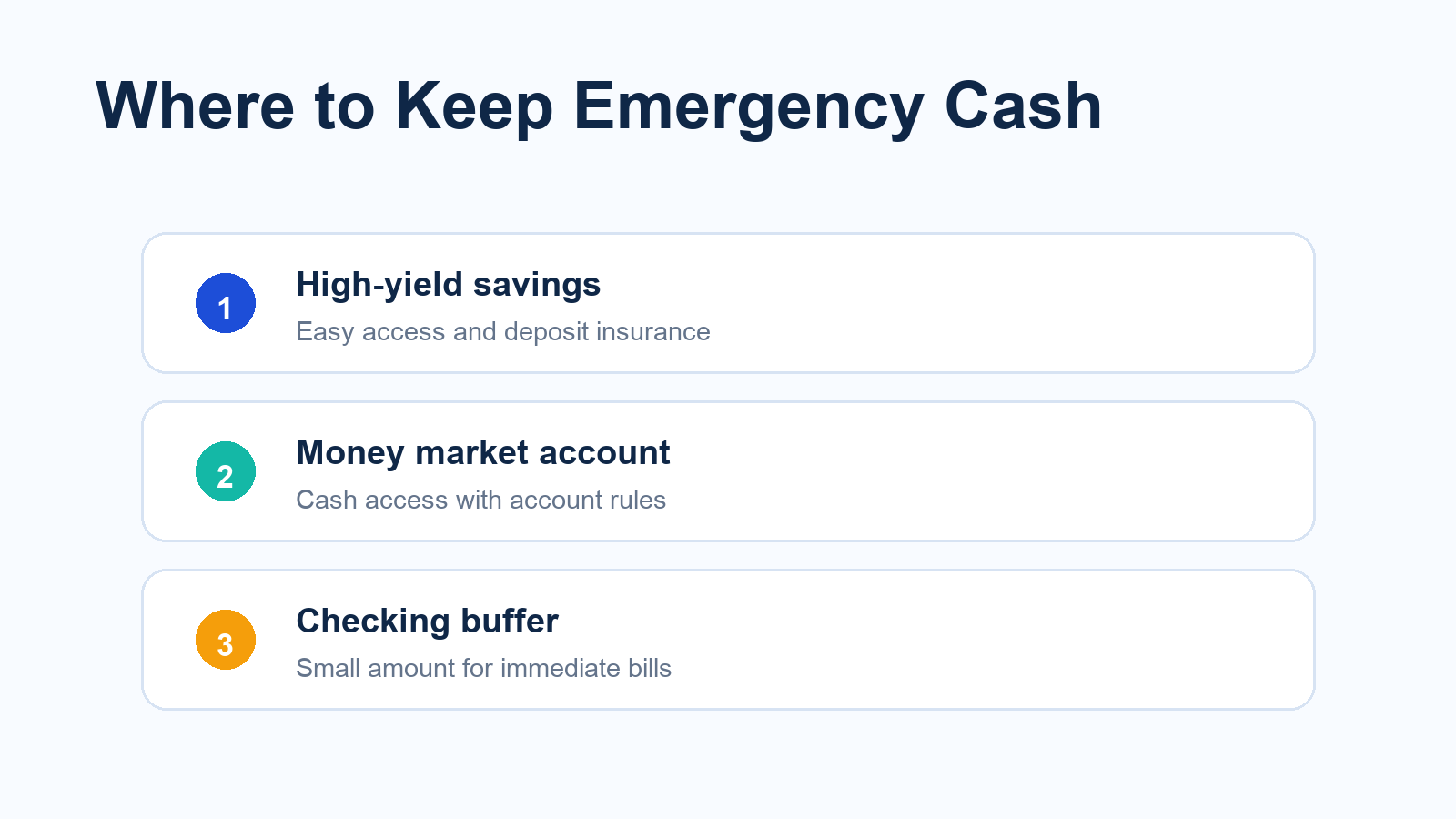
An emergency fund should usually be safe, liquid, and separate from everyday spending. That means you want quick access, but not so much access that the money disappears into routine purchases.
A high yield savings account can work well because it may pay a competitive APY while keeping cash accessible. The rate can change, so do not choose an account only because it has the highest number today.
Deposit insurance matters. The FDIC says eligible deposits at FDIC-insured banks are automatically insured up to at least $250,000 per depositor, per insured bank, for each ownership category. Credit unions may have similar federal protection through the NCUA.
Some people keep a small checking buffer for immediate bills and the rest in savings. Others use a money market deposit account. The key is avoiding products that can lose value right when cash is needed.
For many households, the practical setup is two layers: a small checking buffer for same-day needs and a larger savings balance for real emergencies. This keeps the emergency fund close enough to use, but separate enough that it does not get spent casually.
That is why an emergency fund is usually different from a bond fund, stock fund, or crypto account. A bond can be useful in a portfolio, but bond prices can move. Emergency cash has a more practical job: be there when needed.
How to Build an Emergency Fund Step by Step
Start with a number that feels reachable. If three months of expenses sounds impossible today, aim for the first $250, then $500, then $1,000. Momentum matters.
Automate the process if you can. A small automatic transfer after each paycheck removes the need to make the same decision over and over. This is not glamorous, but it works because it turns saving into a routine.
Use windfalls carefully. A tax refund, bonus, cash gift, or side income can speed up the process. You do not need to put every extra dollar into savings forever, but early progress can make the emergency fund feel real.
Keep the fund separate from investing money. Long-term investing can still matter while you build cash, especially inside retirement accounts such as a 401k or Roth IRA. But if you have no cash cushion, a small emergency fund may deserve priority before extra risk-taking.
Once the fund reaches your target, you can redirect new dollars toward other goals. That might mean paying down debt, investing in an index fund, or building a broader portfolio. The emergency fund is the floor, not the whole house.
Review the balance after major life changes. A new apartment, child, car loan, health issue, or career shift can change the amount of cash that feels responsible. What is an emergency fund supposed to do in those moments? It should match the risks you actually carry now, not the risks you had two years ago.
Common Emergency Fund Mistakes
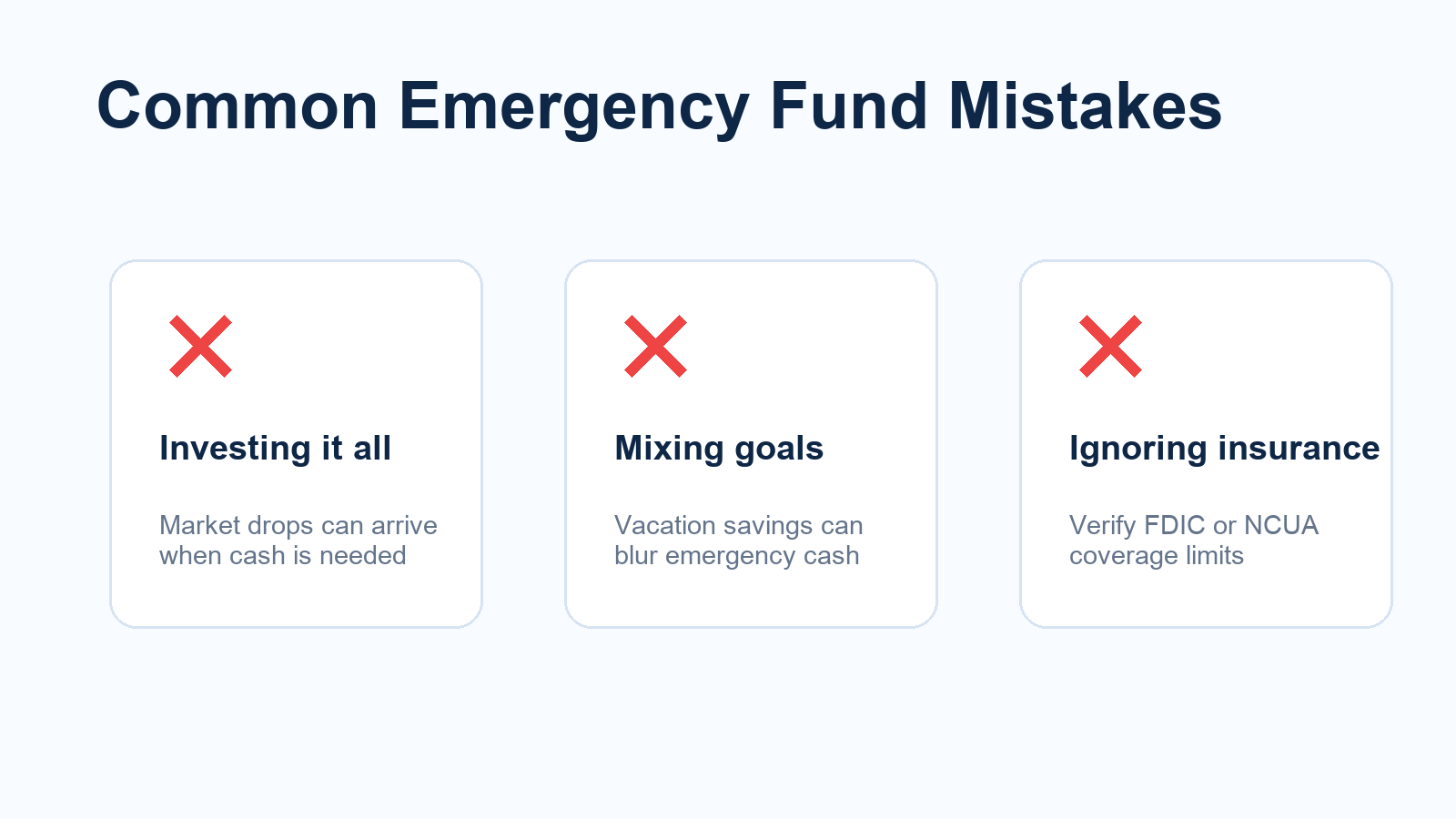
The first mistake is investing the entire emergency fund. Stocks can fall, ETFs can decline, and bond funds can lose value when interest rates move. That risk may be acceptable for long-term goals, but it is not ideal for next month’s surprise bill.
The second mistake is making the fund too hard to access. If the money is locked in a long certificate of deposit or tied up in a slow transfer process, it may not help when the emergency arrives.
The third mistake is mixing emergency money with everyday spending. If the same account pays for groceries, subscriptions, and weekend purchases, the balance may not be there when needed.
The fourth mistake is never refilling it. An emergency fund is meant to be used for real emergencies. After using it, rebuild it as soon as reasonable. The fund is a cycle: save, use when necessary, refill, repeat.
The fifth mistake is holding too much cash forever. Cash is useful, but it can lose purchasing power over time. GSV’s article on cash and inflation explains why money needed for long-term growth may require a different plan.
A good emergency fund is boring by design. If it feels too exciting, too complicated, or too risky, it may be doing the wrong job.
Frequently Asked Questions
What is an emergency fund used for?
An emergency fund is used for unexpected and necessary expenses, such as urgent repairs, medical costs, temporary income loss, or essential bills during a difficult period.
How much emergency fund should I have?
Many people use three to six months of essential expenses as a target. A smaller starter fund can still help while you build toward a larger cushion.
Should I invest my emergency fund?
Usually, emergency cash should not be invested in volatile assets because you may need it during a market downturn. Safety and access are more important than maximum return.
Is a high-yield savings account good for an emergency fund?
It can be a good choice if the account is federally insured, has reasonable access, avoids unnecessary fees, and stays separate from everyday spending.
Should I save an emergency fund before investing?
Many beginners benefit from building at least a small starter emergency fund before investing extra money. After that, saving and investing can often happen side by side.
Final Thoughts
What is an emergency fund? It is a practical cash reserve that protects the rest of your financial life. It gives surprise expenses somewhere to land.
A good emergency fund does not need to be complicated. Keep it safe, liquid, separate, and sized to your real life. Start small if necessary, then build in layers.
Once the cushion is in place, investing can become easier to stick with. You are no longer asking your portfolio to solve every short-term problem. That is the quiet strength of an emergency fund.