
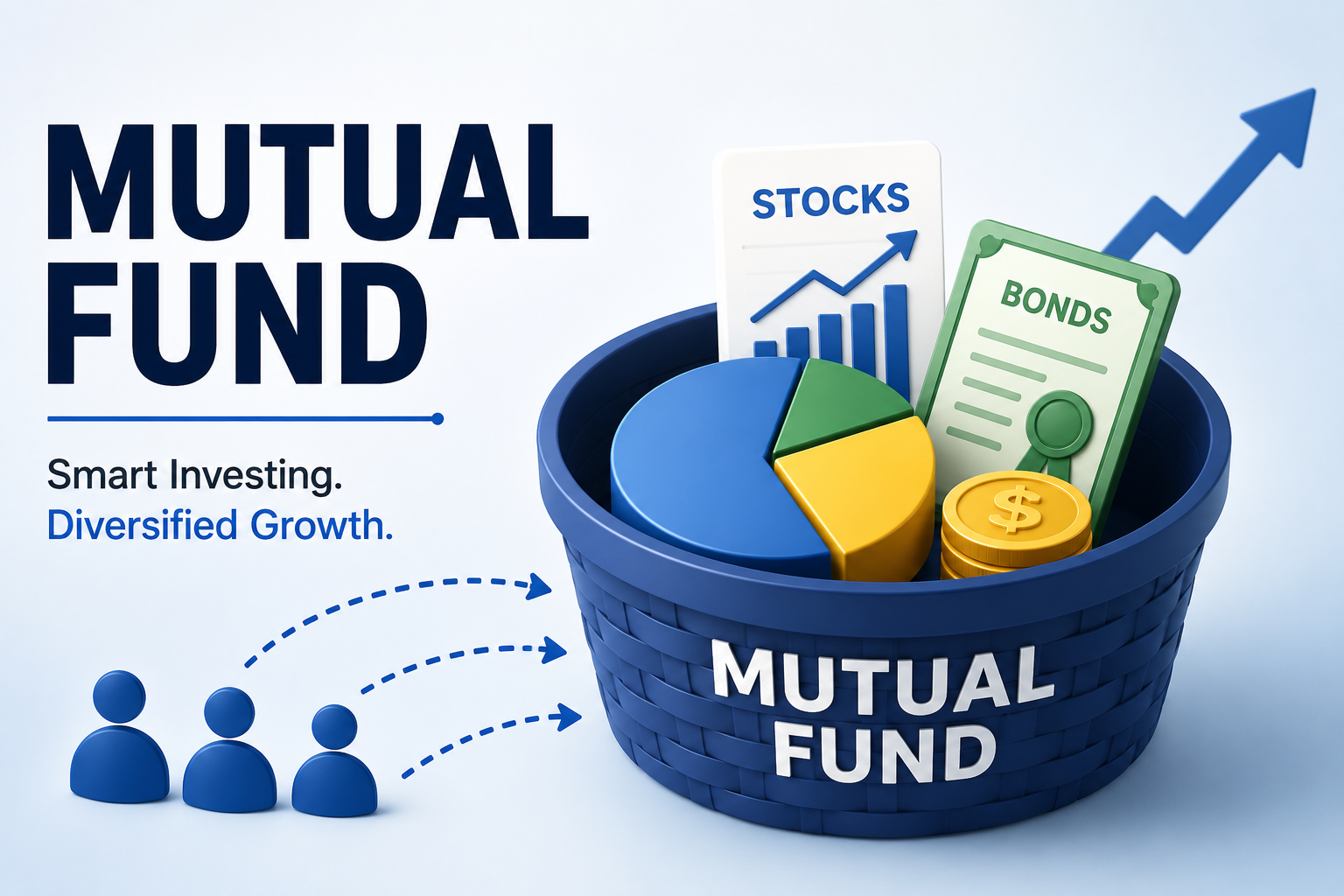
A mutual fund is an investment fund that pools money from many investors and uses that money to buy a portfolio of stocks, bonds, short-term investments, or other securities. When you buy shares of a mutual fund, you own a small piece of the fund’s portfolio rather than one individual company or bond.
That simple structure is why pooled funds remain common in retirement accounts, brokerage accounts, and long-term investing plans. A mutual fund can make diversification easier, but it still has costs, risks, and tax details that beginners should understand before investing.
Key Takeaways
- A mutual fund pools money from many investors into one professionally managed portfolio.
- These funds are usually bought and sold at the fund’s net asset value, or NAV, after the market closes.
- They can hold stocks, bonds, money market instruments, or a mix of assets.
- Costs matter because fund fees reduce the investor’s return over time.
- This investment is not FDIC-insured, and investors can lose money.
What Is a Mutual Fund?
This type of fund is a pooled investment vehicle. Instead of buying every stock or bond yourself, you buy shares of the fund. The fund then owns a basket of investments that match its objective, such as large U.S. stocks, total bond market exposure, dividend-paying companies, or a target retirement year.
Investor.gov describes mutual funds as SEC-registered open-end investment companies that pool money from many investors and invest in a portfolio managed by a registered investment adviser. In everyday language, that means a mutual fund is a shared portfolio with rules, management, disclosures, and costs.
This makes a mutual fund different from buying one stock. A single stock gives you ownership in one company. A diversified stock fund may hold dozens, hundreds, or even thousands of companies. That does not remove risk, but it can reduce the damage caused by one company doing poorly.
If you are still learning the basics of ownership, start with what a stock is. If you want to understand funds that follow a market benchmark, an index fund is one of the most important ideas to learn next.
How a Mutual Fund Works

The fund starts with a stated objective. One fund may try to track the S&P 500. Another may focus on investment-grade bonds. Another may combine stocks and bonds for retirement investors. That objective appears in the fund’s prospectus, along with its risks, fees, strategy, and performance information.
When investors contribute money, the fund manager uses the pool to buy securities that fit the strategy. If the fund owns stocks, it may receive dividends. If it owns bonds, it may receive interest. If it sells an investment for a gain, the fund may have a capital gain. Those results belong to fund shareholders after expenses.
The price of a fund share is based on net asset value, often called NAV. In simple terms, NAV is the value of the fund’s assets minus liabilities, divided by the number of shares. Unlike an ETF, most mutual funds are priced once per business day after the market closes.
That daily pricing can be a feature, not a flaw. A long-term investor who contributes every paycheck may not care about intraday trading. The bigger questions are whether the mutual fund is diversified, low cost, aligned with the investor’s goal, and held inside the right account.
Mutual Fund vs ETF: The Main Differences

A fund and an ETF can both give investors diversified exposure. Both may hold stocks, bonds, or other assets. Both can be actively managed or index-based. The big differences are usually how they trade, how they are priced, how automatic investing works, and how taxes may show up in a taxable account.
| Feature | Mutual Fund | ETF |
|---|---|---|
| Pricing | Usually priced once daily at NAV | Trades during market hours |
| How investors buy | Through the fund, broker, adviser, or retirement plan | Through a brokerage exchange order |
| Automatic investing | Often simple for recurring contributions | Depends on the broker |
| Tax efficiency | Can distribute capital gains | Often more tax efficient, but not always |
| Best fit | Retirement plans and automatic savings | Brokerage flexibility and intraday trading |
For many beginners, this is not a fight where one product wins forever. A person may own pooled funds inside a 401k and ETFs inside a brokerage account. The better question is whether the fund is low cost, diversified, understandable, and useful for the job it is supposed to do.
GSV already has a separate guide to what an ETF is. If you want the direct comparison between two common fund wrappers, index funds vs ETFs is also worth reading after this article.
Common Types of Mutual Funds
These funds are not all the same. Two funds can share the same wrapper while taking completely different risks. Before choosing one, beginners should look at what the fund owns, how it is managed, and what role it is supposed to play in a portfolio.
Stock Mutual Funds
Stock funds invest primarily in companies. Some focus on the broad U.S. market. Others focus on large companies, small companies, dividend stocks, growth stocks, international stocks, or specific sectors. A broad stock fund may be useful for long-term growth, but it can lose value sharply when the market falls.
Bond Mutual Funds
Bond funds invest in debt securities. They may hold government bonds, corporate bonds, municipal bonds, short-term bonds, or longer-term bonds. Bond funds can help diversify a portfolio, but they still carry interest-rate risk and credit risk. To understand the building block, read how bonds work.
Index Mutual Funds
An index version tries to track a market index instead of picking investments one by one. A common example is a fund that tracks the S&P 500. Index versions are often popular because they can be simple, diversified, and relatively low cost.
Target Date Funds
A target date fund is designed around a future year, often a retirement year. It usually holds a mix of stock funds and bond funds, then gradually becomes more conservative as the target date approaches. These funds are common in workplace retirement plans because they offer an all-in-one option.
Money Market Mutual Funds
Money market funds invest in short-term, high-quality debt instruments. Investors often use them for cash-like needs inside a brokerage account. They are not the same thing as a bank savings account, and they are not FDIC-insured. For bank savings context, compare this with a high yield savings account.
Costs, Risks, and Mistakes to Avoid
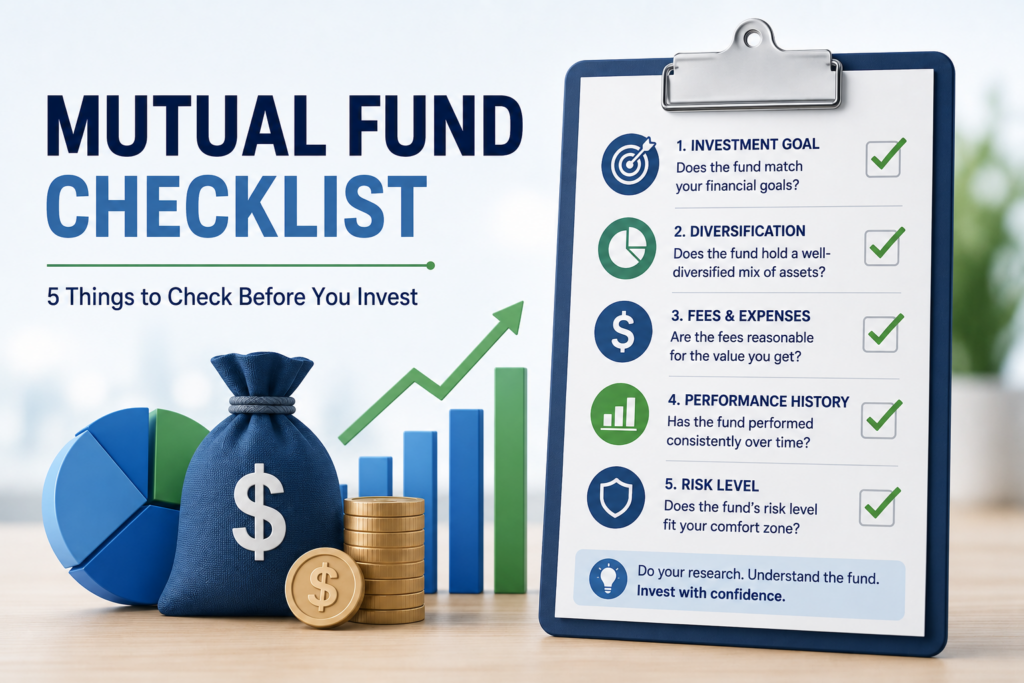
The biggest beginner mistake is assuming every pooled fund is automatically safe because it is diversified. Diversification helps, but the fund can still lose money if its holdings fall. A stock fund can drop with the stock market. A bond fund can decline when interest rates rise or credit conditions worsen.
Costs are another major issue. A fund may charge an expense ratio, sales load, redemption fee, account fee, or other costs depending on the share class and platform. Even a small fee difference can compound over many years. If you want the fee math in plain English, read GSV’s guide to the expense ratio; the same basic idea matters for mutual funds too.
Taxes can also surprise investors in taxable brokerage accounts. A fund may distribute dividends and capital gains even if the investor did not sell shares. That does not make the structure bad, but it means account type matters. A tax-advantaged account can change how fund income and gains are handled.
Another mistake is choosing a fund because of recent performance alone. Past performance can show volatility, but it does not guarantee future returns. A fund that did well last year may have simply owned the hottest part of the market. Beginners should look at the fund’s objective, holdings, fees, manager approach, and fit inside the overall plan.
Finally, avoid collecting overlapping funds without a reason. Owning five funds that all hold the same large U.S. stocks may look diversified on the surface while behaving like one concentrated bet. This is where asset allocation matters more than the number of fund names in an account.
How Beginners Can Use a Mutual Fund Wisely
This type of fund can be useful when it solves a clear problem. For example, a beginner might use a broad stock index fund for long-term growth, a bond fund for income and stability, or a target date fund for a simple retirement account. The fund should match the goal, time horizon, and risk tolerance.
Start by asking what job the fund has. Is it for retirement in 30 years? A medium-term goal? Portfolio stability? Cash management? A fund that is reasonable for one goal may be wrong for another. Money needed soon should not usually sit in an aggressive stock fund.
Next, compare costs. Look at the expense ratio, any sales load, and whether a cheaper share class or similar index fund is available. In a retirement plan, you may be limited to the funds on the menu, but you can still compare the choices available.
Then check the holdings. If the fund name says balanced, income, growth, dividend, or target date, do not stop at the label. Look at what the fund actually owns. A fund’s label can sound conservative while still holding meaningful stock exposure.
Last, keep the mutual fund in context. A good fund is only one piece of a portfolio. If your account also holds ETFs, individual stocks, bonds, or cash, the entire mix matters. A simple written plan can prevent random fund collecting and help you stay consistent when markets get noisy.
FAQ
Is a mutual fund good for beginners?
It can be good for beginners when it is diversified, low cost, easy to understand, and matched to the investor’s goal. It is not automatically safe, and it can still lose money.
Can you lose money in a mutual fund?
Yes. Mutual funds are not FDIC-insured, and their holdings can fall in value. Stock funds, bond funds, and money market funds all have different types of risk.
Is a mutual fund better than an ETF?
Neither is always better. Mutual funds may be convenient for automatic investing and retirement plans. ETFs may offer intraday trading flexibility and potential tax efficiency in taxable brokerage accounts.
How does a mutual fund make money?
It can make money through dividends, interest, capital gains, and increases in the value of its holdings. After expenses, those results affect shareholders through distributions or NAV changes.
What should I check before buying a mutual fund?
Check the objective, holdings, expense ratio, fees, risk level, past volatility, tax considerations, and whether the fund fits your overall asset allocation.
Final Thoughts
This fund structure is one of the most common investing tools for beginners because it turns many individual securities into one fund share. That can make diversification and automatic investing easier, especially inside retirement accounts.
Still, the wrapper is only the beginning. It should be judged by what it owns, what it costs, how it behaves, and whether it fits your plan. Learn the structure first, then compare funds calmly instead of chasing the one with the best recent return.
Official Sources
- Investor.gov: Mutual Funds
- Investor.gov: Mutual Fund and ETF Fees and Expenses
- Investor.gov: Characteristics of Mutual Funds and ETFs
- IRS Publication 550: Investment Income and Expenses