

Wash sale rule is the IRS rule that can disallow an investment loss if you sell stock or securities at a loss and buy the same or substantially identical stock or securities within 30 days before or after the sale. For beginner investors, the rule matters most when selling losing investments in a taxable brokerage account and reinvesting too quickly.
The rule does not mean you can never sell a losing investment. It means the tax loss may not be deductible right away if your replacement purchase is too close and too similar. That distinction is important because the investment decision and the tax reporting decision are connected.
Educational disclaimer: This article is for general education only and is not personal tax, legal, investment, or financial advice. Tax rules can change, and wash sale situations can depend on account type, purchase dates, replacement investments, cost basis records, and your full tax return. Consider working with a qualified tax professional before making tax-sensitive trades.
Key Takeaways
- The wash sale rule can delay or disallow the current tax deduction for a loss.
- The rule generally looks 30 days before and 30 days after the sale that created the loss.
- The key question is whether the replacement purchase is the same or substantially identical.
- Dividend reinvestment, automatic investing, and purchases in other accounts can create surprises.
- A different replacement investment may help keep market exposure while reducing wash sale risk.
Wash Sale Rule: The Basic Definition
The wash sale rule exists to prevent investors from creating a tax loss while staying in essentially the same investment position. Without this rule, an investor could sell a stock at a loss, claim the loss on a tax return, and immediately buy the same stock back.
IRS Publication 550 describes a wash sale as occurring when you sell or trade stock or securities at a loss and, within 30 days before or after the sale, buy substantially identical stock or securities, acquire them in a fully taxable trade, acquire a contract or option to buy them, or have certain IRA-related purchases. The exact facts matter, so this article focuses on the common beginner scenario: selling a losing investment in a taxable account and buying a replacement too close to the sale date.
This topic often appears inside tax loss harvesting, but the search intent is narrower. Tax loss harvesting asks how losses can offset gains. The wash sale rule asks when that loss may be blocked or postponed.
How the 30-Day Window Works
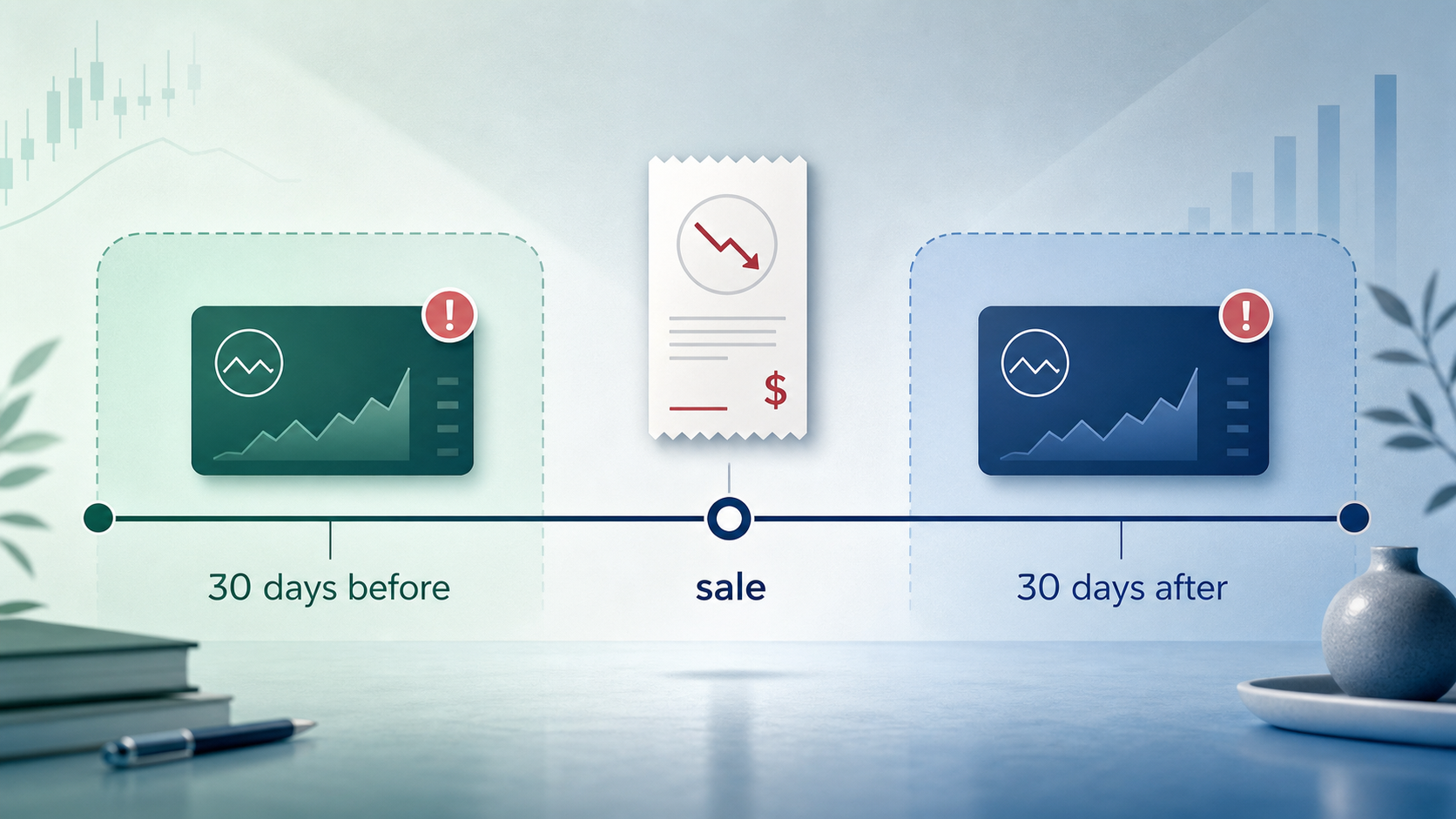
The wash sale rule is not only a rule about what happens after you sell. It also looks backward. If you buy the same or substantially identical stock or securities during the 30 days before the loss sale, that earlier purchase may matter too.
That is why investors often describe the wash sale period as a 61-day window: 30 days before the sale, the sale date itself, and 30 days after the sale. The IRS language focuses on the 30 days before or after the sale, but the practical checklist includes the sale date because that is the event that creates the loss.
Here is a simple timeline:
| Period | What to Check | Why It Matters |
|---|---|---|
| 30 days before the sale | Recent purchases or reinvested dividends | A prior purchase can still trigger the rule |
| Sale date | The investment sold at a loss | This is the loss you hoped to deduct |
| 30 days after the sale | Replacement purchases | Buying back too soon can create a wash sale |
The timing rule is one reason taxable investors should check automatic investments before selling. A small dividend reinvestment can complicate a much larger tax-loss trade if it buys the same or substantially identical security during the window.
What Counts as Substantially Identical?
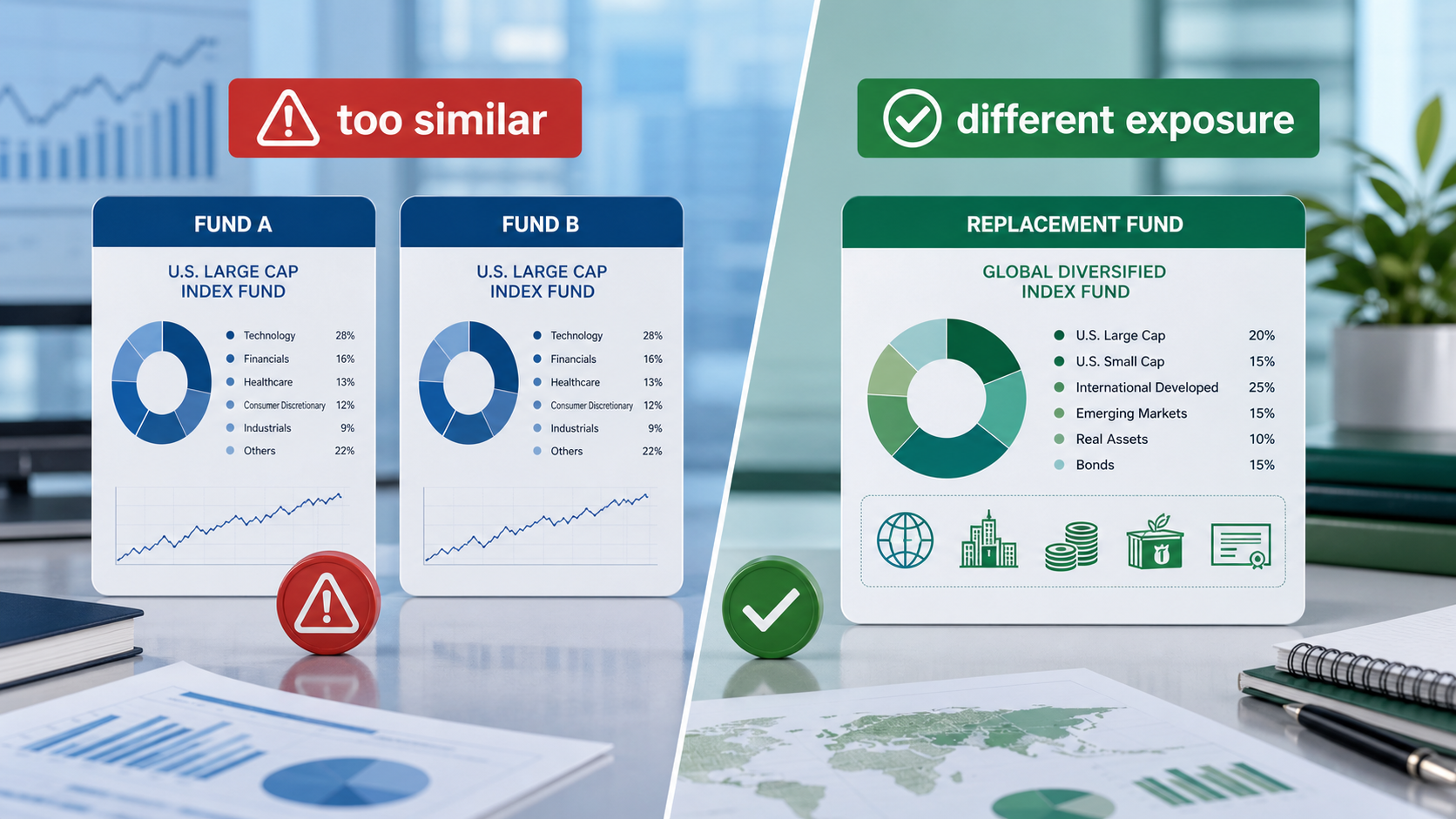
The hardest part of the wash sale rule is the phrase substantially identical. Buying the exact same stock is the easiest case. If you sell shares of one company at a loss and buy the same company back inside the window, the risk is obvious.
Funds can be more nuanced. If two ETFs track the same index and hold nearly the same securities in nearly the same proportions, many investors treat that pairing as higher risk. If two funds have meaningfully different indexes, objectives, holdings, or strategies, the analysis may be different. The IRS does not provide a simple public list that labels every ETF or mutual fund pair as allowed or not allowed.
That uncertainty is why replacement selection should be practical, not casual. A beginner comparing ETFs and mutual funds should look beyond the ticker symbol and read what the fund actually tracks. Understanding how index funds work can also make the replacement decision clearer.
How a Wash Sale Affects Your Taxes
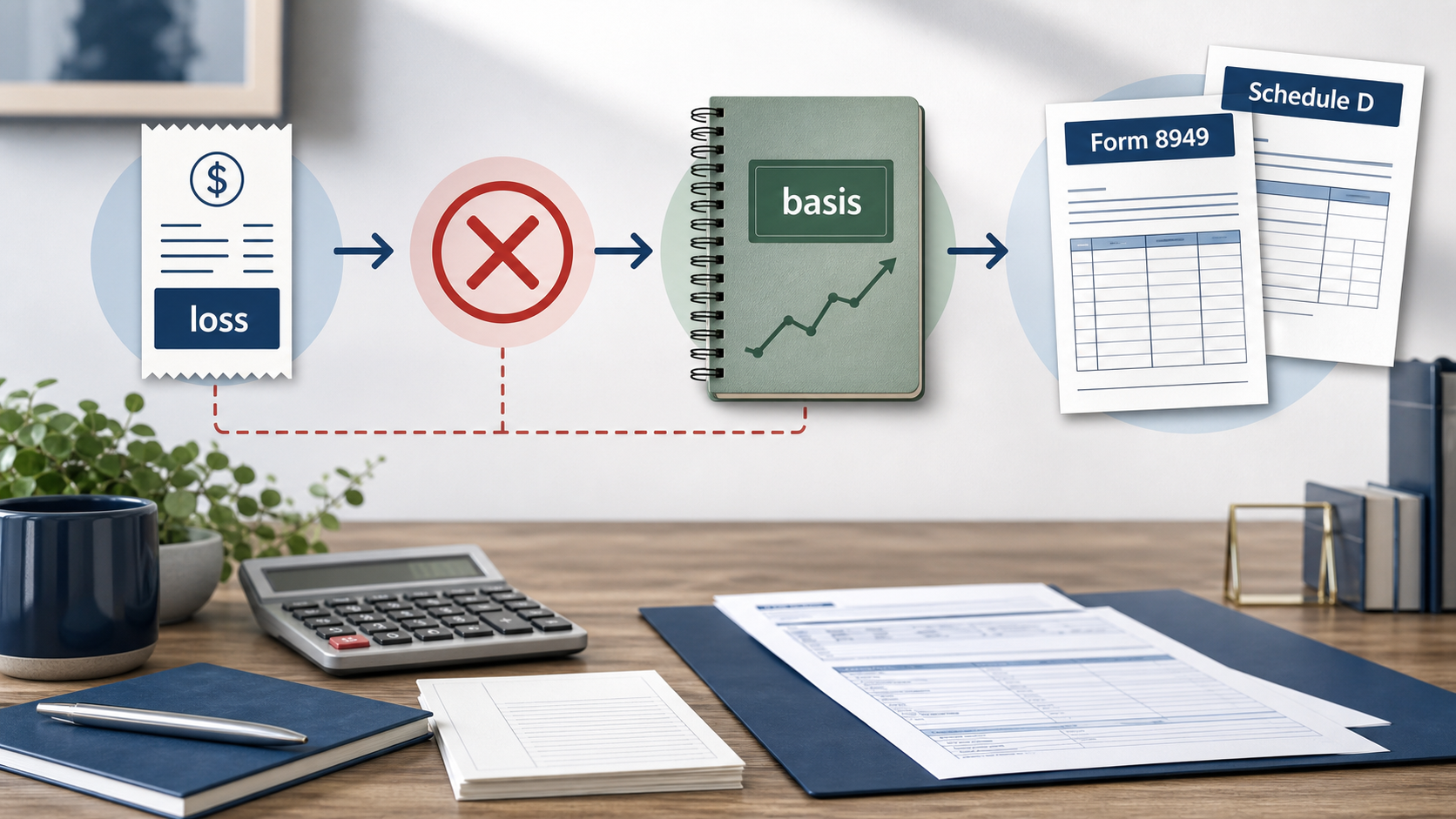
When the wash sale rule applies, the loss is generally disallowed for current tax purposes. In many common taxable-account situations, the disallowed loss is added to the cost basis of the replacement shares. That basis adjustment can affect the gain or loss when the replacement investment is eventually sold.
This is why a wash sale is often better understood as a timing problem than a disappearing-loss problem, although some account combinations can be more complicated. The loss you expected to use immediately may be deferred through the replacement investment’s basis instead.
Capital gains and losses are reported through tax forms such as Form 8949 and Schedule D. If you are still learning the tax side of investing, it helps to understand capital gains tax before trying to manage losses intentionally.
Common Wash Sale Rule Mistakes
The first common mistake is buying the same investment back too soon. An investor sells a stock at a loss on Monday, feels nervous about missing a rebound, and buys it back on Friday. That may preserve market exposure, but it can damage the tax-loss goal.
The second mistake is forgetting about automatic purchases. Dividend reinvestment plans, recurring ETF buys, and robo-advisor trades can happen quietly. If one of those transactions buys the same or substantially identical security during the window, the result may surprise the investor later.
The third mistake is checking only one account. A taxable account is the usual place where the loss sale happens, but replacement purchases in another account may still be relevant. Publication 550 specifically flags certain IRA-related transactions, so investors should not assume account separation always solves the problem.
The fourth mistake is replacing a sold investment with something that no longer fits the portfolio. Avoiding a wash sale does not help if the new holding is expensive, concentrated, or inconsistent with the investor’s plan. Tax management should support asset allocation, not override it.
Wash Sale Rule Examples for Beginners
Example one: you sell a stock at a $1,000 loss and buy the same stock back 10 days later. That is the classic wash sale rule problem. The current loss may be disallowed, and basis adjustments may apply to the replacement shares.
Example two: you sell a broad-market ETF at a loss and buy another fund that tracks the exact same index the next day. This can raise substantially identical concerns because the economic exposure may be very similar. A different fund with a different index or strategy may reduce that concern, but you should evaluate the facts carefully.
Example three: you sell a losing ETF in a taxable account, but an automatic dividend reinvestment buys a small amount of the same ETF inside the window. Even a small purchase can create a partial wash sale issue. The dollar amount may be small, but it can still create reporting complexity.
Example four: you sell one investment and hold cash for 31 days before buying it again. This may avoid the basic 30-day repurchase problem, but it also leaves you out of the market during that period. Some investors prefer a non-identical replacement investment so they do not abandon their long-term exposure.
How to Avoid Accidental Wash Sales
The safest beginner approach is to plan before selling. Look at recent purchases, scheduled recurring investments, dividend reinvestment settings, and other accounts before placing the loss sale. A few minutes of review can prevent a messy tax surprise.
If the sale is part of a broader portfolio cleanup, think about the replacement investment first. A replacement should preserve the spirit of your plan without being the same or substantially identical security. For fund investors, this can mean comparing indexes, holdings, strategy, and costs, including the ETF expense ratio.
Also keep records. Your brokerage may identify some wash sales, especially within the same taxable account, but it may not catch every cross-account or household-level issue. Good records make tax filing easier and help a professional understand what happened.
Finally, remember that tax planning should not create a worse investment plan. If selling a loss changes your target mix, revisit portfolio rebalancing so the portfolio remains aligned with your long-term goals.
Beginner Checklist Before Selling at a Loss
- Confirm the loss is in a taxable account, not only inside a retirement account.
- Check purchases of the same investment during the past 30 days.
- Pause automatic reinvestment or recurring buys if they could create a problem.
- Review spouse, IRA, and other account activity when relevant.
- Choose a replacement investment before placing the sale.
- Document the sale date, replacement date, security names, and cost basis.
- Ask a tax professional when the dollar amount is large or the facts are complex.
This checklist does not eliminate every gray area, but it reduces avoidable mistakes. The goal is to make the tax move deliberate instead of discovering the wash sale rule after the trade has already happened.
Final Thoughts
The wash sale rule is one of the most important tax rules for investors who sell losing positions in taxable accounts. It does not prevent you from changing investments, but it can prevent you from claiming a loss right away if your replacement purchase is too similar and too close to the sale date.
For most beginners, the best approach is simple: understand the 30-day window, avoid rushed repurchases, choose replacement investments carefully, and keep records. When a loss is large or the account setup is complicated, the wash sale rule is a good reason to get professional tax guidance before trading.
Frequently Asked Questions About the Wash Sale Rule
What is the wash sale rule?
The wash sale rule can disallow a tax loss when you sell stock or securities at a loss and buy the same or substantially identical stock or securities within 30 days before or after the sale.
How many days does the wash sale rule cover?
It covers purchases during the 30 days before and the 30 days after the loss sale. Including the sale date, investors often describe the practical review period as 61 days.
Does the wash sale rule apply to ETFs and mutual funds?
It can. ETFs and mutual funds are securities, so fund investors should be careful when replacing one fund with another fund that may be substantially identical.
Can I avoid a wash sale by buying a different investment?
Buying a genuinely different investment may reduce wash sale risk, but the facts matter. Investors often compare indexes, holdings, objectives, and strategies before choosing a replacement.
Do brokers catch every wash sale?
Not necessarily. Brokers may identify wash sales within the same account, but cross-account activity, household activity, and certain retirement-account purchases can be harder to catch automatically.
Continue Learning
Ready for the next step? Explore these related investing guides.