
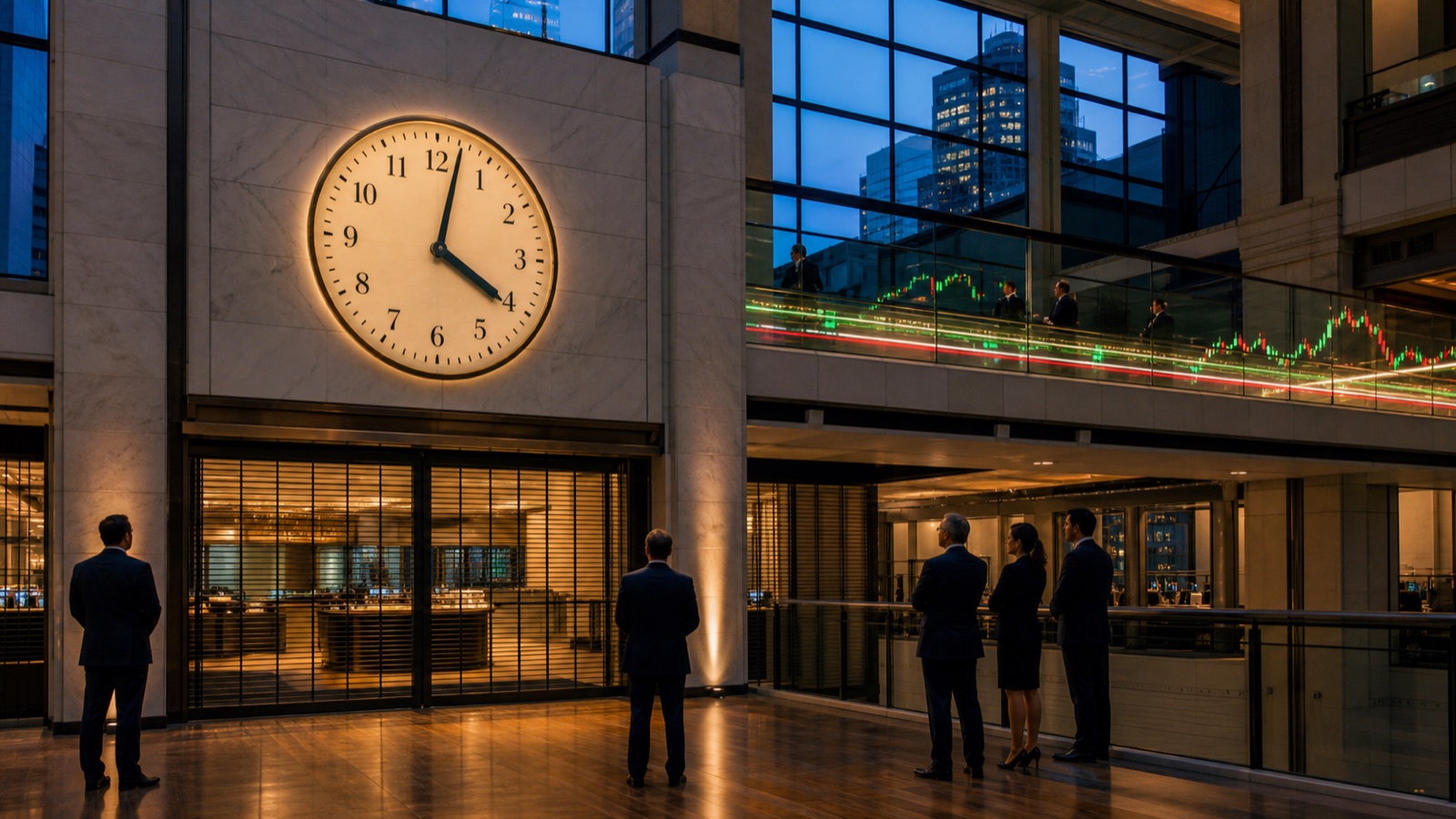
Have you ever watched a stock jump after the closing bell and felt you had to buy before morning? After-hours trading lets investors act on earnings and breaking news after the regular U.S. market closes at 4:00 p.m. Eastern Time. The access is real, but the price on the screen may come from a much thinner market than the one you saw five minutes before the bell.
That difference matters. Fewer buyers and sellers can mean a wider spread, a partial fill, or a price that looks convincing at 5:00 p.m. and disappears when regular trading resumes. Speed feels useful in the moment; sometimes the better decision is to slow down.
From the publisher: I remember seeing a stock rise after the market had closed and wondering, “Why is it moving now? Did something happen? Should I be trying to get in too?” I felt the urgency before I even understood exactly how after-hours orders worked, so I started searching for answers online. I did not place the trade that night, but I still remember the feeling. This guide is written for that moment—when the price is moving faster than your understanding.
Before looking at the seven risks, picture one trade you might actually make. What price would you refuse to pay? How much could the quote move before the order filled? And would waiting until the next morning truly damage your long-term plan?
Key Takeaways
- Regular U.S. stock-market hours are generally 9:30 a.m. to 4:00 p.m. Eastern Time.
- After-hours sessions vary by broker and usually rely on electronic trading systems rather than one centralized closing auction.
- Lower liquidity can create wider bid-ask spreads, larger price gaps, and partial or missed fills.
- Many brokers accept only limit orders in extended hours, and eligible securities may be restricted.
- An after-hours move can continue, shrink, or reverse when regular trading resumes.
What Is After Hours Trading?
After-hours trading is stock trading that occurs after the regular session ends. FINRA notes that regular hours for listed stocks run from 9:30 a.m. to 4:00 p.m. Eastern Time. Broker-specific extended sessions commonly continue into the evening, but exact times, order types, and eligible securities differ.
Orders are matched electronically. A buyer posts a bid, a seller posts an offer, and a trade occurs when prices meet. The mechanism sounds identical to normal trading, but the quality of the market can change because fewer buyers, sellers, and market makers may be participating.
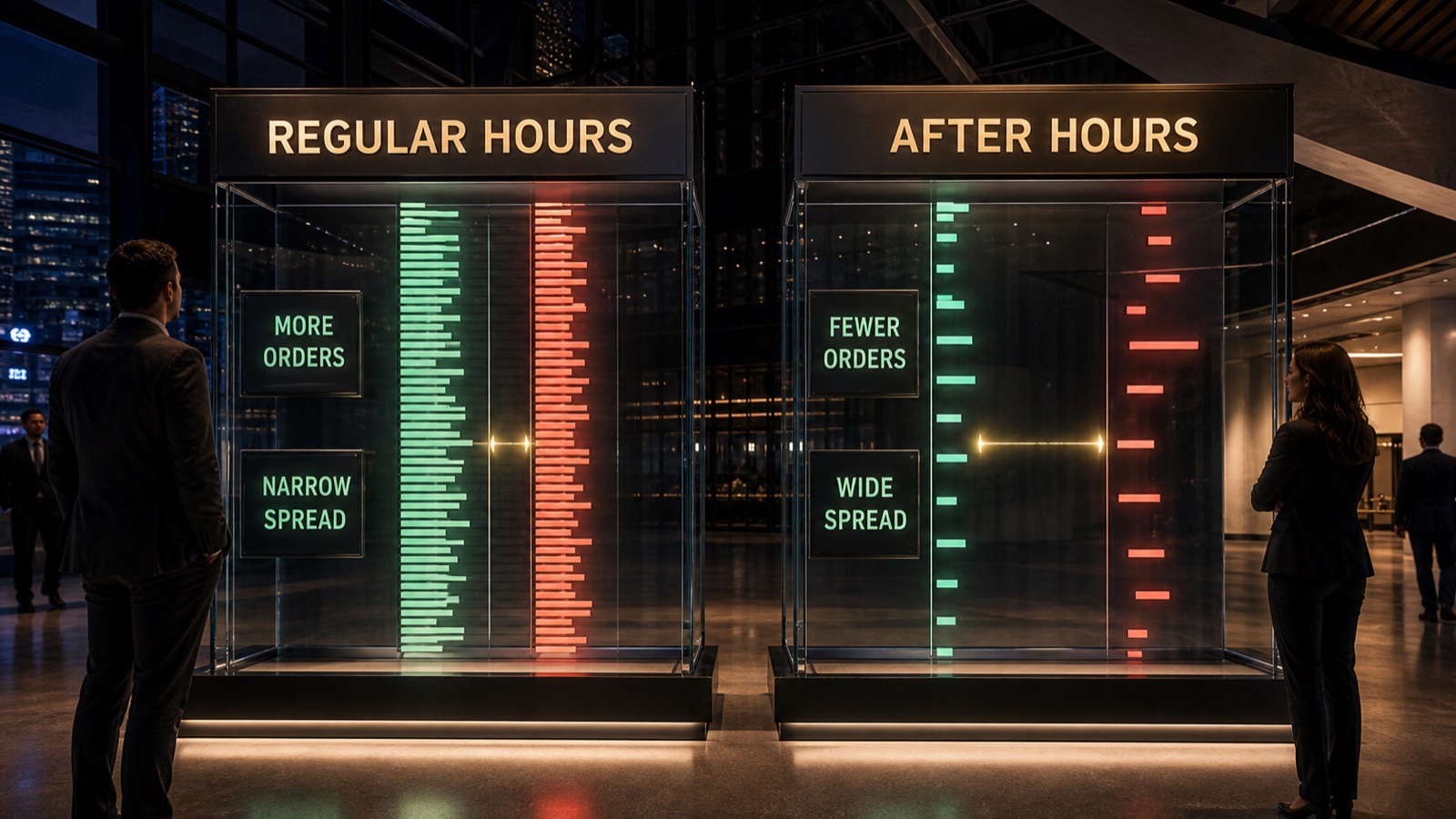
A stock’s official closing price generally comes from the regular session, not the last trade made later that evening. Investor.gov warns that some financial publications and data vendors may display an after-hours transaction as a closing price, so readers should check what a quote actually represents.
After-hours trading is one part of extended-hours trading. Pre-market trading happens before the regular opening bell, while overnight offerings may be available through selected brokers and venues. Access is not uniform, and a broker can route, limit, or reject orders according to its own rules.
Why Stock Prices Move After the Market Closes
Information does not stop at 4:00 p.m. Companies frequently release earnings, mergers, leadership changes, and forecasts outside regular hours. Investors immediately revise what they believe the business is worth, and the available orders establish a new price.
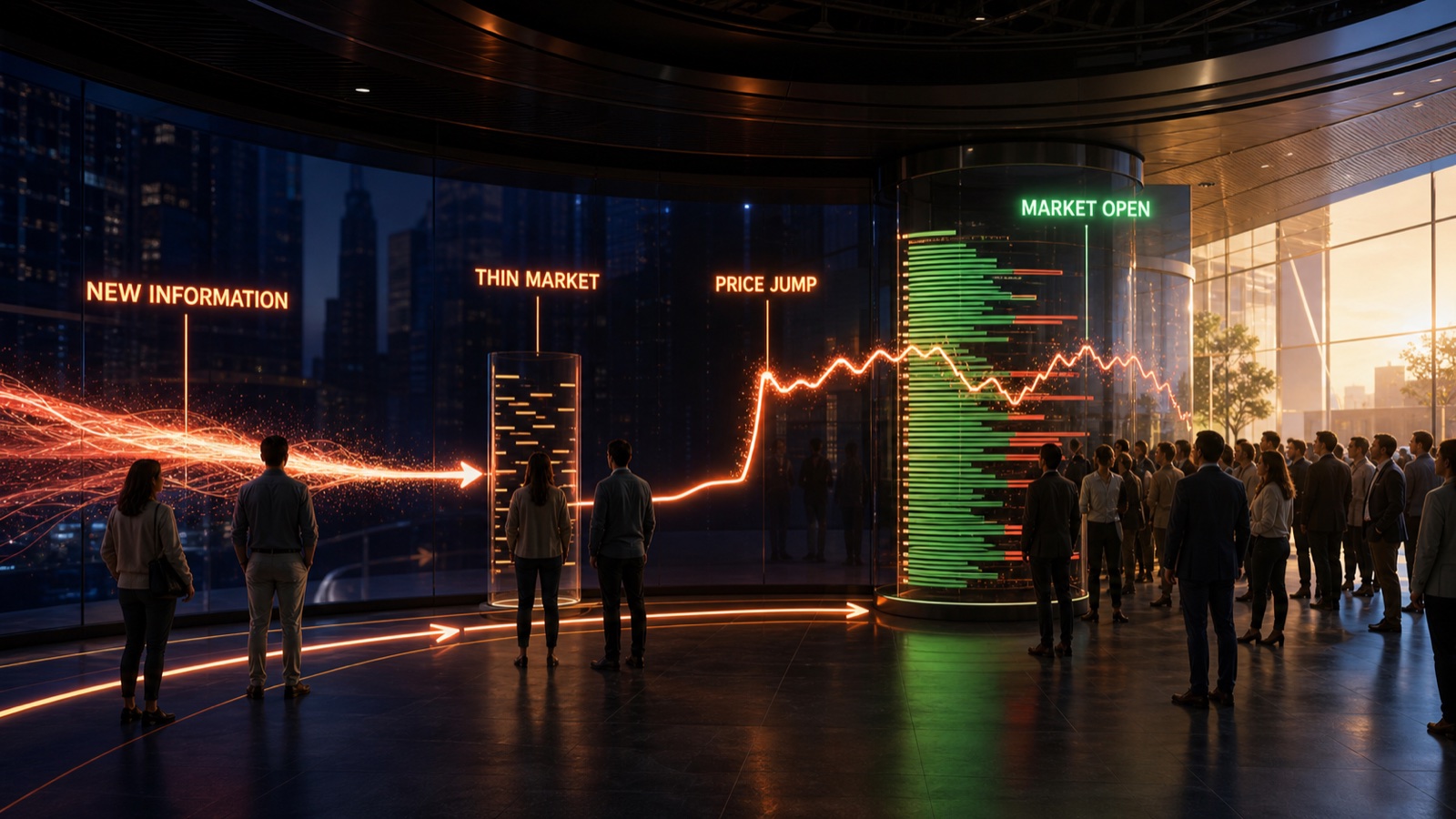
Suppose a company closes at $50 and then reports much stronger revenue than expected. If the nearest sellers now want $54 while buyers are willing to pay that amount, the next trade may occur near $54. The stock did not teleport; the order book repriced because new information changed supply and demand.
Low liquidity can magnify the move. During normal hours, many orders may exist between $50 and $54. In after-hours trading, those intermediate prices may have few or no sellers. One modest order can cross several price levels and make the last trade look dramatic.
This process is common during earnings season. The first reaction may focus on a headline number, then change as investors read guidance, listen to management, and compare the results with expectations.
7 After-Hours Trading Risks
As you read these, do not ask only whether a risk exists. Ask whether you can see it in the quote in front of you. A spread, order size, and limit price tell you more about the immediate trade than a flashing percentage change.
1. Lower Liquidity
Liquidity describes how easily an asset can be traded without moving its price substantially. With fewer orders available, a trade that would be routine during the day may move through several price levels at night. Small and less-followed stocks can be especially thin.
2. Wider Bid-Ask Spreads
The bid is the highest current buying price, and the ask is the lowest current selling price. Their difference can widen in after-hours trading, increasing the hidden cost of entering or exiting. GSV’s guide to the bid-ask spread explains why the last traded price is not necessarily the price available for your next order.
3. Price Volatility
A thin order book can make prices jump quickly. Earnings headlines may also be incomplete or misunderstood, causing rapid reversals as more details emerge. A percentage move is not proof that the market has reached a stable conclusion.
4. Uncertain Execution
A limit order controls the worst price you will accept, but it may not fill. It may execute only partially if too few shares are available. Some orders expire at the end of the extended session instead of carrying into the next day.
5. Fragmented Prices
Different electronic venues may display different liquidity and quotes. Your broker may not access every available venue, so a better price might exist elsewhere. FINRA specifically lists linkage and price-variation risks among the issues investors should understand.
6. News and Information Gaps
Professional participants may have faster feeds, specialized models, and teams reading a release in real time. A beginner reacting to one headline can trade against investors who have already reviewed margins, guidance, segment data, and the earnings-call transcript.
7. The Opening Price Can Be Different
An evening move does not guarantee the next regular-session opening. Overnight news, analyst updates, overseas markets, and a larger morning order book can extend or reverse the move. FINRA notes that pricing dynamics at the open may differ from the previous extended session.
After-Hours Trading vs Regular Hours
| Feature | Regular Session | After Hours |
|---|---|---|
| Typical time | 9:30 a.m.–4:00 p.m. ET | Broker-specific after 4:00 p.m. |
| Participation | Generally highest | Usually lower |
| Bid-ask spread | Often narrower | Can be wider |
| Available depth | Often greater | Can be shallow |
| Order types | Broader selection | Often limited to limit orders |
| Price stability | Usually more price discovery | Can jump or reverse quickly |
The comparison is not absolute. A heavily traded large-cap stock immediately after major news can have meaningful volume, while an obscure stock can be illiquid even during regular hours. Investors should examine the actual spread and displayed depth rather than relying only on the clock.
Market orders prioritize execution rather than price. Because the order book may be thin, many brokers do not allow them in extended sessions. GSV’s limit order guide explains how price protection works and why a protected price still does not guarantee a fill.
Worked Example: Last Price vs the Price You Can Actually Get
Consider a hypothetical stock that closed at $50.00. At 5:15 p.m., the screen still shows a last trade of $50.20, but the live after-hours quote is $49.40 bid and $50.80 ask. These figures are an educational example, not a forecast or a recommendation.
| Number on the Screen | Example | What It Means |
|---|---|---|
| Regular-session close | $50.00 | The official closing reference, not a guaranteed evening price |
| Last after-hours trade | $50.20 | The price of an earlier transaction; it may no longer be available |
| Current bid | $49.40 | The highest displayed price a buyer is offering |
| Current ask | $50.80 | The lowest displayed price a seller is asking |
| Bid-ask spread | $1.40 | $50.80 minus $49.40, or 2.8% of the $50.00 close |
A buyer who assumes $50.20 is available could instead face a $50.80 ask. For 100 shares, that is $5,080—$60 more than 100 shares at the displayed last-trade price. A buy limit at $50.30 prevents a fill above $50.30, but it may receive no fill if sellers refuse that price. The choice is therefore not “safe order versus risky order”; it is price control versus execution certainty.
Before acting, read the quote in this order: current bid, current ask, displayed size, your limit price, and the order’s expiration rule. If one of those is unclear, waiting for regular hours is a valid decision.
A 30-Second Check Before You Trade
Pause before opening the order ticket. You do not need a complicated system; you need answers to four plain questions: What are the current bid and ask? How many shares are actually available? What is the most you are willing to pay? What new fact makes the trade necessary tonight?
GSV editorial view: if you cannot answer all four, waiting for regular hours is usually the cleaner decision for a long-term investor. That is not fear or indecision. It is refusing to pay an unknown price for speed.
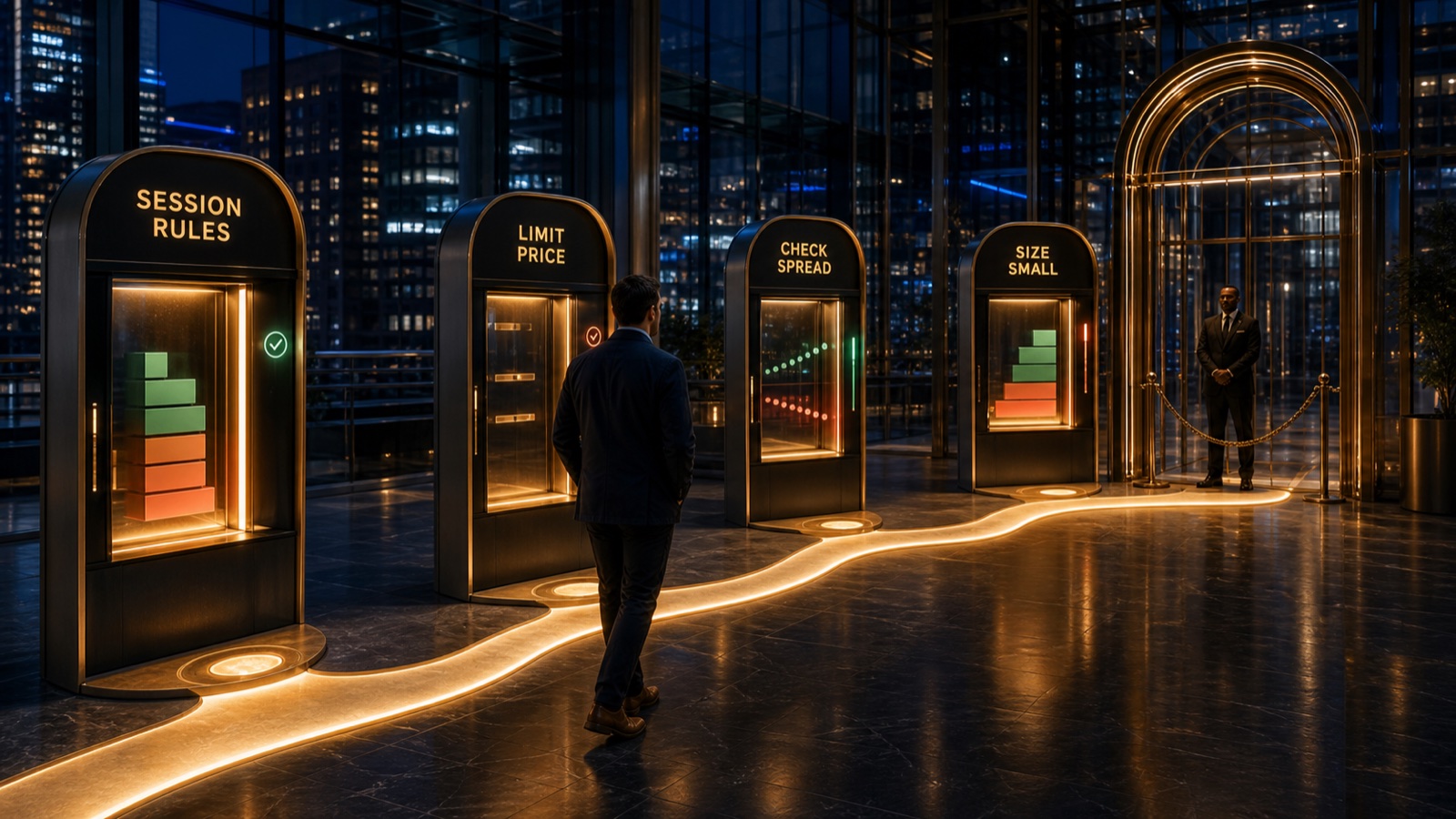
Check Your Broker’s Rules
Confirm session times, eligible securities, allowed order types, routing, expiration, fees, and whether the order carries into regular hours. Do not assume another broker’s rules apply to your account.
Use a Deliberate Limit Price
A limit price sets the maximum you will pay or minimum you will accept. Base it on the live bid, ask, depth, and your estimate of value—not on the last trade alone. Remember that price protection comes with execution uncertainty.
Inspect the Spread and Order Size
Imagine the last trade says $50, but the live quote shows a $48 bid and a $52 ask. Buying 100 shares at $52 means committing $5,200—$200 above the price that first caught your eye. That $4 spread is not background noise; it is part of the trade. Review how many shares are displayed at each level before deciding the quote is usable.
Reduce the Cost of Being Wrong
If you choose to participate, smaller position sizing can limit damage from a gap or reversal. Your decision should fit your risk tolerance, time horizon, and portfolio concentration.
Long-term investors are not required to trade immediately. Waiting for the regular session can provide more participants and more time to read the full disclosure. Delayed action can be a rational choice rather than a missed opportunity.
When After Hours Trading May Be Useful
Extended access can help an investor respond to material company news, manage a known risk, or enter a carefully priced order when regular hours are inconvenient. It can also show how the market is initially interpreting information before the next opening.
Those benefits do not erase the seven risks. After-hours trading is most defensible when the investor understands the security, has read the information, knows the broker’s rules, and accepts that the order may not fill.
It is less suitable when the decision is driven by fear of missing out, a social-media headline, or a desire to recover a loss quickly. A stop-loss order also does not guarantee a particular execution price and may behave differently outside regular hours depending on broker rules.
Common Beginner Mistakes
- Treating the last trade as fair value. One small transaction can print far from the broader market.
- Ignoring the bid and ask. The spread reveals the prices you can actually trade.
- Chasing the first earnings move. Guidance or call details can reverse the headline reaction.
- Assuming a limit order will fill. Price protection does not guarantee execution.
- Using normal position size. Thin liquidity can increase slippage and gap risk.
- Expecting the move to hold overnight. The opening auction can establish a different price.
Frequent reaction trading can also increase taxes, transaction costs, and behavioral mistakes. A diversified long-term plan, described in GSV’s guide to diversification, often matters more than winning one extended-hours trade.
How This Guide Was Verified
- FINRA: Extended-Hours Trading—Know the Risks
- Investor.gov: Closing Price
- Investor.gov: Trading Halts and Delays
Conclusion
Would you still place the order if the after-hours quote disappeared and you had to defend the decision using the company’s actual news, the spread, and your limit price? If the answer is no, the trade is probably being driven by the screen rather than the plan.
After-hours trading can be useful, but long-term investors rarely need to win the first few minutes after an announcement. Read the full release. Check what the market is really offering. Morning will bring more participants—and often a clearer price.
Frequently Asked Questions About After-Hours Trading
What time does after-hours trading start?
It begins after the regular U.S. stock session ends at 4:00 p.m. Eastern Time. The closing time and access rules vary by broker and trading venue.
Why are after-hours prices so volatile?
There are often fewer buyers and sellers, wider spreads, and less order depth. New information such as earnings can therefore move through available prices quickly.
Can I use a market order after hours?
Many brokers restrict extended-hours orders to limit orders, but policies differ. Check your broker’s current rules before submitting an order.
Does an after-hours price become the next opening price?
Not necessarily. New information and a larger set of orders can produce a different price when regular trading resumes.
Continue Learning
Ready for the next step? Explore these related investing guides.
Disclaimer
This article is for general educational purposes only and is not personalized financial, tax, or legal advice. After-hours trading can involve substantial price, liquidity, and execution risk. Review your broker’s current disclosures and consider your objectives, financial situation, and risk tolerance.