
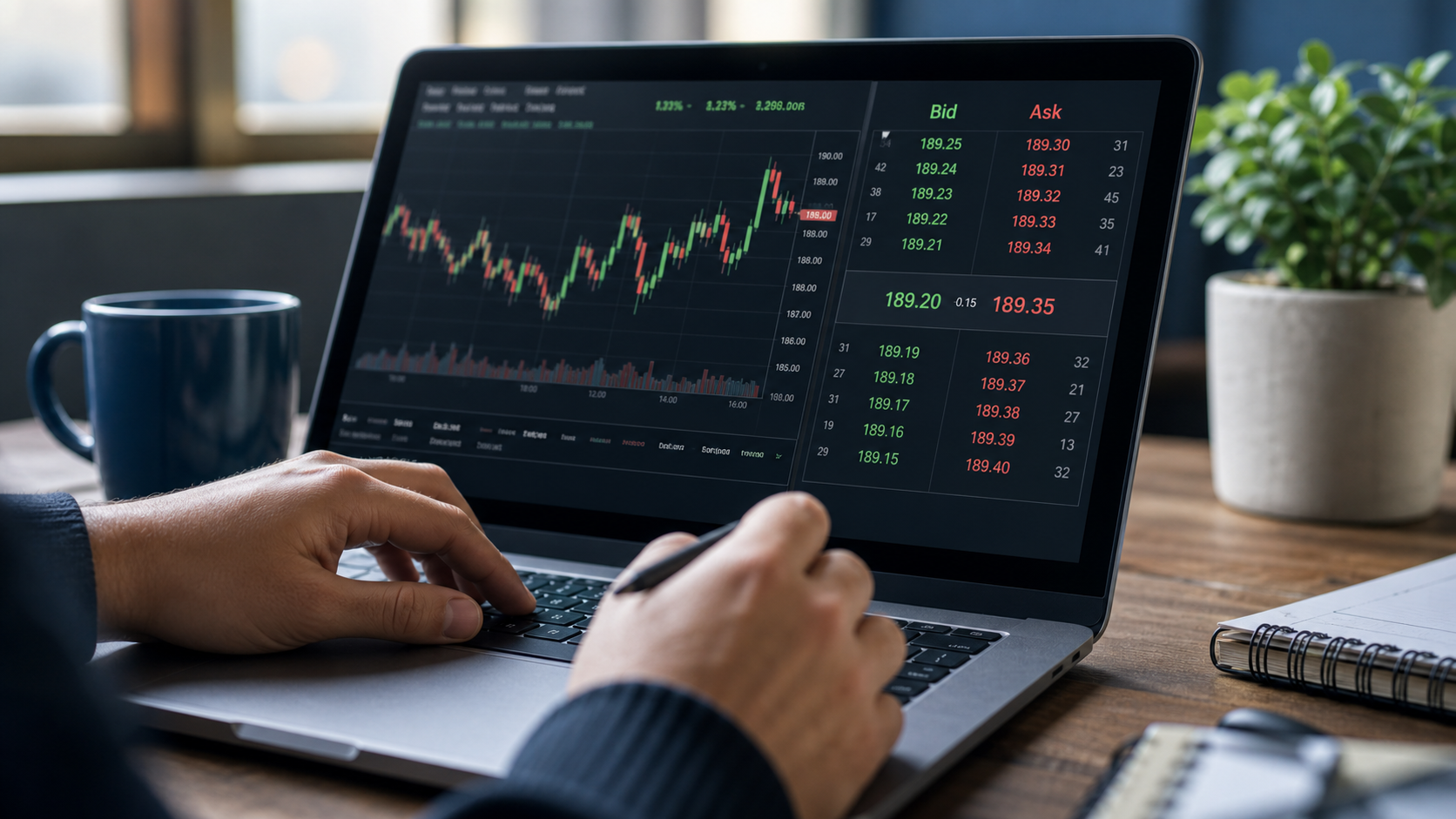
What is a bid-ask spread? It is the small gap between what a buyer is offering and what a seller is willing to accept. Buyers want to pay a little less. Sellers want to receive a little more. A trade happens only when two orders can meet.
If you have watched an order book move up and down, you may already understand the idea without knowing the English term. It can feel like a quiet negotiation: “How much do I need to offer for someone to sell to me?” or “How high can I ask before buyers walk away?” The highest current buying offer is the bid. The lowest current selling offer is the ask. The distance between them is the spread.
From the publisher: I once placed a limit buy order about 500 won below the price sellers wanted. I thought the price might come down just enough for my order to fill. The bids and asks kept moving, but they never met my price. My order expired without a purchase. When the stock jumped at the next market open, the few hundred won I had tried to save had turned into a difference of several thousand—or even tens of thousands—of won.
That memory taught me the part beginners often miss: choosing a price and getting a trade are two different things. A limit order protects the price you set, but it cannot promise that anyone will accept it. This guide explains that trade-off in everyday language.
Key Takeaways
- The bid price is what buyers are willing to pay; the ask price is what sellers are willing to accept.
- The bid-ask spread is the difference between those two prices.
- A narrow spread usually signals stronger liquidity, while a wide spread can increase trading costs.
- Spreads can change during volatile markets, outside regular trading hours, or in less actively traded securities.
- Beginners can reduce spread-related mistakes by using limit orders carefully and avoiding unnecessary trading.
What Is a Bid-Ask Spread?
A bid-ask spread is the difference between the bid price and the ask price quoted for a stock, ETF, bond, option, or other tradable security. The bid is the price a buyer is willing to pay. The ask is the price a seller is willing to receive.
If a stock has a bid of $49.98 and an ask of $50.02, the bid-ask spread is $0.04. That does not mean every investor pays exactly four cents as a separate fee. Instead, the spread is built into the prices available in the market at that moment.
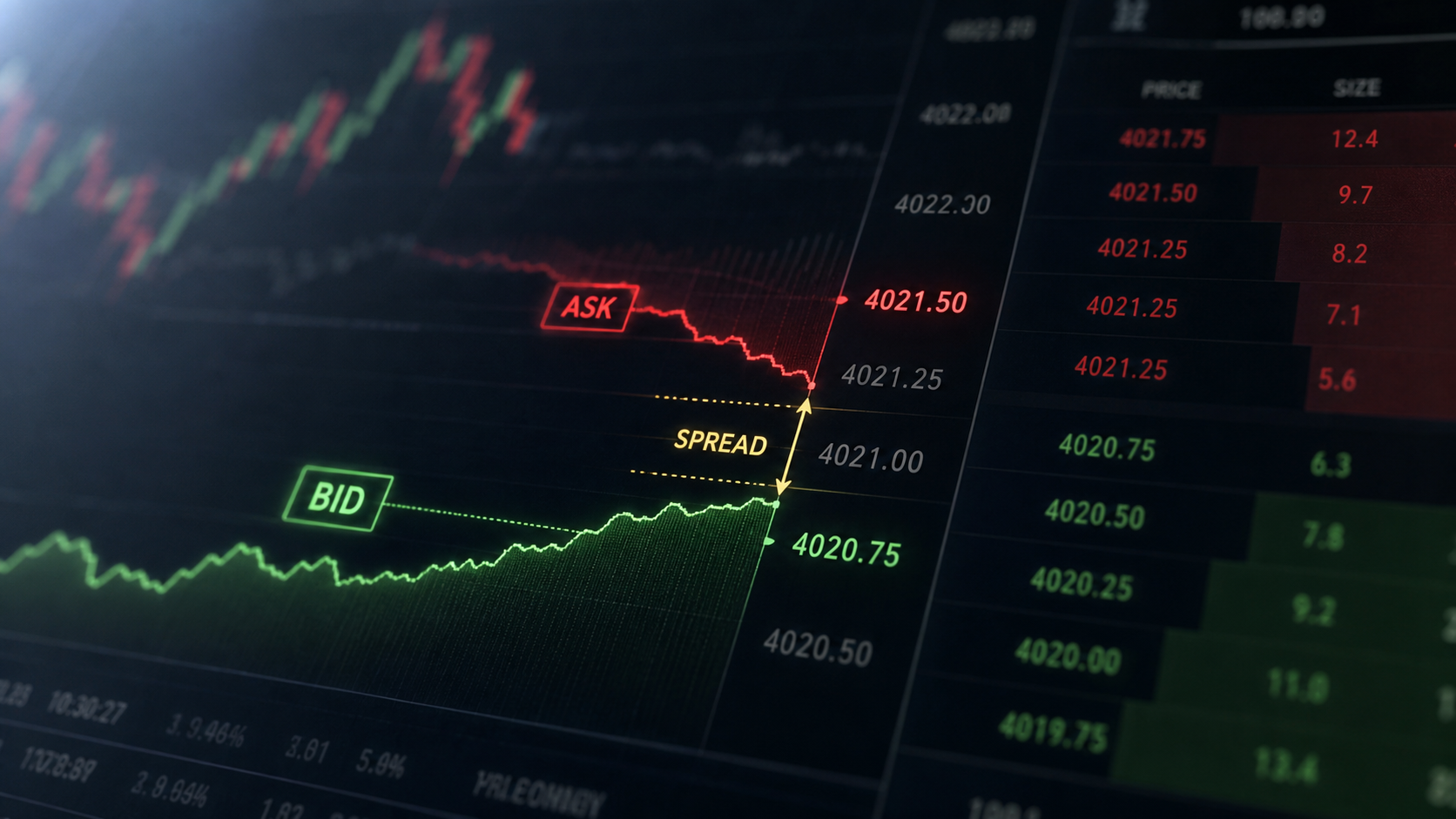
The U.S. Securities and Exchange Commission explains that market orders are designed for immediate execution, while limit orders let investors set a maximum purchase price or minimum sale price. That distinction matters because the bid-ask spread can influence the price you receive when an order is filled.
For an investor learning how orders work, the spread is part of the practical trading experience. It connects directly to GSV’s guide to limit orders, because a limit order can help you avoid paying more than you intended when the ask price is moving.
1. Bid Means the Best Price a Buyer Is Offering

The bid price shows the highest price a buyer is currently willing to pay. If you already own the investment and want to sell immediately, the bid price is the price you are most likely to see first.
Imagine a stock quote shows a bid of $25.10. That means at least one buyer is willing to buy at $25.10, subject to the number of shares available at that price and how quickly the market changes. If you place a market sell order, your order may interact with available bids.
The bid is not a promise that every share will sell at that price. If you are selling a large number of shares, there may not be enough demand at the best bid to fill the entire order. The rest could fill at lower prices if the order moves through the order book.
For many beginners buying small amounts of highly liquid stocks or broad ETFs, the difference may be small. But understanding the bid side helps you see why the quoted market price is not always the exact price you will receive.
2. Ask Means the Lowest Price a Seller Will Take
The ask price, sometimes called the offer, shows the lowest price a seller is currently willing to accept. If you want to buy immediately, the ask price is usually the first price you should pay attention to.
If a stock quote shows an ask of $25.15, sellers are currently asking for $25.15 per share at the best available level. If you place a market buy order, your order may fill at that ask price or at nearby prices depending on available shares and market movement.
This is one reason beginners should be careful with market orders in less liquid securities. A market order prioritizes execution, not price control. In a fast market, the best ask can change before the order is completed.
A brokerage account makes trading easy, but easy does not always mean costless. If you are still learning the mechanics of buying investments, GSV’s guide to brokerage accounts explains the account structure beginners use to place trades.
3. The Spread Can Act Like a Hidden Trading Cost
The bid-ask spread can feel invisible because it is not usually shown as a line-item fee. You may not see a charge labeled “spread” in your account history. But the bid-ask spread can still affect your result.
Suppose an ETF shows a bid of $100.00 and an ask of $100.08. If you buy immediately at the ask and then sell immediately at the bid, the quoted market moved nowhere, but you could still lose about $0.08 per share before considering any other costs. That is the practical effect of the spread.
For a long-term investor who trades rarely, a small spread may not be a big issue. For frequent traders, investors using less liquid securities, or anyone placing large orders, spreads can matter more.
Spreads also matter when comparing ETFs. Two funds may have similar expense ratios, but if one trades with wider spreads, the total cost of entering or exiting may differ. GSV’s guide to ETF expense ratios explains another cost beginners should understand alongside spreads.
4. More Buyers and Sellers Usually Mean a Smaller Gap
Liquidity simply means how easy it is to find someone on the other side of your trade. When many people are buying and selling, their prices tend to sit close together. When only a few people are trading, buyers and sellers can remain much farther apart.
A thinly traded stock can be different. If there are fewer buyers and sellers, the best bid and best ask may sit farther apart. That wider gap can make it more expensive or harder to trade at a fair price.
Market conditions also matter. During normal trading hours, widely followed securities often have more active buyers and sellers. Around major news, during market stress, or outside regular hours, spreads can widen because traders demand more compensation for uncertainty.
This is especially relevant for beginners using ETFs. A broad ETF with heavy daily trading volume may trade with a narrow spread, while a niche ETF may have a wider one. If you are learning the fund structure, start with GSV’s guide to what an ETF is and how it works.
5. A Limit Order Controls Price, Not Timing
This is the lesson from my missed buy order. I controlled the most I was willing to pay, but I did not control whether the market would return to that price. The order did exactly what I asked—it refused to pay more—even though the outcome was not what I hoped for.

A limit order lets you set the highest price you are willing to pay when buying or the lowest price you are willing to accept when selling. That can help beginners avoid accidentally crossing a wide spread at an unfavorable price.
For example, if an ETF shows a bid of $49.90 and an ask of $50.10, a market buy order may fill near the ask. A limit buy order at $50.00 would not pay more than $50.00, though it might not fill if sellers are not willing to accept that price.
This tradeoff is important. A market order gives more certainty of execution. A limit order gives more control over price. Neither is perfect in every situation. The right choice depends on liquidity, urgency, order size, and your investing plan.
Stop-loss orders are different from limit orders, but they also involve order execution risk. If you want to understand that related concept, read GSV’s guide to stop-loss orders.
Bid-Ask Spread Example
Here is a simple bid-ask spread example. A stock quote shows:
| Quote Item | Price | What It Means |
|---|---|---|
| Bid | $74.95 | Highest current buyer price |
| Ask | $75.05 | Lowest current seller price |
| Spread | $0.10 | Difference between ask and bid |
If you buy at $75.05 and later sell at $74.95 without any price movement, the spread works against you. In real markets, prices move constantly, so the exact result may differ. But the example shows why the gap matters.
For a small long-term purchase, ten cents per share may not change your financial life. For a large trade or repeated short-term trading, the spread can become more meaningful. That is why beginners should check quotes before placing trades instead of assuming the last traded price is the price they will get.
Common Bid-Ask Spread Mistakes
The first mistake is confusing the last price with the price you can trade at now. The last price is simply the most recent completed trade. The current bid and ask may already be different.
The second mistake is placing market orders in thinly traded investments without checking the spread. If the spread is wide, the final execution price may surprise you.
The third mistake is ignoring time of day. Spreads can be wider near the market open, near the close, or during extended-hours trading. Beginners do not need to time every trade perfectly, but they should know that trading conditions can change.
The fourth mistake is overtrading. Even small costs matter more when they are repeated often. If your investing strategy is long-term, unnecessary buying and selling can add friction without improving your plan.
The fifth mistake is treating limit orders as guaranteed execution. A limit order can protect your price, but it may not fill. That can be useful or frustrating depending on your goal.
How Beginners Can Use This Concept Wisely
Before placing a trade, look at the bid, ask, and spread. If the spread is very small relative to the price and the investment trades heavily, the practical impact may be limited. If the spread is wide, slow down and ask why.
Consider using a limit order when price control matters. This can be especially helpful for ETFs, small-cap stocks, or anything with lower trading activity. You do not need to become a professional trader to benefit from basic order awareness.
Also think about your bigger investing behavior. A well-diversified long-term portfolio may not require frequent trading. GSV’s guide to risk tolerance can help you connect trading decisions with your comfort level and investment plan.
Finally, remember that the spread is only one cost. Expense ratios, taxes, fund premiums or discounts, and poor timing can also affect results. A smart beginner looks at the whole trade, not just the headline price.
How This Guide Was Verified
Conclusion
Would I place that same order 500 won lower again? Maybe—but only if saving 500 won mattered more to me than buying the stock that day. That is the decision I had not made clearly the first time.
A bid-ask spread is not just a definition on a quote screen. It is a reminder that every order makes a choice between price and timing. Before pressing Buy or Sell, decide which one matters more. Then the result is easier to accept, whether the order fills or not.
Frequently Asked Questions About Bid-Ask Spreads
Is a bid-ask spread a fee?
It is not usually charged as a separate fee, but it can act like a trading cost because buyers often pay the ask and sellers often receive the bid.
Is a smaller bid-ask spread better?
Usually, yes. A smaller spread often means better liquidity and lower trading friction, though investors should still consider risk, price movement, taxes, and investment quality.
Why do bid-ask spreads get wider?
Spreads can widen when trading activity is low, volatility is high, news is moving quickly, or markets are outside normal trading hours.
Can a limit order avoid the spread?
A limit order can help control the price you pay or receive, but it does not guarantee execution. Your order may not fill if the market does not reach your limit price.
Do ETF bid-ask spreads matter?
They can. Heavily traded ETFs often have tight spreads, while niche or less liquid ETFs may have wider spreads. Beginners should check the quote before buying or selling.
Continue Learning
Want to understand what happens after you enter the price? Continue with these guides.
Disclaimer
This article is for general education only and is not personalized financial, tax, or investment advice. Quotes can change quickly, limit orders may not execute, and investing involves possible loss of principal.