
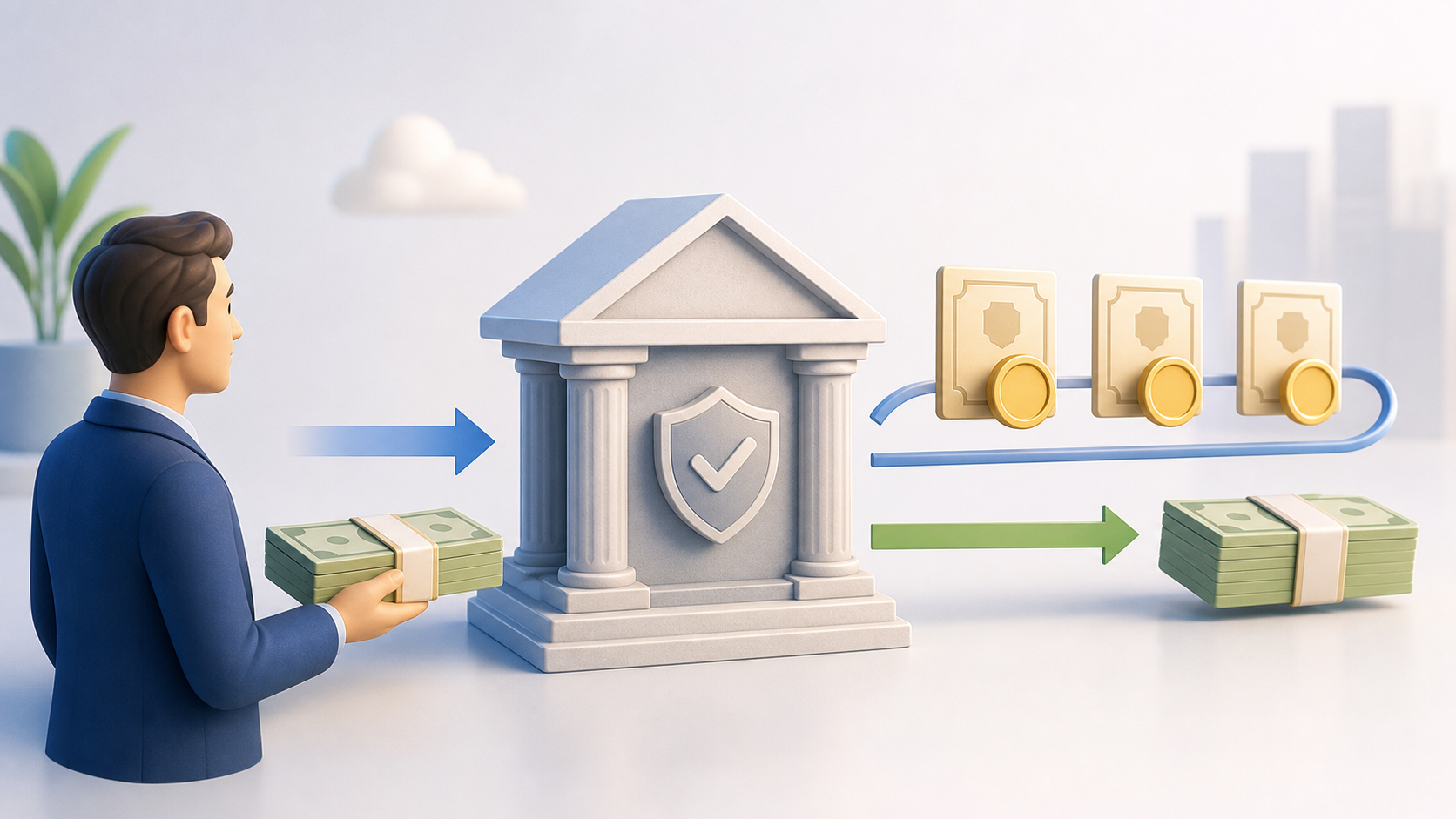
What is a bond? A bond is a loan that an investor makes to a borrower, usually a government, municipality, or company. In return, the borrower agrees to pay interest and repay the principal at a future date called maturity.
For beginner investors, bonds can feel less exciting than stocks. They usually do not promise ownership, rapid growth, or headlines about the next big company. But bonds are one of the core building blocks of financial markets because they help investors manage income, risk, and portfolio balance.
This guide explains how bonds work, why bond prices move, how bonds compare with stocks, and what risks beginners should understand before using bonds in a long-term investing plan.
Key Takeaways
- A bond is a debt investment. You lend money to an issuer and expect interest plus repayment of principal.
- Bond prices and interest rates often move in opposite directions.
- Bonds can help diversify a portfolio, but they are not risk-free.
- Government, municipal, and corporate bonds can have different tax rules, credit risks, and yields.
- Beginners should evaluate bonds by issuer quality, maturity, yield, costs, and portfolio role.
What Is a Bond in Simple Terms?
What is a bond in everyday language? It is basically an IOU. When a government or company needs money, it can borrow from investors by issuing bonds. The investor provides cash today. The issuer promises to pay interest along the way and return the borrowed amount when the bond matures.
That makes a bond different from a stock. When you buy stock, you buy ownership in a company. When you buy a bond, you are usually lending money to the issuer. Our guide to what a stock is explains the ownership side of that comparison.
Investor.gov describes bonds as debt obligations where investors lend money to the issuer. For corporate bonds, the company generally has a legal commitment to pay interest and principal according to the bond terms. That legal promise is one reason bonds are often discussed separately from dividends, which companies can reduce or cancel more easily.
Still, a bond is not the same as a savings account. Bonds can lose value before maturity, issuers can run into financial trouble, and inflation can reduce the purchasing power of future payments. A bond may be steadier than many stocks, but it still belongs in the investing world, not the risk-free world.
How Bonds Work
A bond starts with an issuer. The issuer may be the U.S. Treasury, a city, a state agency, or a corporation. The issuer sells the bond to raise money for operations, projects, refinancing, or other needs.
The bond has a face value, also called par value. Many bonds are discussed using a $1,000 face value, though actual purchase amounts can vary by market and platform. The coupon rate is the interest rate the issuer agrees to pay on that face value. If a $1,000 bond has a 5% coupon, it pays $50 per year before taxes and account-specific details.
The maturity date tells you when the principal is due to be repaid. A short-term bond may mature in a few months or a few years. A long-term bond may mature decades later. TreasuryDirect notes that Treasury bonds are currently issued for terms of either 20 or 30 years and pay a fixed rate of interest every six months until maturity.
Investors do not always hold bonds until maturity. Many bonds can be bought and sold in the secondary market. If you sell before maturity, the price may be higher or lower than what you paid. That is where interest rates, credit quality, and market demand become important.
Why Investors Use Bonds
Bonds are often used for three practical reasons: income, diversification, and risk management. A bond’s interest payments can create a more predictable income stream than relying only on stock dividends or stock price gains.
Diversification is another major reason. Stocks and bonds respond to different forces, even though they can sometimes fall together. Stocks are heavily tied to business profits, investor expectations, and valuations. Bonds are heavily affected by interest rates, credit risk, inflation expectations, and the issuer’s ability to repay.
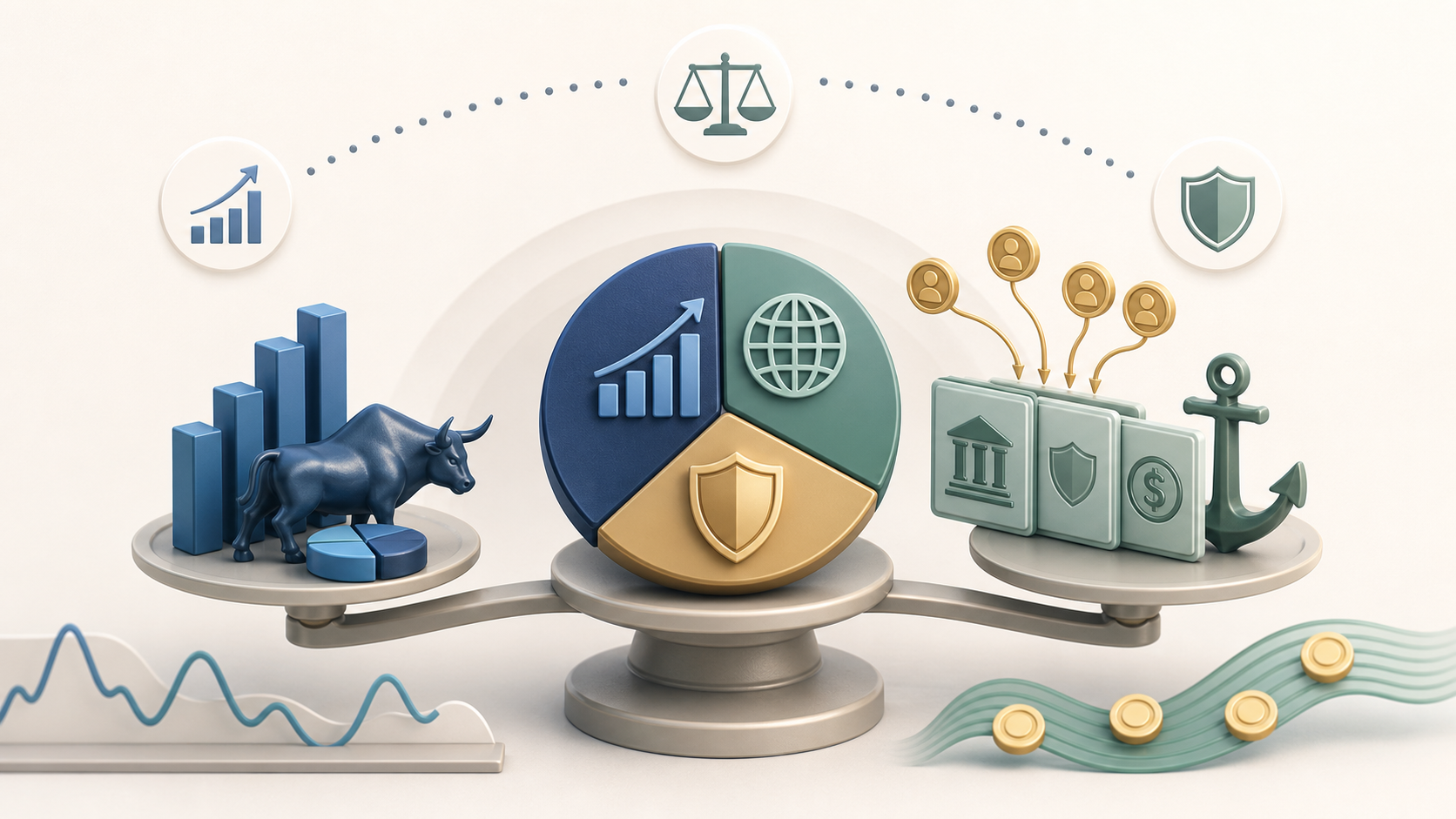
That difference is why bonds often show up in asset allocation decisions. A portfolio that holds only stocks may have higher growth potential, but it can also swing sharply. Adding bonds can sometimes reduce volatility and give investors a clearer plan for different market environments. Our guide to asset allocation explains how stocks, bonds, and cash can work together.
Bonds can also help investors match money with time horizon. Money needed soon usually should not be exposed to heavy stock market risk. Longer-term retirement money may be able to handle more volatility. A balanced portfolio tries to connect each dollar with the job it needs to do.
This is especially relevant inside retirement accounts. Someone learning how a 401k works may see bond funds, target-date funds, or stable value options in the plan lineup. Someone using a Roth IRA may also decide whether bonds belong in the account based on time horizon, taxes, and overall portfolio design.
Bond Prices, Interest Rates, and Yield
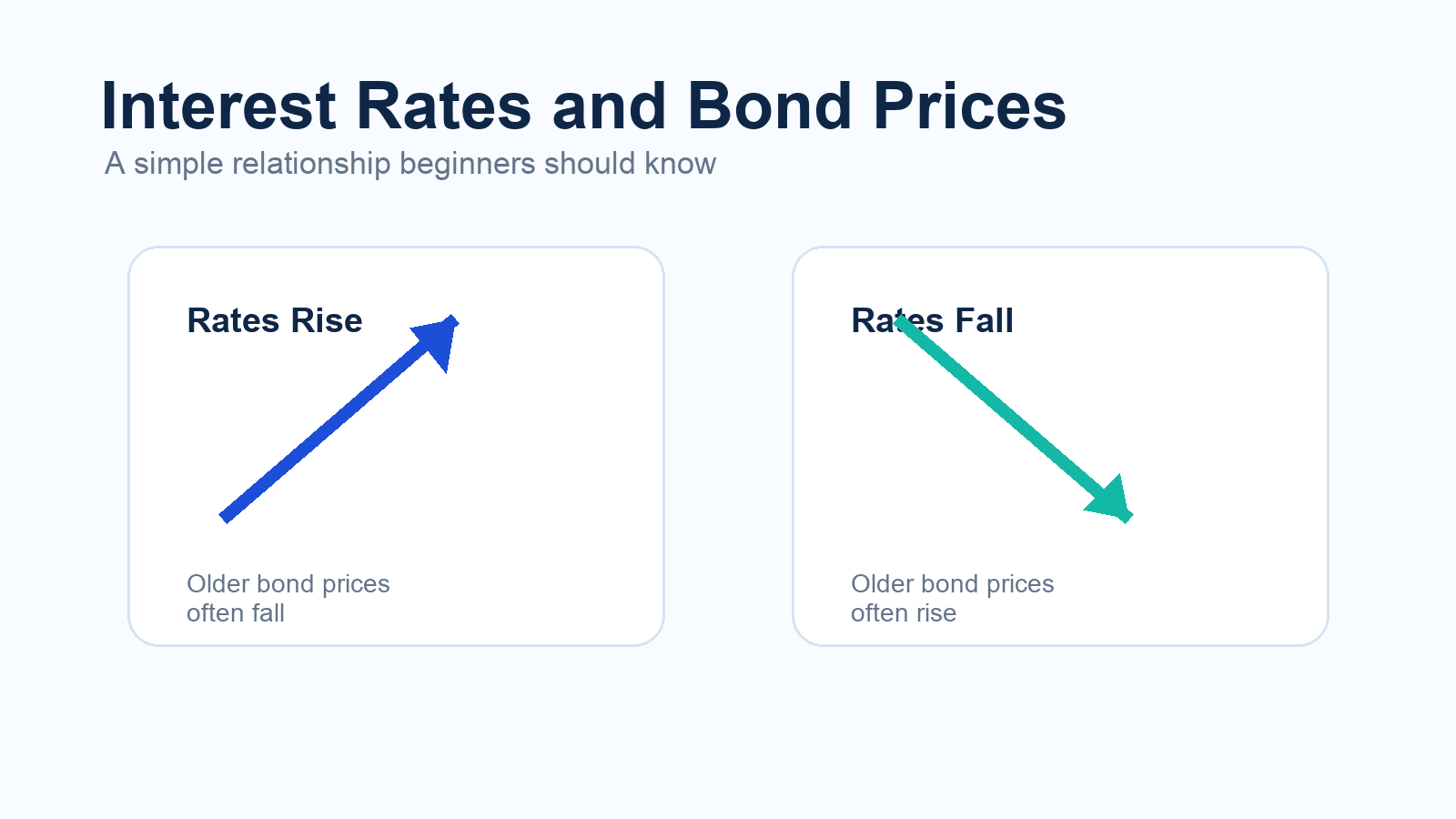
One of the most important bond lessons is that bond prices and market interest rates often move in opposite directions. This idea confuses many beginners, but the logic is straightforward.
Imagine you own a bond that pays 3% interest. Later, new similar bonds become available with 5% interest. Your older 3% bond is less attractive than the new 5% bond, so its market price may fall if you try to sell it. The lower price helps the bond compete with newer, higher-yielding options.
Now imagine the opposite. You own a bond paying 5%, and new similar bonds offer only 3%. Your older bond looks more attractive, so buyers may be willing to pay more for it. That is the basic reason bond prices can rise when market rates fall.
Yield is the return measure investors use to compare bonds. Coupon tells you the interest rate based on face value. Yield considers the bond’s price, coupon, time to maturity, and repayment expectations. A bond purchased below face value may have a different yield than its coupon rate.
Interest rate risk matters more for longer-term bonds. If a bond matures in 30 years, many years of payments are affected by changing market rates. If a bond matures in one year, there is less time for rate changes to affect the price. This is one reason beginners should not assume all bonds behave the same way.
Types of Bonds Beginners Should Know
Not all bonds come from the same kind of issuer. The issuer matters because it affects risk, tax treatment, liquidity, and yield.
| Bond Type | Issuer | Beginner Note |
|---|---|---|
| U.S. Treasury bonds | U.S. federal government | Often viewed as high credit quality, but still sensitive to interest rates. |
| Municipal bonds | State or local governments | May have tax advantages, but credit quality varies by issuer. |
| Corporate bonds | Companies | Usually offer higher yields than Treasuries to compensate for company-specific risk. |
| Bond funds | Fund companies | Hold many bonds, but share prices can move and there may be no fixed maturity date. |
| Savings bonds | U.S. Treasury | Designed for individual savers and are different from marketable Treasury bonds. |
Corporate bonds deserve extra attention because they add business risk. If a company weakens, its bond prices may fall. If the company defaults, bondholders may not receive all promised payments. Investor.gov notes that corporate bond investors have a creditor claim, but that does not remove default risk.
Stocks vs. Bonds
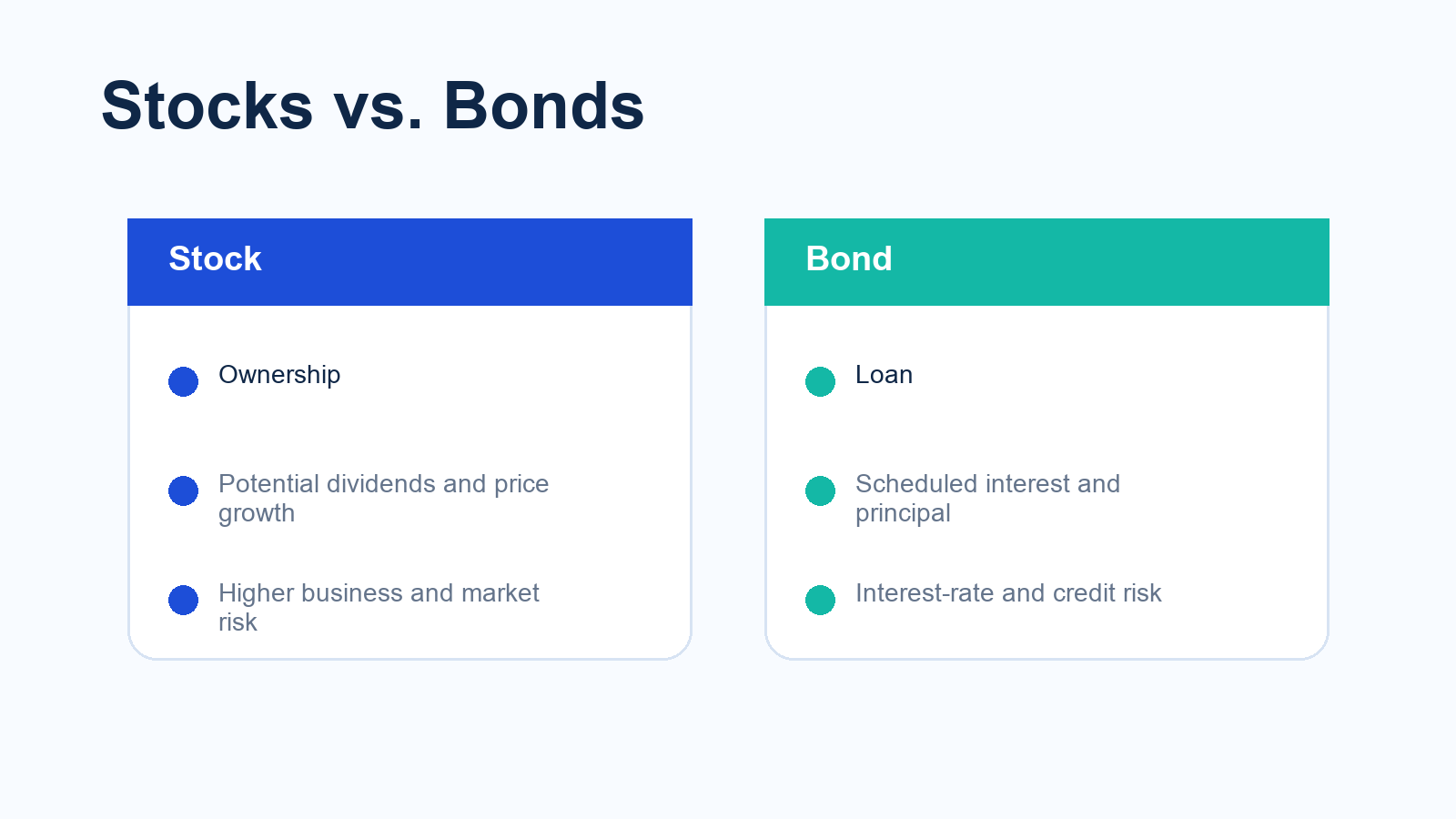
The simplest stock-versus-bond comparison is ownership versus lending. A stockholder owns a slice of a company. A bondholder lends money to an issuer.
That difference changes the upside and downside. Stocks can rise dramatically if a company grows, profits increase, and investors become more optimistic. Bonds usually have more limited upside because the promised interest and principal are defined by the bond terms.
Bonds may have priority over common stock in a corporate bankruptcy, but priority does not mean certainty. Recovery depends on the issuer, the bond’s seniority, collateral, and the bankruptcy process. A risky bond can still lose a large amount of value.
That mix also changes over time. A young investor saving for retirement may hold more stocks. Someone approaching a major spending goal may want more stability. Either way, the portfolio should be reviewed periodically. The GSV guide to portfolio rebalancing explains how investors bring a portfolio back toward its target mix.
Bond Risks and Common Mistakes
What is a bond risk beginners often miss? The first is interest rate risk. If market rates rise, existing bond prices can fall. This does not always matter if you hold an individual high-quality bond to maturity and the issuer pays as promised, but it matters if you sell early or own a bond fund.
The second risk is credit risk. Credit risk is the chance that the issuer may not pay interest or principal on time. Higher-yield bonds often pay more because investors are accepting more credit risk. A bigger yield is not free money.
The third risk is inflation risk. A bond may pay a fixed amount of interest, but future dollars may buy less if inflation stays high. This is one reason some investors compare nominal bonds with inflation-linked options, cash, stocks, and other assets.
The fourth risk is reinvestment risk. If your bond matures or pays coupons when rates are lower, you may have to reinvest at a lower yield. This can matter for retirees and income-focused investors.
Common mistakes include buying a bond only because the yield looks high, ignoring maturity, assuming bond funds cannot lose money, and forgetting how bonds fit with the rest of the portfolio. Another mistake is comparing bonds with stocks using only recent performance. A bond’s job may be stability or income, not beating the stock market every year.
Beginners using broad funds should also understand overlap. An index fund may focus on stocks, bonds, or a mix of assets. A portfolio can look diversified by fund count while still being concentrated in one kind of risk.
How to Decide Whether Bonds Fit Your Portfolio
Start with the job the bond should do. Is it for income, stability, diversification, capital preservation, or a future spending goal? A bond chosen for near-term safety should be evaluated differently from a bond fund used for long-term diversification.
Next, consider time horizon. Money needed in one year should usually be handled more conservatively than money needed in 25 years. Longer maturities can offer higher yields at times, but they also bring more sensitivity to rate changes.
Then look at the issuer and credit quality. U.S. Treasuries, high-quality corporate bonds, high-yield corporate bonds, and municipal bonds do not carry the same risk. If the yield is much higher than similar options, ask why.
Finally, connect bonds with your broader plan. Bonds are not automatically good or bad. They are tools. A thoughtful investor uses them when they fit the goal, understands the trade-offs, and avoids treating any single asset class as a magic solution.
Frequently Asked Questions About Bonds
What is a bond in one sentence?
A bond is a loan from an investor to an issuer, with interest payments and repayment terms defined by the bond agreement.
Can bonds lose money?
Yes. Bonds can lose money if interest rates rise, the issuer’s credit quality weakens, the bond is sold before maturity at a lower price, or a bond fund declines in value.
Are bonds safer than stocks?
Many high-quality bonds are less volatile than stocks, but bonds are not automatically safe. Credit risk, inflation risk, interest rate risk, and liquidity risk still matter.
Do bonds pay dividends?
Individual bonds generally pay interest, not dividends. Dividends are usually payments from stocks or funds. If you are comparing income investments, read our guide to dividend stocks.
What is the difference between a bond and a bond fund?
An individual bond has its own issuer, coupon, and maturity date. A bond fund owns many bonds and can offer diversification, but its share price can move and it may not have one fixed maturity date.
After learning the basic bond structure, investors can compare government and corporate debt with municipal bonds. Their potential tax advantages come with credit, interest-rate, call, and liquidity risks that differ by issuer and security.
Final Thoughts
What is a bond? It is a loan that can turn borrowing into an investment product. The investor provides money, the issuer promises interest, and the bond terms define when principal is due.
Bonds can be useful because they may provide income, diversification, and a steadier counterweight to stocks. They can also be misunderstood. A bond is not risk-free just because it sounds conservative, and a high yield is not automatically a bargain.
The best beginner approach is to keep the concept simple: know the issuer, maturity, coupon, yield, credit risk, interest rate sensitivity, and portfolio role. Once you understand those pieces, bonds become less mysterious and much easier to use thoughtfully.