
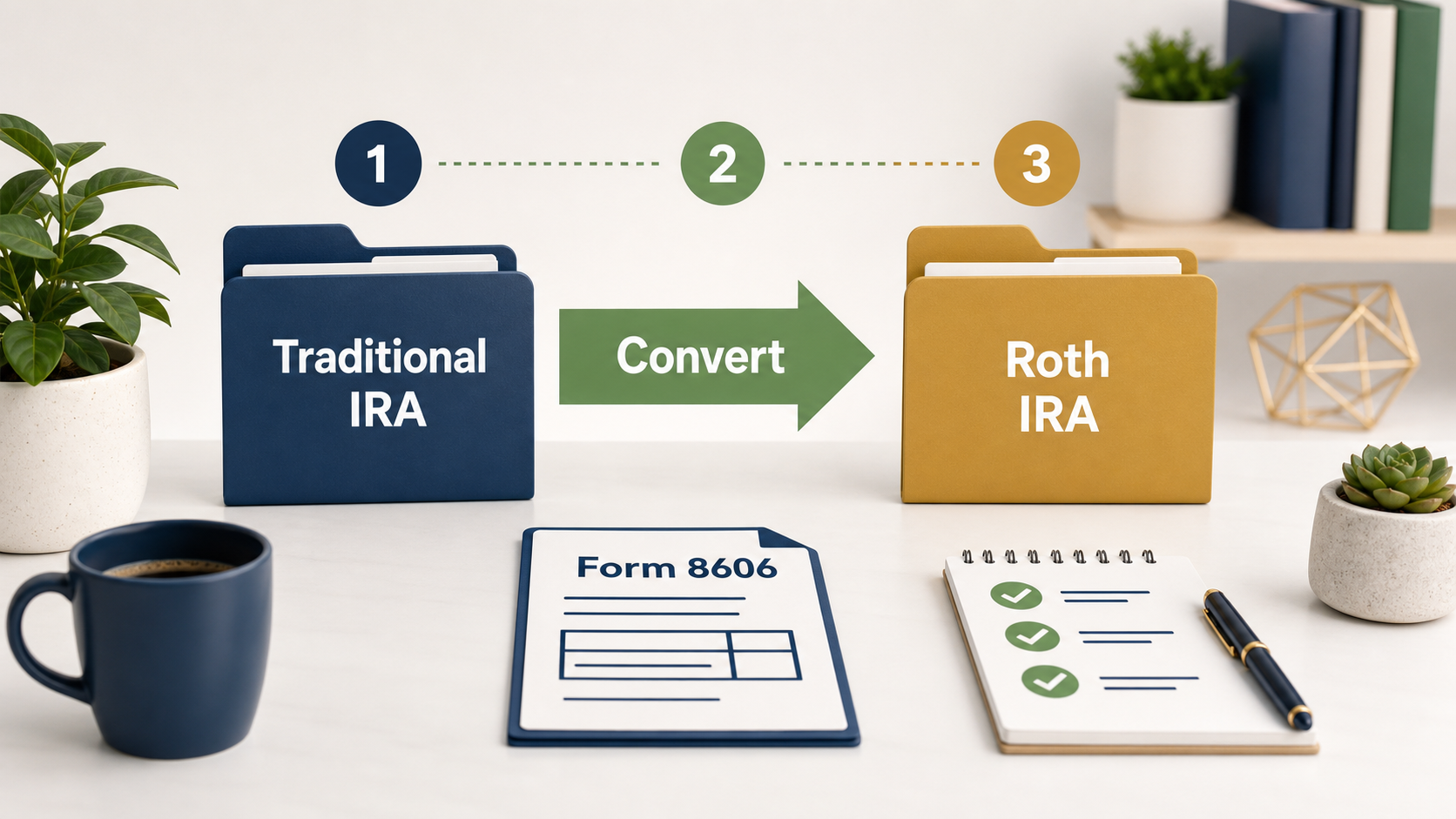
A Backdoor Roth IRA is a retirement savings strategy where someone makes a nondeductible traditional IRA contribution and then converts that money to a Roth IRA. It is commonly used by high-income earners who are above the direct Roth IRA income limits but still want Roth-style retirement savings.
The strategy sounds simple, but it is not risk-free. Taxes, existing pre-tax IRA balances, Form 8606 reporting, timing, and investment gains can all affect the final result. Beginners should understand the moving parts before trying it.
Educational disclaimer: This article is for general education only and is not personal tax, legal, retirement, or investment advice. Roth conversion rules can depend on income, filing status, existing IRA balances, employer plans, tax forms, and current IRS guidance. Consider working with a qualified tax professional before using this strategy.
Key Takeaways
- A Backdoor Roth IRA is not a separate account type. It is a process that uses a traditional IRA contribution and Roth IRA conversion.
- The strategy is often discussed by people whose income is too high for a direct Roth IRA contribution.
- Existing pre-tax IRA money can make the tax calculation more complicated because of the pro-rata rule.
- IRS Form 8606 is important because it reports nondeductible IRA contributions and Roth conversions.
- The strategy can be useful, but it is not a beginner move to do casually without understanding tax reporting.
Backdoor Roth IRA: What It Means
This is a workaround-style process, not an official account name. The person generally contributes to a traditional IRA, treats the contribution as nondeductible, and then converts the money to a Roth IRA.
The reason this exists is that direct Roth IRA contributions have income limits. When income is above the allowed range, a person may not be able to contribute directly to a Roth IRA. A conversion from a traditional IRA to a Roth IRA is a different transaction with different rules.
That difference is why the strategy is popular among some high-income earners. It can create a path to Roth IRA assets even when a direct Roth IRA contribution is limited or unavailable. But the tax details matter more than the nickname.
If you need the basic account definitions first, start with what a Roth IRA is and what a traditional IRA is. This article focuses on the conversion strategy that connects those two account types.
How the Backdoor Roth IRA Process Works
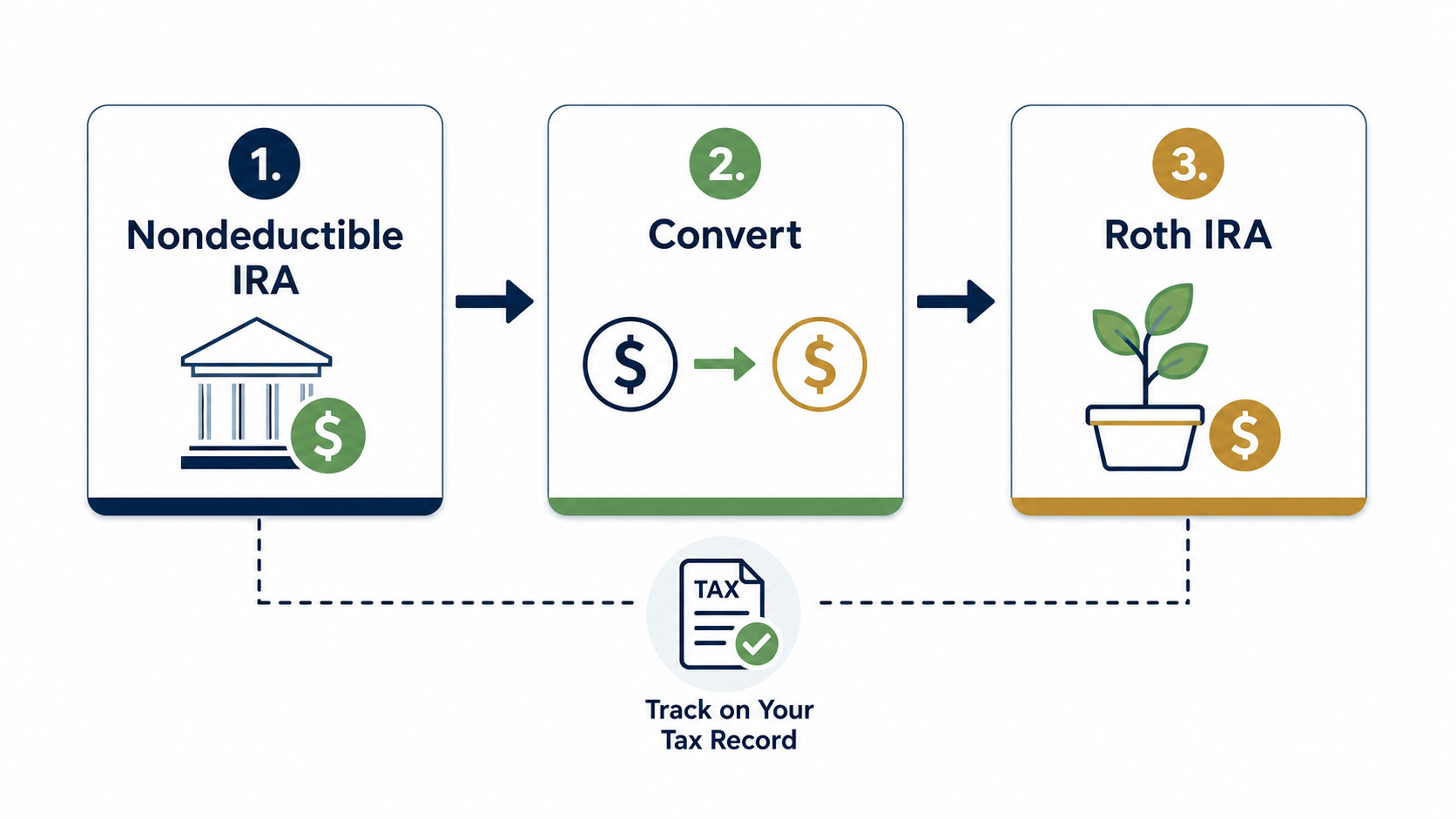
The basic process has two main steps. First, the investor makes a traditional IRA contribution. Second, the investor converts that money to a Roth IRA. In many examples, the contribution is nondeductible because the goal is not to receive a traditional IRA tax deduction.
A simple version may look like this: contribute to a traditional IRA, leave the money in cash briefly, convert it to a Roth IRA, then invest inside the Roth IRA. The timing and mechanics can vary by custodian, but the tax reporting should not be ignored.
If the contribution earns investment gains before conversion, those gains may be taxable when converted. If the person has other pre-tax IRA money, the tax calculation may become more complicated. That is where many conversion mistakes happen.
| Step | What Happens | Why It Matters |
|---|---|---|
| 1 | Make a traditional IRA contribution | The contribution may be nondeductible |
| 2 | Convert the amount to a Roth IRA | The conversion moves money into Roth treatment |
| 3 | Report the transaction | Form 8606 helps track basis and conversions |
The annual IRA contribution limit still matters. Our guide to Roth IRA contribution limits 2026 explains the current IRA contribution amounts and income phase-out ranges.
Why High-Income Earners Use It
The main appeal is Roth access. Roth IRAs can be attractive because qualified withdrawals may be tax-free, and Roth IRAs can offer more individual control than workplace retirement plans.
High-income earners may already be saving through a workplace plan such as a 401(k). If they are above the income limits for direct Roth IRA contributions, they may look for another way to build Roth IRA assets.
That does not mean the strategy is automatically good for every high-income person. Someone with large pre-tax IRA balances may face a tax result that is very different from the clean examples shown online. Someone who fails to file the right tax forms may create avoidable confusion later.
The broader planning question is whether Roth money fits your tax strategy. Our comparison of Roth 401(k) vs Roth IRA can help explain the account differences before deciding whether a Roth IRA path is worth pursuing.
The Pro-Rata Rule Problem
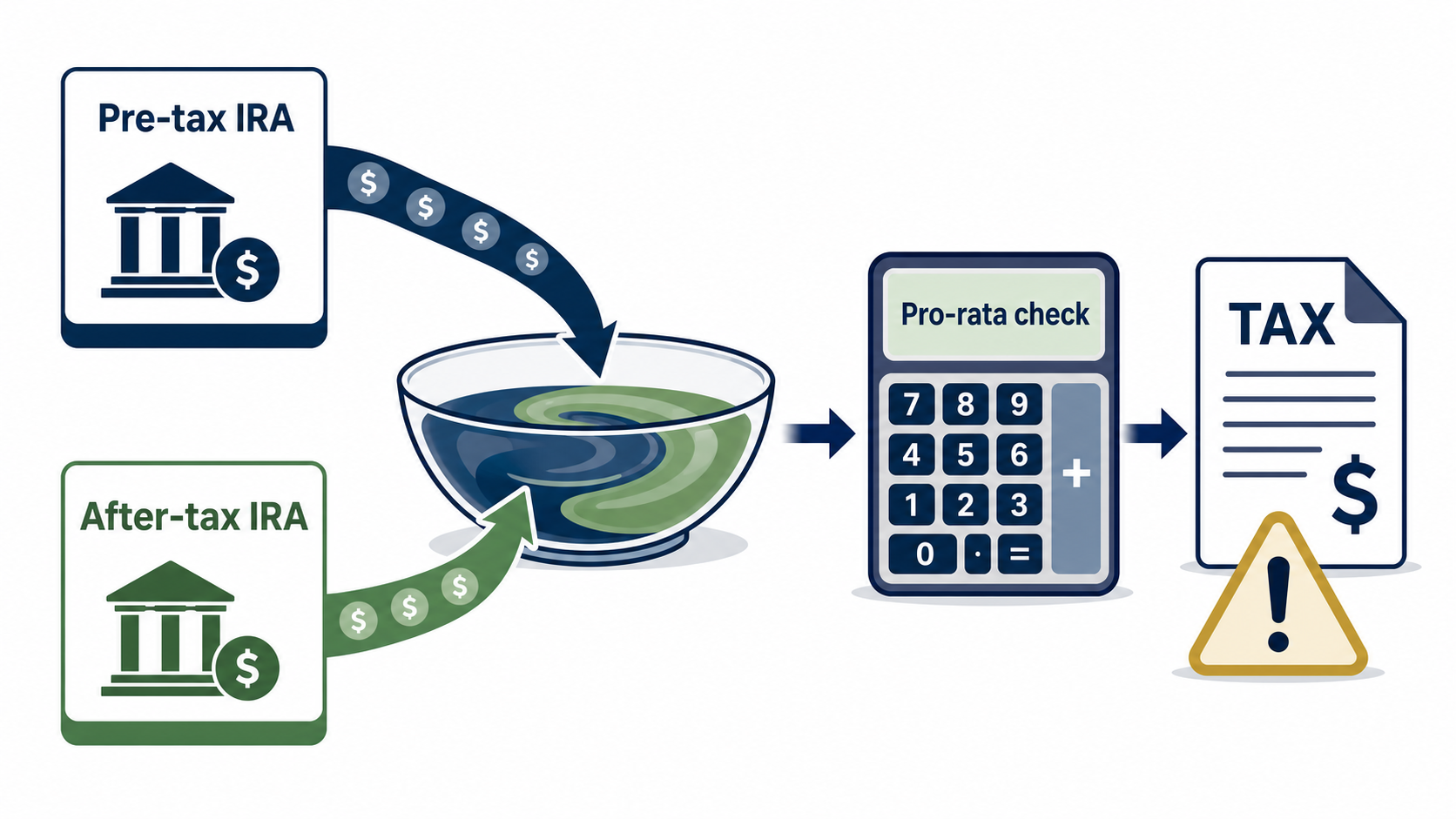
The biggest trap is the pro-rata rule. In simple terms, the IRS does not let a person isolate only after-tax dollars for conversion when they also have pre-tax IRA money. The tax calculation can look across traditional, SEP, and SIMPLE IRA balances.
Imagine someone contributes nondeductible money to a traditional IRA but already has a large pre-tax traditional IRA from past rollovers. A conversion may be treated as partly after-tax and partly pre-tax, rather than fully after-tax. That can create a taxable conversion even if the newest contribution itself was nondeductible.
This is why people often hear that the process is easier when a person has no existing pre-tax IRA balance. The strategy can still require careful tax planning, but the calculation is usually more straightforward when there is no pre-tax IRA money mixed into the picture.
If traditional IRA deductibility is part of your situation, our guide to traditional IRA deduction limits 2026 explains how deductions and workplace plan coverage can affect IRA tax treatment.
Form 8606 and Tax Reporting
Form 8606 is central to reporting. The IRS says Form 8606 is used to report nondeductible contributions to traditional IRAs, conversions from traditional, SEP, or SIMPLE IRAs to Roth IRAs, and certain IRA distributions.
This matters because nondeductible contributions create basis. Basis is the part of the IRA that has already been taxed. Without proper reporting, a taxpayer may have trouble showing that some money should not be taxed again later.
This is not only an investment action. It is also a tax-reporting action. The custodian may issue tax forms, but the taxpayer is still responsible for reporting the transaction correctly on the tax return.
For beginners, this is a good reason not to rush. If you are not comfortable with Form 8606, IRA basis, conversion reporting, and the pro-rata rule, it may be wise to get help before completing the transaction.
Backdoor Roth IRA vs Roth 401(k)
This strategy is often compared with a Roth 401(k), but they solve different problems. A Roth 401(k) is a workplace plan feature. The conversion process can move money into an individual Roth IRA.
One practical difference is contribution room. A 401(k) generally has a much higher annual employee contribution limit than an IRA. If your employer plan offers a Roth 401(k), it may be a simpler Roth option than using an IRA conversion strategy.
Another difference is investment choice. A Roth IRA may offer broader provider and investment options, depending on where it is opened. A Roth 401(k) is limited by the employer plan menu. Our guide to Roth 401(k) vs Traditional 401(k) explains the tax-timing decision inside workplace plans.
Common Mistakes to Avoid
The first mistake is assuming the process is tax-free for everyone. It may be low-tax in a clean case with no pre-tax IRA balances and little or no investment gain before conversion. But it can become taxable when existing pre-tax IRA money is involved.
The second mistake is forgetting Form 8606. If the nondeductible contribution and conversion are not reported properly, the taxpayer may create recordkeeping problems that show up years later.
The third mistake is investing the traditional IRA contribution before conversion without understanding the tax result. If the money grows before conversion, the gain may be taxable when converted.
The fourth mistake is treating the strategy as a loophole that replaces planning. This is a technical process. It should fit into a broader retirement plan, contribution strategy, and tax picture.
Beginner Checklist Before Trying It
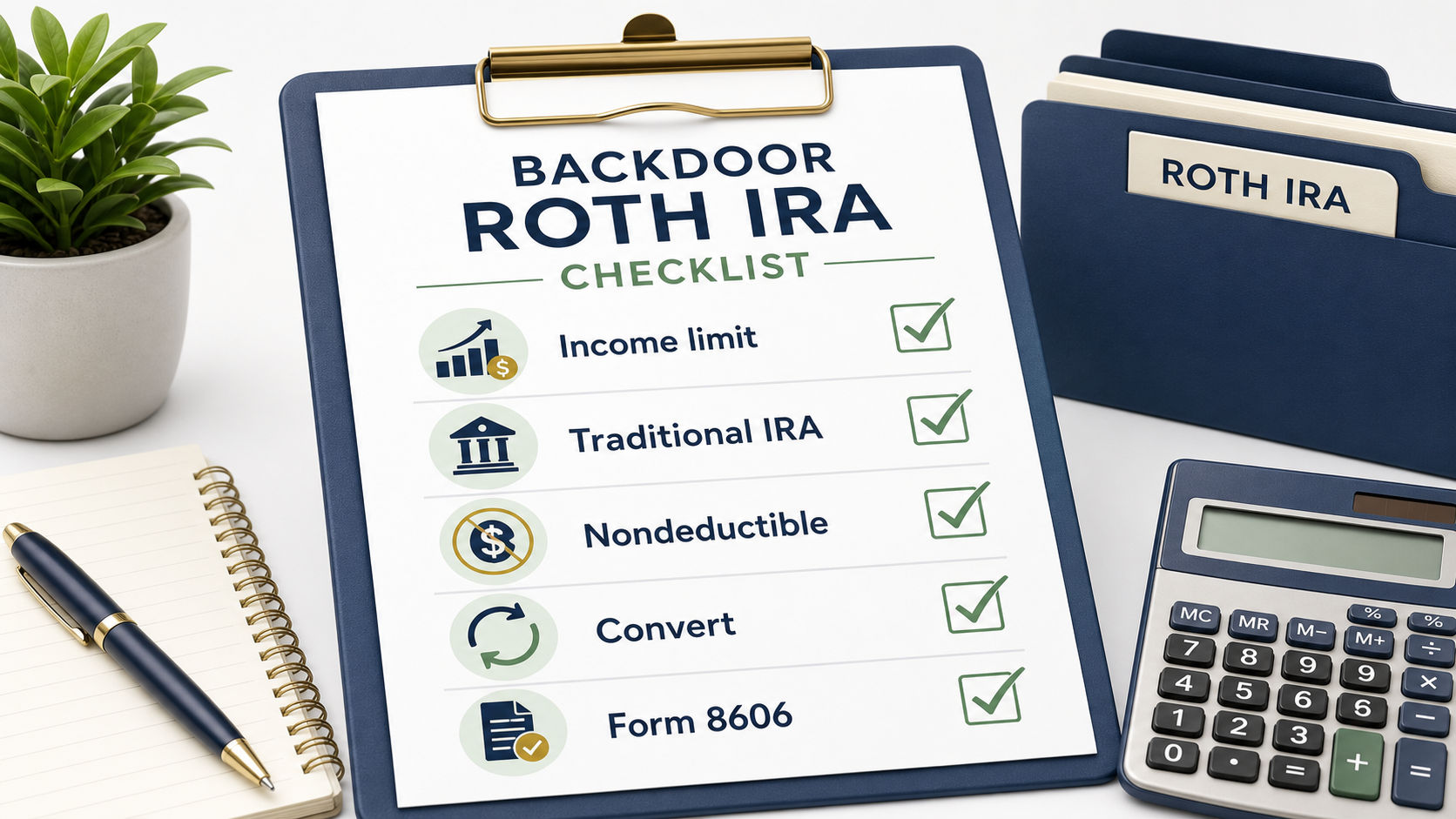
Before attempting this strategy, walk through a checklist. The purpose is not to make the strategy sound scary. The purpose is to prevent avoidable tax confusion.
- Confirm that you are above or near the direct Roth IRA income limits.
- Check whether you have traditional, SEP, or SIMPLE IRA balances.
- Understand whether your traditional IRA contribution will be nondeductible.
- Ask how the pro-rata rule may affect the conversion.
- Know that Form 8606 may be required for reporting.
- Decide whether a Roth 401(k) or other retirement account is simpler.
- Consider getting tax help before converting.
Once the money is inside a Roth IRA, it still needs to be invested appropriately. Our guides to asset allocation and diversification can help with the portfolio side after the account decision is made.
Frequently Asked Questions About Backdoor Roth IRA
Is a Backdoor Roth IRA legal?
It is a commonly discussed strategy that uses traditional IRA contributions and Roth IRA conversions. The key issue is not the nickname, but whether the contribution, conversion, tax calculation, and reporting are handled correctly under current rules.
Who should consider a Backdoor Roth IRA?
It is usually considered by people whose income is too high for direct Roth IRA contributions and who want Roth IRA exposure. It may be less attractive if they have large pre-tax traditional, SEP, or SIMPLE IRA balances.
Does a Backdoor Roth IRA avoid taxes?
Not necessarily. If the contribution is nondeductible and there are no pre-tax IRA balances or gains, the taxable amount may be small. But existing pre-tax IRA money or investment gains can create taxable income.
Why does Form 8606 matter?
Form 8606 is used to report nondeductible IRA contributions and conversions to Roth IRAs. It helps track after-tax basis so money is not accidentally taxed twice.
Is a Backdoor Roth IRA better than a Roth 401(k)?
Not always. A Roth 401(k) may be simpler if your employer offers one, while the IRA conversion route may provide individual Roth IRA access. The better choice depends on income, plan quality, IRA balances, and tax reporting complexity.
Final Thoughts
A Backdoor Roth IRA can be a useful retirement strategy for some high-income earners, but it is not magic and it is not automatically tax-free. The strategy depends on nondeductible contributions, Roth conversions, accurate reporting, and careful attention to existing IRA balances.
For beginners, the safest way to think about a Backdoor Roth IRA is as a tax-sensitive process, not a shortcut. Understand the pro-rata rule, Form 8606, IRA limits, and your existing account balances before deciding whether the strategy fits your retirement plan.