

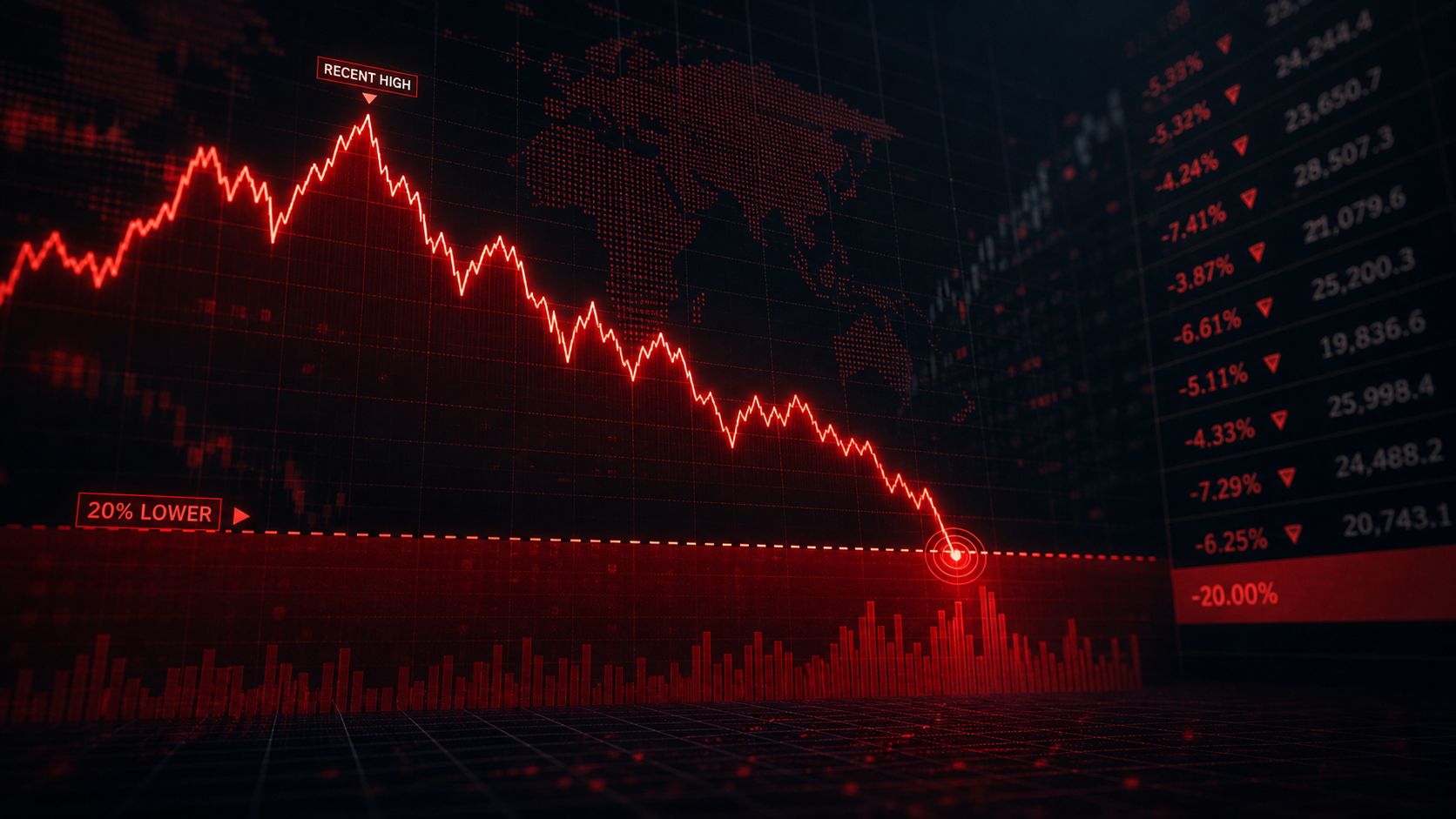
Bear market means a broad market or investment index has fallen sharply and investor sentiment has turned negative. A common rule of thumb is a decline of 20% or more from a recent high, especially in a broad stock index.
For beginners, this kind of downturn can feel scary because account balances may fall at the same time headlines sound unusually negative. But the term itself is not a prediction that losses will continue forever. It describes a market environment that has already become difficult.
This guide explains the definition, how it differs from a correction, why it happens, and five things beginner investors should know before making emotional portfolio decisions.
Key Takeaways
- The term is commonly defined as a broad market decline of 20% or more from a recent high.
- A correction is usually smaller, often around 10% from a recent high.
- Major downturns can happen because of recessions, high inflation, rising rates, valuation pressure, financial stress, or investor fear.
- Long-term investors should focus on time horizon, diversification, risk tolerance, and cash needs.
- Lower prices do not make every investment a bargain.
What Is a Bear Market?
1. Major declines are normal, but never comfortable
Market declines are part of investing, especially for stock investors. That does not make them easy. Seeing a portfolio fall can be emotionally harder than reading about risk in a calm market.
This is why GSV’s guide to risk tolerance matters. A portfolio that looks perfect during good times may be too aggressive if it makes you sell during a downturn.
2. The cause can vary
Large market declines can happen for different reasons. Sometimes the trigger is a recession. Sometimes it is inflation, rising interest rates, falling earnings expectations, a financial crisis, expensive valuations, or a sudden shock that changes investor confidence.
Understanding the cause can help, but beginners should avoid pretending every decline has one simple explanation. Markets are complex. Prices move because many investors are adjusting expectations at the same time.
3. Your time horizon changes the decision
If you need money soon, a sharp decline can be a serious problem because you may not have time to wait for recovery. If the money is for a long-term goal, such as retirement decades away, the decline may be painful but less urgent.
GSV’s guide to the S&P 500 explains how broad indexes are used as market benchmarks. If your portfolio tracks a stock index, your time horizon should be long enough to handle periods when that index falls.
4. Diversification helps, but it does not prevent losses
Diversification can reduce the damage from depending on one company or one narrow sector. It does not guarantee gains or fully protect a portfolio when the whole stock market falls.
A diversified portfolio may still lose value during a broad selloff. The goal is not to avoid every decline. The goal is to avoid taking more concentrated risk than your plan can handle. GSV’s guide to diversification explains the difference.
5. Lower prices do not make every investment attractive
A downturn can make some investments cheaper, but cheaper does not automatically mean better. A weak company, expensive fund, or concentrated strategy can keep struggling even after a large price drop.
Beginners should look at the investment itself, not just the decline. For fund investors, that means checking the index, holdings, cost, and role in the portfolio. GSV’s guide to index funds explains why the underlying benchmark matters.
What Causes a Major Market Downturn?
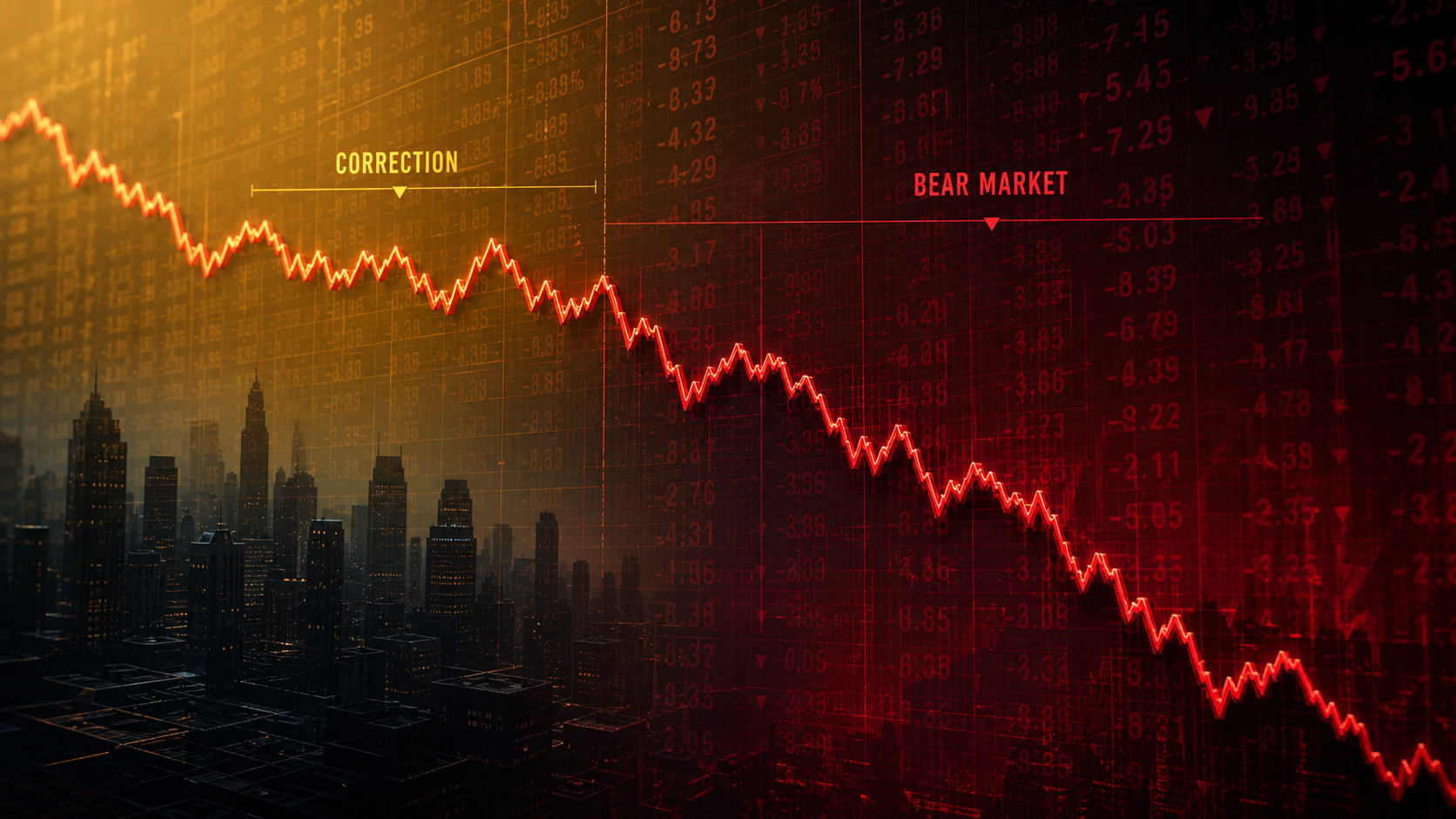
A bear market usually reflects a broad loss of confidence. Investors may worry that corporate earnings will fall, interest rates will stay high, inflation will hurt consumers, or the economy will weaken. When enough investors reduce risk at the same time, stock prices can fall sharply.
Rising interest rates can pressure stocks because future profits may be discounted more heavily and safer assets may become more attractive. Recessions can pressure stocks because companies may sell less, earn less, or cut costs. High valuations can also matter because expensive markets have less room for disappointment.
Sometimes the cause is obvious in hindsight. Other times, the explanation changes as new information arrives. That uncertainty is one reason market timing is difficult.
What Should Beginners Do During a Downturn?

The first step is to separate emergency money from investment money. Cash needed for bills, short-term goals, or unexpected expenses should not depend on stock market recovery. GSV’s guide to emergency funds explains why that cushion matters.
The second step is to review asset allocation. If your portfolio has more stock exposure than you can handle, the downturn may reveal a mismatch. GSV’s guide to asset allocation explains how stocks, bonds, and cash can work together.
The third step is to avoid making a permanent decision from temporary panic. Some investors sell because they want the discomfort to stop. That can feel relieving in the moment, but it may create a new problem: deciding when to get back in.
Investors who contribute regularly may keep using a planned routine, such as dollar-cost averaging. This does not guarantee profit, but it can reduce the pressure to pick one perfect day.
Common Mistakes to Avoid
The first mistake is checking the account constantly. More information does not always mean better decisions. During a downturn, frequent checking can make normal volatility feel like an emergency.
The second mistake is selling everything without a plan. If you sell because prices are falling, you also need a rule for when to reinvest. Without that rule, fear can keep money out of the market long after prices begin recovering.
The third mistake is assuming a broad selloff affects every investment the same way. Some stocks, funds, sectors, and asset classes may fall more than others. The mix of holdings still matters.
The fourth mistake is ignoring rebalancing. If markets move enough, your portfolio may drift away from its intended mix. GSV’s guide to portfolio rebalancing explains how investors bring a portfolio back toward the target allocation.
Official Sources
Bear Market, Correction, and Market Volatility
| Market Term | Common Meaning | What It Does Not Tell You |
|---|---|---|
| Bear market | A broad market decline of about 20% or more from a recent high | How long the decline will last or when recovery will begin |
| Correction | A decline of about 10% or more that is smaller than a bear market | Whether the decline will deepen into a bear market |
| Normal volatility | Routine price movement that can occur without a formal label | Whether the next move will be up or down |
These labels describe what prices have already done; they are not timing signals. Definitions can vary slightly among market sources, and none of them predicts the duration or depth of a decline.
Final Thoughts
A bear market is a difficult period when prices have fallen sharply and investor sentiment has become negative. For beginners, the most important lesson is not to memorize the label. It is to build a plan that can survive the kind of decline the label describes.
If your emergency fund is separate, your time horizon is realistic, your portfolio is diversified, and your risk level fits your life, a downturn becomes less mysterious. It can still be uncomfortable, but it does not have to control every decision.
FAQ
What is a bear market in simple terms?
A bear market is a period when a broad market has fallen sharply, commonly 20% or more from a recent high, and investors are generally pessimistic.
How long does a bear market last?
There is no fixed length. Some bear markets are short, while others last much longer. The cause, economy, interest rates, earnings, and investor confidence all matter.
Is a bear market the same as a recession?
No. A bear market describes falling investment prices. A recession describes a broad decline in economic activity. They can happen together, but they are not the same thing.
Should beginners stop investing during a bear market?
Not automatically. The answer depends on emergency savings, time horizon, risk tolerance, and whether the investment plan still fits the goal.
Can a bear market be a good time to buy?
It can create lower prices, but that does not make every investment attractive. Beginners should still check diversification, costs, quality, and portfolio fit.
Continue Learning
- What Is Risk Tolerance? 7 Questions for Beginners
- What Is Asset Allocation?
- What Is Diversification? Beginner Guide
Educational disclaimer: This article is for general investing education only. It is not personal financial, tax, legal, or investment advice. Investing involves risk, including possible loss of principal.