
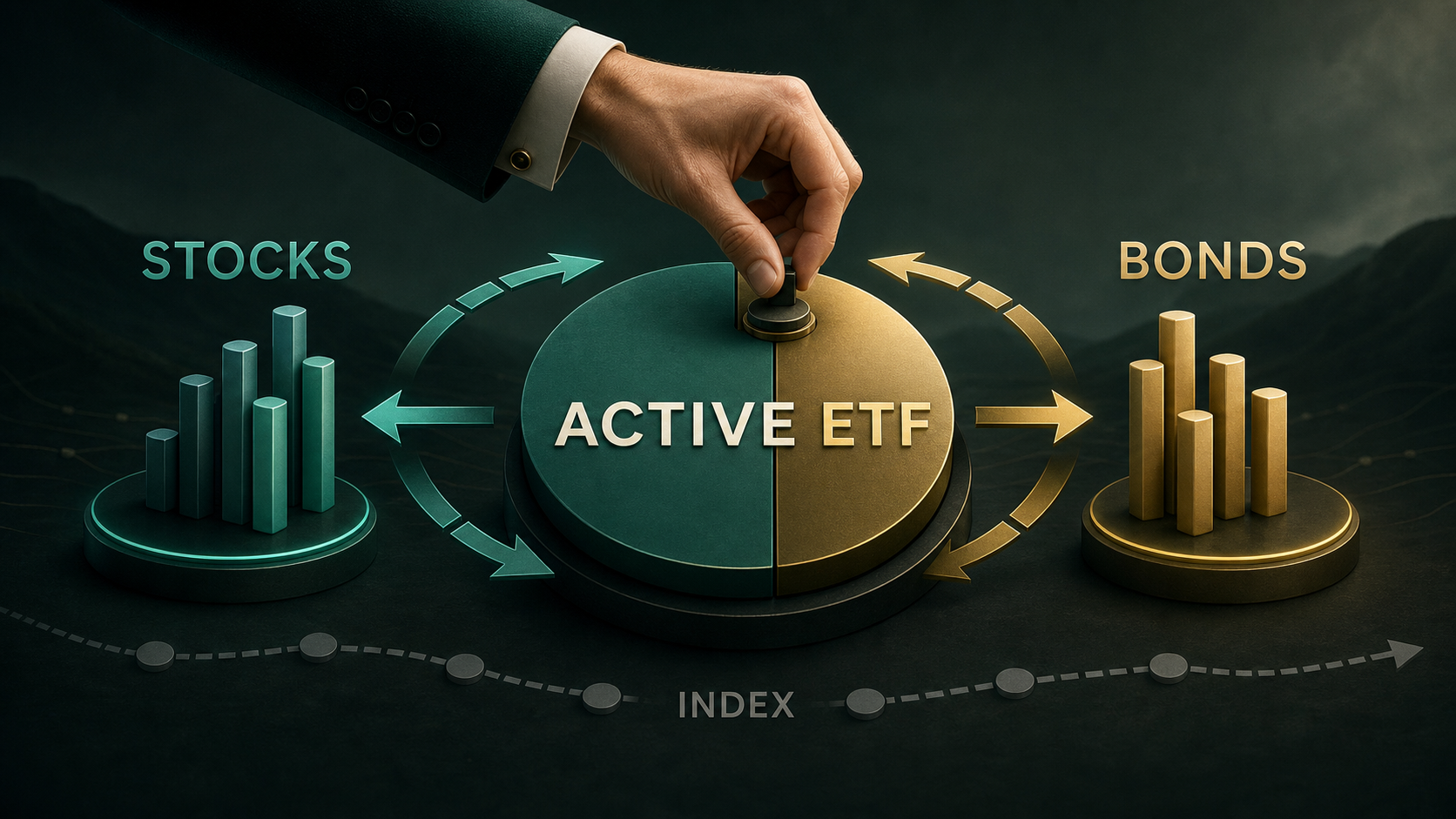
Active ETFs combine the intraday trading of an exchange-traded fund with a portfolio manager who can choose, avoid, and reweight investments instead of automatically following an index. That flexibility can help in markets where research and risk control matter, but it is not free: investors take on higher fees, manager risk, and the possibility of lagging a simple benchmark.
The category is no longer a niche experiment. In February 2026, the SEC reported that the United States had more than 3,600 ETFs holding over $10 trillion and said actively managed funds were rapidly approaching passive funds in number. Growth, however, is not proof that every fund deserves a place in your portfolio.
Key Takeaways
- Active ETFs let a manager select and adjust holdings rather than copy a fixed index.
- They trade on an exchange like other ETFs, so investors still face bid-ask spreads and possible premiums or discounts.
- Higher expenses must be overcome before active decisions add value to an investor’s net return.
- Results depend on the strategy, people, process, capacity, and discipline behind the fund—not merely the word “active.”
- The right comparison is a relevant benchmark and comparable funds over a full market cycle, after fees and taxes.
What Are Active ETFs?
An active ETF is a pooled investment fund whose adviser makes ongoing portfolio decisions. The manager may buy securities believed to be undervalued, avoid companies with weakening fundamentals, alter duration, hold cash, or use derivatives within the limits described in the prospectus. The objective may be to beat a benchmark, generate income, reduce downside risk, or deliver a particular outcome. Buffer ETFs are one example of an outcome-oriented structure: they trade away part of the upside in exchange for limited downside protection over a defined period.
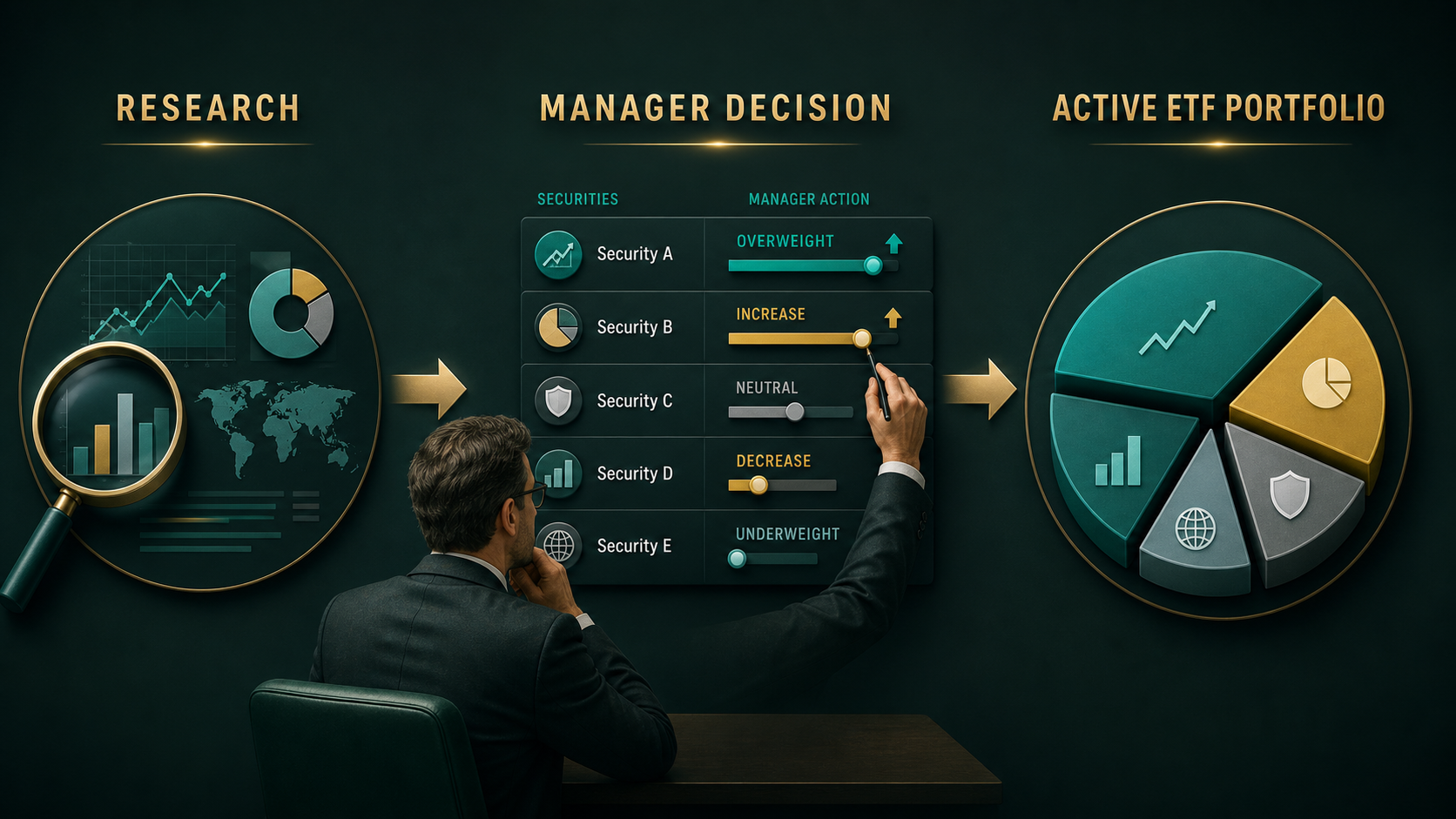
The ETF wrapper determines how shares are created, redeemed, and traded. The active mandate determines how the portfolio is managed. That is why understanding how an ETF works is only the first step. Two products can both be ETFs while following completely different investment processes.
Investor.gov notes that actively managed funds rely on the adviser’s skill and may trade without needing to conform to an index. Historically, active management has also involved higher fees and more turnover, which can affect both performance and taxes.
How Active ETFs Work
The process normally begins with a defined opportunity set. A manager researches securities, estimates potential return and risk, chooses positions, and then changes their weights as prices or facts change. Some teams make fundamental judgments from earnings and balance sheets; others use quantitative models, macroeconomic signals, or a mixture of methods.
A sensible mandate still imposes rules. The prospectus may limit sectors, credit quality, country exposure, derivatives, or position size. Portfolio construction then turns individual ideas into a diversified fund. Understanding diversification helps investors judge whether an apparently broad fund is actually dependent on a few concentrated bets.
Authorized participants support the creation and redemption mechanism that helps the market price stay near net asset value. But investors buy and sell through an exchange, so the bid-ask spread, trading volume, and timing still affect the price paid.
Active ETF vs Index ETF
| Feature | Active ETF | Index ETF |
|---|---|---|
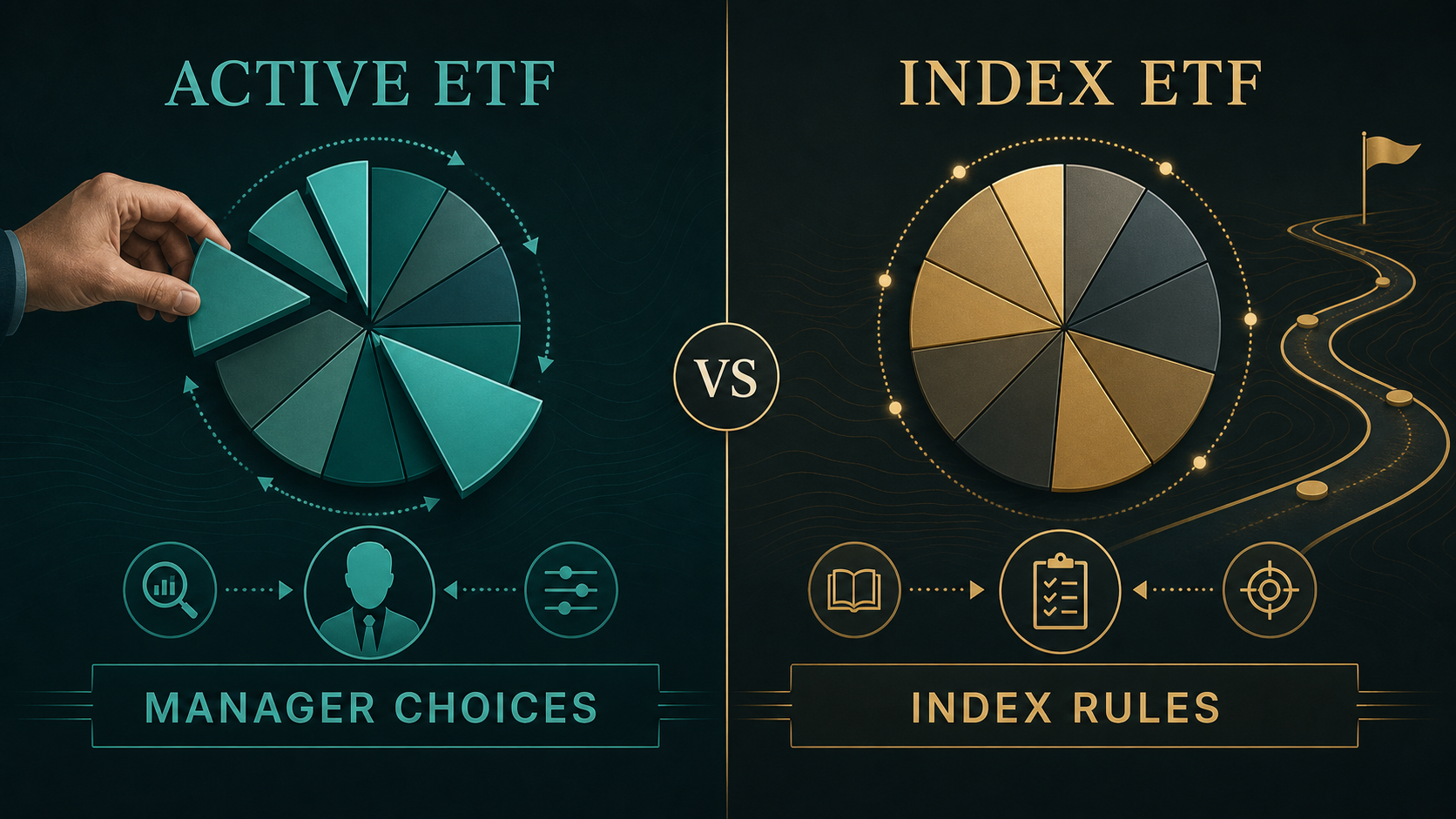
| Portfolio decisions | Manager or model selects and reweights holdings | Rules seek to replicate a stated index |
| Primary goal | Outperform, manage risk, create income, or target an outcome | Track benchmark performance before costs |
| Typical fee | Often higher | Often lower |
| Main risk | Manager, process, and strategy failure | Benchmark and tracking risk |
| Portfolio turnover | Can be higher | Usually driven by index changes and flows |
| Best evaluation | Process plus after-fee, risk-adjusted results | Cost, diversification, and tracking difference |
An index fund accepts the market segment defined by its benchmark. An active fund deliberately departs from that benchmark. This creates the possibility of better performance and the certainty of different performance. Even a skilled process can trail for years because its style is out of favor.
Do not compare a small-company value fund with the S&P 500 simply because that index is familiar. Compare each fund with a benchmark that reflects its actual opportunity set. For passive products, tracking error helps measure implementation. For active products, benchmark-relative risk shows how aggressively the manager is departing from the market.
Are the Higher Fees Worth Paying?
The fee question is mathematical. If one fund costs 0.65% per year and a comparable index fund costs 0.05%, active decisions must add roughly 0.60 percentage points annually just to close the expense gap, before considering spreads and taxes. Over long periods, even a modest difference compounds.
Review the stated ETF expense ratio, but do not stop there. Trading costs inside the portfolio, cash holdings, derivatives expenses, and market-price spreads can also reduce investor returns. A lower headline fee does not rescue a weak strategy, while a higher fee is defensible only when the process delivers value that is difficult to obtain more cheaply.
Taxes can strengthen the ETF case relative to a traditional mutual fund because the creation-redemption process may reduce taxable capital-gain distributions. It does not make active trading tax-free. Distributions, dividends, interest, and sales by the investor can still create tax consequences, and outcomes depend on the fund and account type.
Where Active Management May Help
Active management may have a stronger case in less efficient or more complex markets—such as certain bonds, smaller companies, emerging markets, or specialized income strategies—where security selection and liquidity analysis can matter. A bond manager, for example, can alter credit exposure and maturity rather than accept every security in an index. Investors considering that use can start with GSV’s guide to bond duration.
Flexibility may also help when a benchmark becomes highly concentrated, market liquidity changes, or risk rises in a specific industry. A manager can hold less of an expensive security or avoid an issuer with deteriorating fundamentals. Yet every protective choice creates another possibility: the manager may sell too early, hold too much cash during a rally, or favor the wrong sector.
The SEC’s 2026 analysis found that active ETFs, as a group, showed higher turnover, greater derivatives use, and less alignment with benchmark returns than passive ETFs. Those are descriptive findings, not a verdict. They reinforce why investors must examine the actual strategy instead of treating all active ETFs as interchangeable.
Five Risks That Marketing Can Hide
1. Manager risk
A strong historical record may belong to a portfolio manager who later leaves. Confirm who made the decisions, how long the current team has worked together, and whether the process is repeatable.
2. Style drift
A fund can gradually move away from the role you assigned it. Holdings, sector exposure, market capitalization, and credit quality reveal more than a broad fund name.
3. Short track records
Many recently launched funds have operated in only one market environment. Backtests are hypothetical and should not be treated like live results through stress, redemptions, and real trading costs.
4. Concentration and complexity
A thematic label can hide large exposure to a handful of securities or derivatives. Match the position size to your risk tolerance rather than to the confidence of the marketing language.
5. Performance chasing
Recent winners often attract money after the favorable move has already happened. Buying a fund because it topped a one-year ranking is not the same as understanding why its process should work in the future.
Seven Questions to Ask Before You Buy
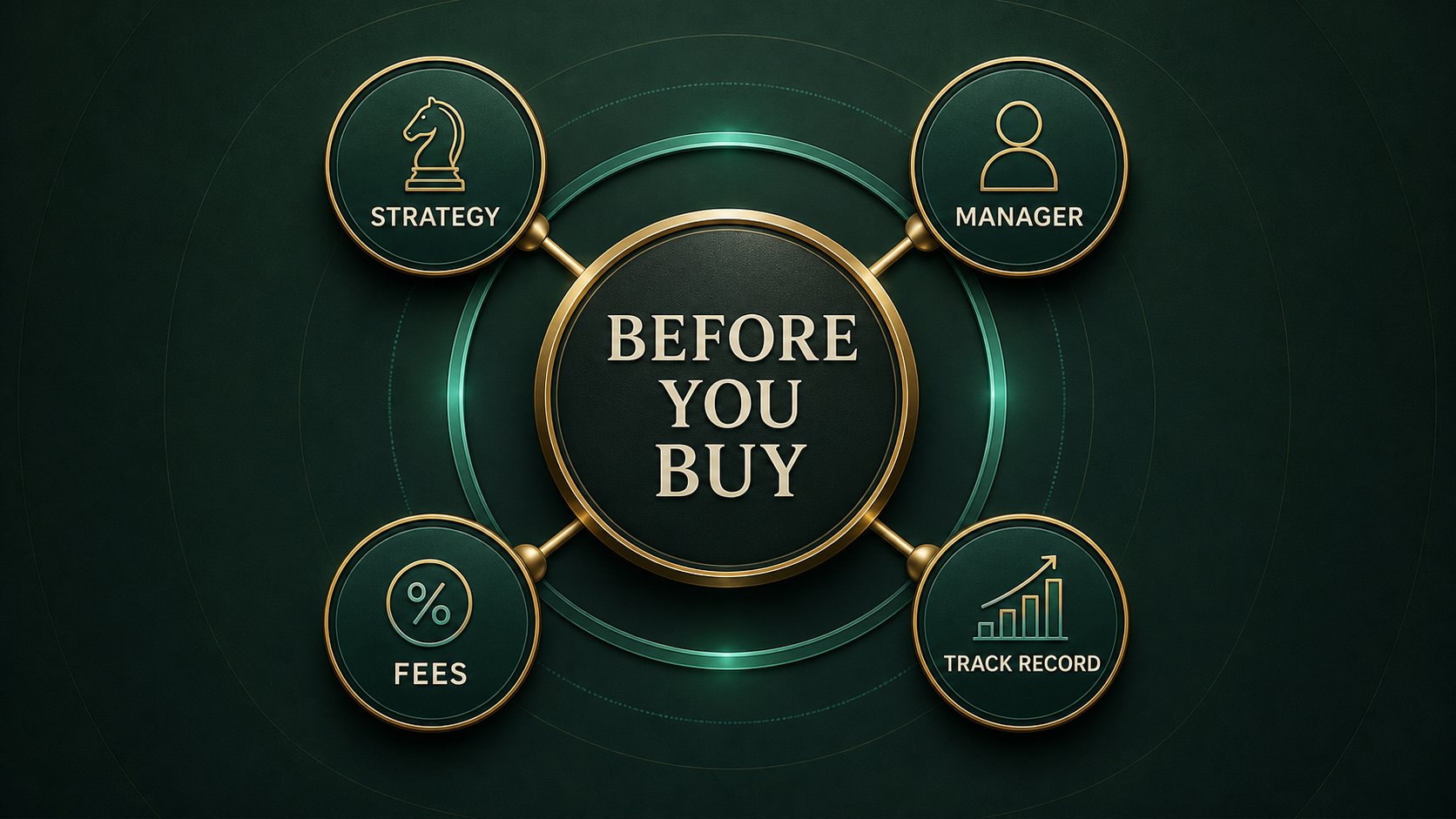
- What exact outcome is the fund trying to deliver? “Growth” is too vague; identify the benchmark, risk target, income goal, or market inefficiency.
- Who makes the decisions? Check the named managers, tenure, team stability, and dependence on one individual.
- Is the process understandable and repeatable? A clear discipline is easier to monitor than a flexible story that changes after poor results.
- What does it cost? Include the expense ratio, spread, tax impact, and any strategy-specific financing or derivatives costs.
- How different is the portfolio? If holdings closely resemble a cheap index, the higher fee may buy little genuine active management.
- How did it behave in weak markets? Compare drawdowns, volatility, and recovery—not only annualized return.
- What role will it play? Decide whether it replaces a core holding or fills a small satellite allocation before purchasing.
Read the prospectus, summary prospectus, holdings, and shareholder reports. Then compare the fund with at least one low-cost alternative. The decision should fit an overall asset allocation, not begin with a fashionable ticker.
Official Sources
- SEC: Updated Statistics and Data on Exchange-Traded Funds
- Investor.gov: Active Fund Definition
- SEC DERA: Active ETFs in a Fast-Growing Market
Final Thoughts
Active ETFs are tools, not automatic upgrades from index funds. Their best argument is flexible decision-making inside a convenient ETF structure. Their biggest weakness is that investors must pay more and trust a process that can be wrong. Buy only when you can explain the strategy, manager advantage, total cost, benchmark, and portfolio role in plain language.
Frequently Asked Questions
Can active ETFs beat the market?
Yes, an active ETF can outperform its benchmark, but it can also underperform. Evaluate results after fees and against the correct benchmark over multiple market environments.
Are active ETFs better than index ETFs?
Neither structure is universally better. Index ETFs often suit low-cost core exposure, while active ETFs may suit a specific market, income goal, or risk-management purpose when the process justifies its cost.
Do active ETFs reveal their holdings?
Many publish holdings daily, while certain structures use different disclosure methods. Investors should review the fund website and prospectus for the exact policy.
Are active ETFs tax-efficient?
They can be tax-efficient relative to similarly managed mutual funds because of the ETF creation-redemption mechanism, but distributions and investor sales may still be taxable.
Continue Learning
Build the rest of your ETF decision framework with these guides.
Educational disclaimer: This article is for general educational purposes only and is not personalized financial, tax, or legal advice. Consider your objectives, time horizon, financial situation, and risk tolerance before investing.