
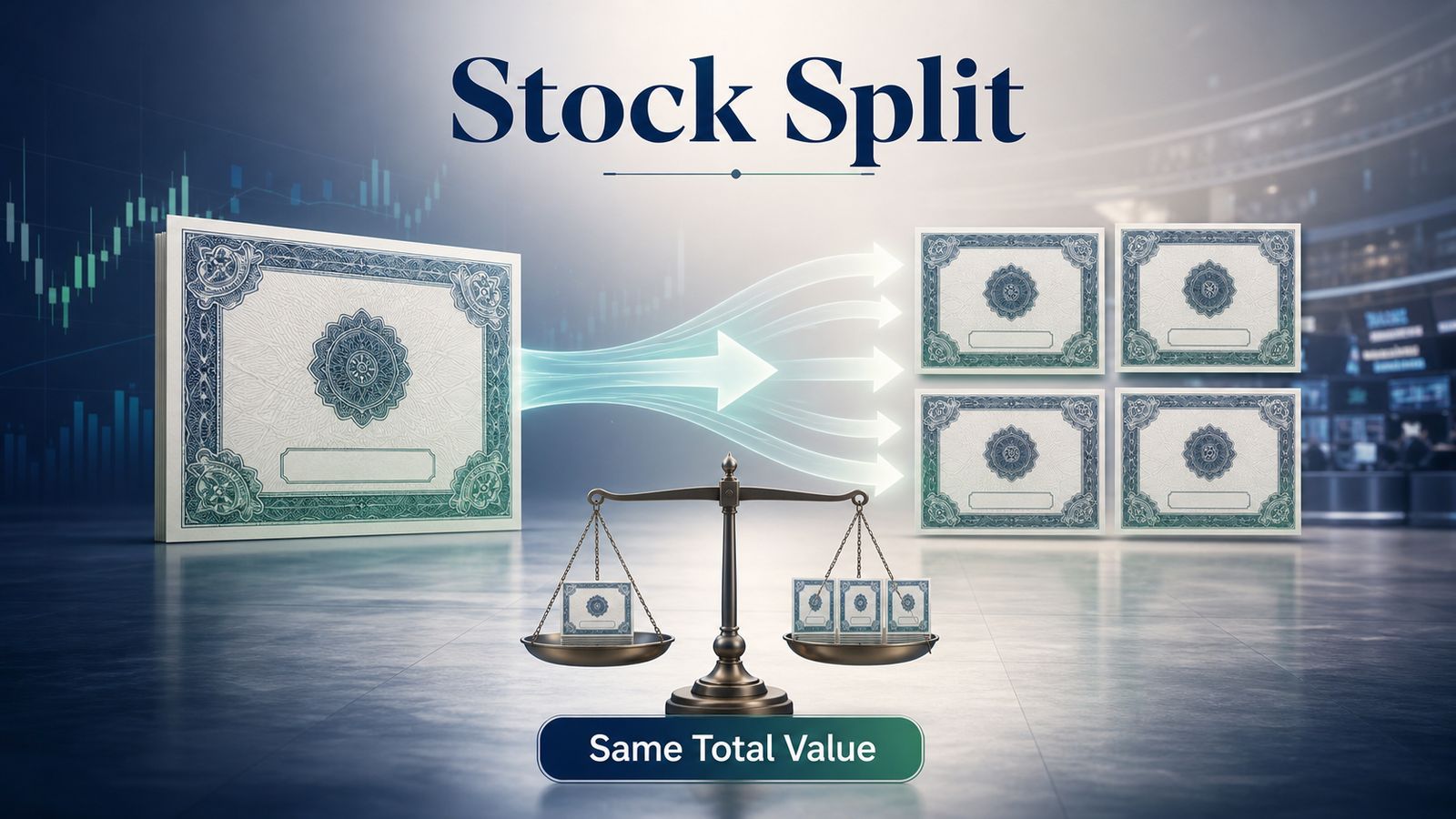
Stock split means a company increases the number of shares outstanding while reducing the price per share in proportion. A split can make each share look cheaper, but it does not automatically make the company more valuable or give investors free profit.
For example, in a 4-for-1 stock split, one share becomes four shares. If the stock traded at $100 before the split, the adjusted price would be about $25 after the split, ignoring normal market movement. The investor owns more shares, but the total position value is designed to stay roughly the same at the moment of the split.
This article is for general investing education only. It is not personalized investment, tax, legal, or financial advice.
A lower share price can feel like a bargain, especially when a company you wanted looked too expensive before the split. I understand that feeling. When I first bought U.S. stocks, the price of one full share sometimes felt impossible. Fractional investing later allowed me to start with a much smaller amount.
That experience also made stock splits easier to understand. A split changes the size of each piece; it does not make the whole company cheaper by itself. Today, fractional shares may already solve the access problem for many investors, although availability depends on the broker.
If a stock rallies around a split announcement, ask what else changed. Did earnings improve? Did guidance rise? Or did investors simply become more enthusiastic because the displayed price became smaller? More shares in the account can look exciting, but the business is still the part that must create value.
Key Takeaways
- A stock split changes the share count and the per-share price, not the company’s underlying business value.
- In a forward split, investors receive more shares at a lower adjusted price per share.
- In a reverse split, investors hold fewer shares at a higher adjusted price per share.
- Splits can improve trading accessibility, but they do not guarantee future gains.
- Beginners should review fundamentals, valuation, and portfolio fit instead of buying only because a split was announced.
What Is a Stock Split?
A stock split is a corporate action that divides existing shares into a larger number of shares. The most common version is a forward split, such as 2-for-1, 3-for-1, or 4-for-1. In a 2-for-1 split, each old share becomes two new shares. In a 4-for-1 split, each old share becomes four new shares.
The important part is that the ownership percentage does not change by itself. If you owned a tiny fraction of a company before the split, you generally own the same tiny fraction immediately after the split. You just hold a different number of shares with a different price per share.
This is easier to understand if you already know what a stock is. A share represents ownership in a company. A split changes how that ownership is divided into pieces. It does not by itself change revenue, profits, cash flow, debt, competitive position, or the quality of the business.
How a Stock Split Works
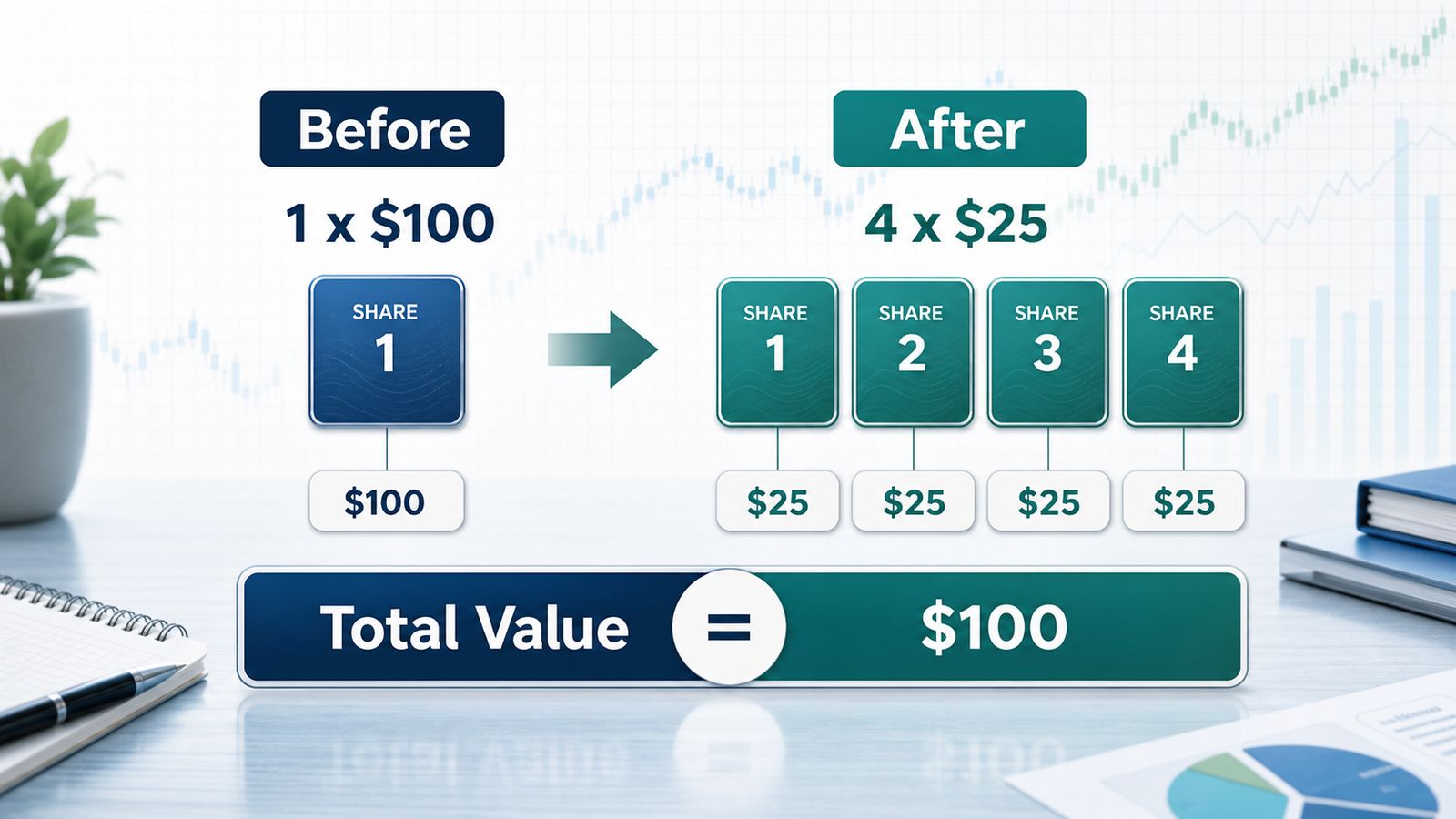
The basic stock split math is simple. Multiply the number of shares by the split ratio, then divide the price per share by the same ratio. The total position value is intended to remain the same at the split moment.
Suppose you own 10 shares of a company at $120 per share. Your position is worth $1,200 before normal market movement. If the company completes a 3-for-1 split, you would own 30 shares after the split. The adjusted price would be about $40 per share. Thirty shares at $40 each still equals $1,200.
| Split Ratio | Before | After | Total Value at Split |
|---|---|---|---|
| 2-for-1 | 10 shares at $100 | 20 shares at $50 | $1,000 |
| 3-for-1 | 10 shares at $120 | 30 shares at $40 | $1,200 |
| 4-for-1 | 5 shares at $200 | 20 shares at $50 | $1,000 |
The market can still move before, during, and after the split. If investors become more excited or more cautious, the stock price may rise or fall for normal market reasons. That price movement is separate from the mechanical adjustment.
Why Companies Split Their Stock
Companies usually announce a forward split when the share price has risen enough that management wants shares to appear more accessible. A lower per-share price can make trading easier for investors who buy whole shares, even though many brokerages now offer fractional shares.
A split can also signal confidence, but beginners should be careful with that idea. A company may split after a strong period of performance, but the split is not the reason the business became strong. The business performance came first. The split changes the share packaging after the fact.
Another reason is liquidity. If a lower price attracts more buyers and sellers, trading may become more active. Higher liquidity can sometimes reduce friction for investors. Still, liquidity benefits do not guarantee that the stock is fairly valued or that the company will keep growing.
Share splits often get attention because they involve well-known companies. That attention can create short-term excitement, but a beginner should separate news from analysis. A split may be interesting, but it is only one small piece of a larger investing decision.
Stock Split vs Reverse Stock Split
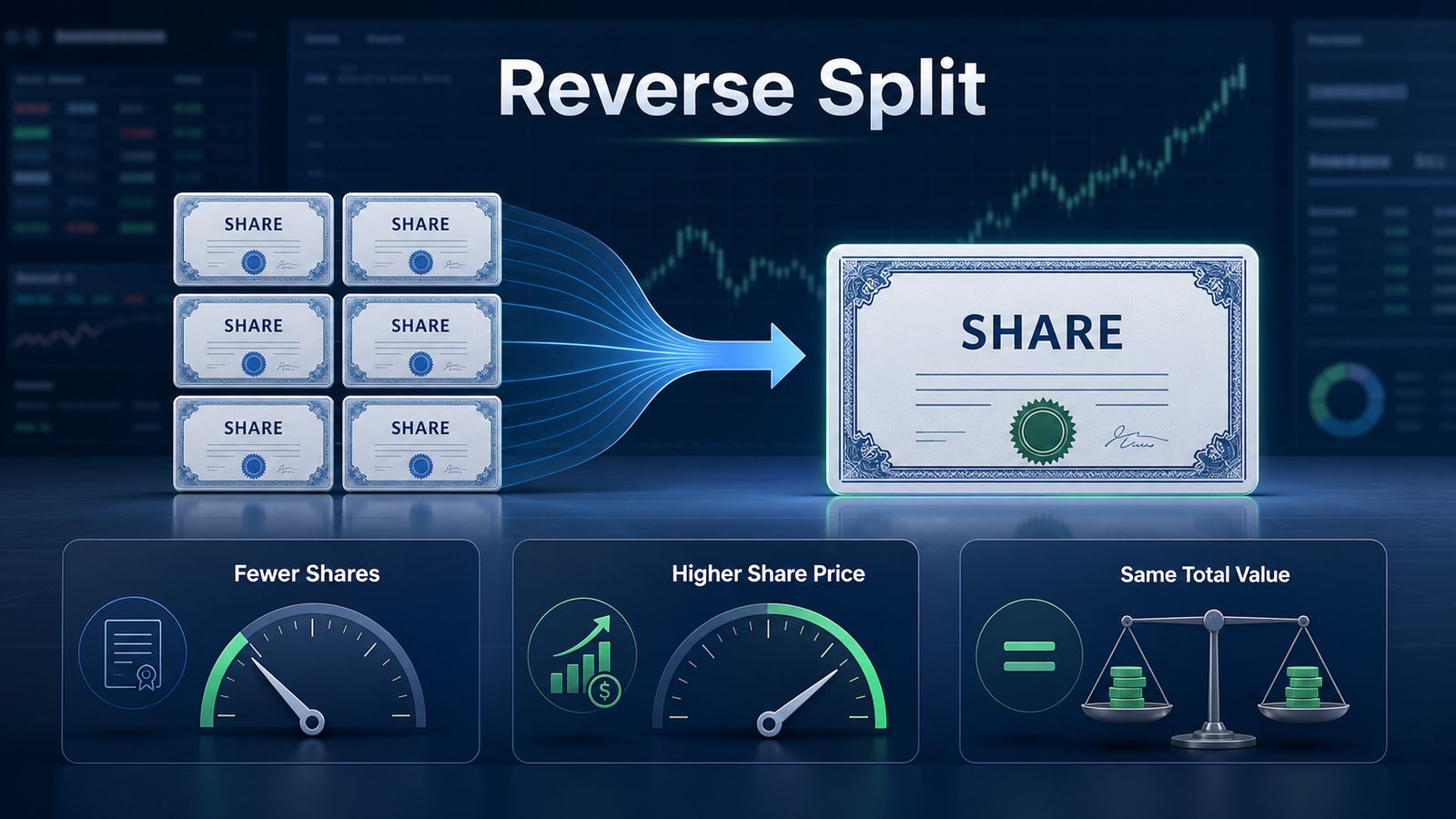
A forward stock split increases the number of shares and lowers the adjusted price per share. A reverse stock split does the opposite. It reduces the number of shares and raises the adjusted price per share.
For example, in a 1-for-10 reverse split, an investor who owned 100 shares may end up with 10 shares. If the stock traded at $2 before the reverse split, the adjusted price would be about $20 after the split, ignoring normal market movement. The total value is designed to remain roughly the same at the moment of the reverse split.
Reverse splits can happen for different reasons. Sometimes a company wants to raise its share price to meet exchange listing requirements. Sometimes management wants to make the stock appear more institutionally acceptable. A reverse split is not automatically bad, but it can be a warning sign when it follows a long share-price decline or weak business performance.
Beginners should look closely at why the reverse split is happening. If a company is shrinking, losing money, issuing new shares, or struggling to stay listed, the reverse split may not fix the underlying problem. It changes the share count, not the business model.
Does a Stock Split Make Investors Richer?
A split does not make investors richer by itself. The math is like exchanging one $100 bill for four $25 bills. You have more pieces of paper, but not more money. The same idea applies to shares at the moment of the split.
Some investors confuse a lower post-split share price with a cheaper stock. That can be a mistake. A $25 stock after a 4-for-1 split may represent the same valuation as a $100 stock before the split. To decide whether the stock is expensive or cheap, investors need to look at valuation measures, earnings, growth, debt, cash flow, and market expectations.
This is where market capitalization matters. Market cap is the share price multiplied by the number of shares outstanding. A split changes both numbers in opposite directions. If the share count increases and the price per share falls proportionally, market cap does not change because of the split alone.
A split can still affect investor behavior. If more investors become interested after the split, demand may increase. If hype fades, the price may fall. Those outcomes depend on market behavior and business results, not on the split mechanics alone.
What a Stock Split Means for Your Portfolio
If you already own shares, a stock split usually appears automatically in your brokerage account. You do not normally need to apply for the new shares. Your broker adjusts the share count and cost information according to the corporate action.
Your total position value should not change because of the split itself, although the market price can move at the same time. Your cost basis may be adjusted across the new number of shares. Tax treatment can depend on details, so investors should rely on official documents, brokerage records, or a qualified tax professional when necessary.
If you are thinking about buying after a split announcement, slow down. Ask whether the company still fits your goals, risk tolerance, and time horizon. A split can make a stock easier to buy, but easier access is not the same as a better investment.
For broader context, it helps to connect a single stock decision to asset allocation, diversification, and brokerage account basics. A split may affect one holding, but a portfolio should not depend on one headline.
How Beginners Should Evaluate a Stock Split
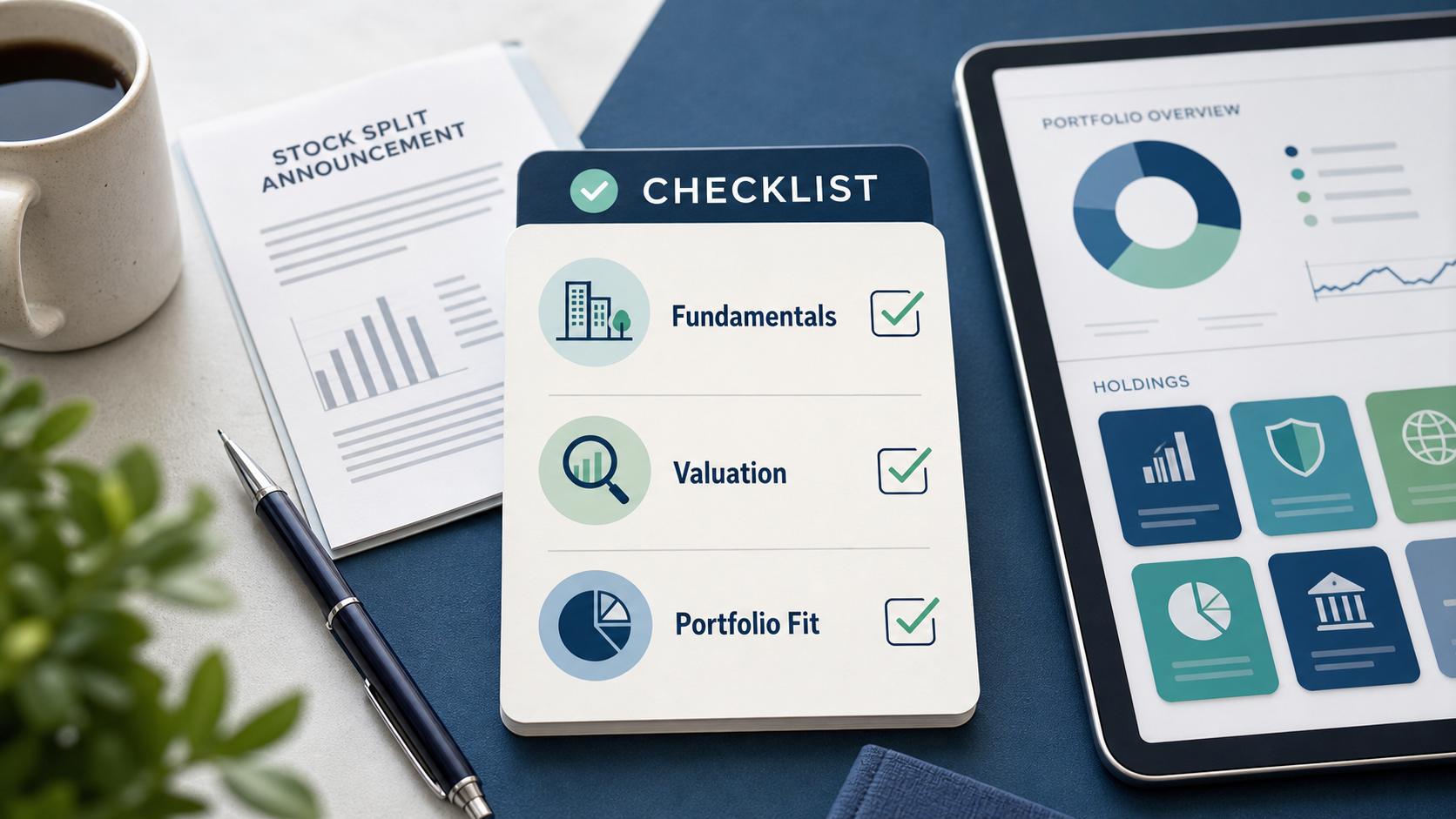
The best way to evaluate a split is to treat it as a starting point for research, not a buy signal. First, review the business. Is revenue growing? Are profits healthy? Does the company have a durable advantage? Is debt manageable? A split does not answer these questions.
Second, review valuation. A great company can still be a poor investment if the price already reflects unrealistic expectations. Beginners often focus on the lower post-split price, but the more useful question is whether the whole company is reasonably valued relative to its fundamentals.
Third, review portfolio fit. If you already own similar companies or funds, buying more after a stock split may increase concentration risk. A stock can be popular and still make your portfolio less balanced. GSV’s guides on the S&P 500, dividend stocks, and AI stocks can help you compare single-stock decisions with broader market exposure.
Finally, check the company’s official announcement. It should explain the split ratio, record date, distribution date, and trading date. Those details matter if you are trying to understand when the adjustment happens.
Common Mistakes to Avoid
The first mistake is thinking a stock split creates free money. It does not. More shares at a lower adjusted price can leave the total value unchanged at the split moment.
The second mistake is assuming a lower price means a cheaper valuation. Price per share and valuation are different ideas. A company with a $20 share price can be expensive, and a company with a $500 share price can be reasonable, depending on earnings, growth, and total share count.
The third mistake is ignoring the reason for a reverse split. A reverse split may be a routine corporate action, but it can also appear when a company is under pressure. Beginners should investigate the business context before reacting.
The fourth mistake is chasing headlines. Stock split announcements can attract attention, but attention is not analysis. A stronger habit is to compare the split with fundamentals, valuation, and portfolio role.
Frequently Asked Questions
Is a stock split good or bad?
A stock split is neutral by itself. It can improve accessibility or liquidity, but the business fundamentals decide whether the stock is attractive over time.
Do I lose money in a stock split?
You should not lose money from the split mechanics alone. Your share count and price per share are adjusted so total value is designed to stay roughly the same at the split moment. Market prices can still move for other reasons.
What is a 2-for-1 stock split?
A 2-for-1 stock split means each old share becomes two new shares. If the stock was $100 before the split, the adjusted price would be about $50, ignoring normal market movement.
Can a stock split affect dividends?
Dividend amounts are usually adjusted for the new share count. If a company paid $1 per share before a 2-for-1 split, the dividend might be adjusted to about $0.50 per share so the total dividend amount is similar, assuming the company keeps the dividend policy unchanged.
Final Thoughts
A stock split is best understood as a change in share packaging. It can make shares look more accessible, but it does not automatically change the company’s value, profits, or long-term prospects.
For beginners, the smart response is simple: understand the math, avoid headline excitement, and study the business. If the company was strong before the split, the split may make ownership easier to manage. If the company was weak before the split, the split alone will not fix it.