

Oil prices and inflation are connected because petroleum affects far more than the number displayed at a gas station. A sustained oil-price increase can raise household energy bills, transportation costs, production expenses, inflation expectations, and interest-rate pressure. The effect is real, but it is neither instant nor identical across every product, company, or market cycle.
This connection matters again in July 2026. Crude prices have swung sharply as conflict risk and changing supply expectations moved the market. Investors should not treat one day’s oil move as a new inflation trend. They should understand the transmission path, identify whether the shock persists, and separate headline inflation from the slower-moving measures that central banks monitor.
Key Takeaways
- Oil reaches inflation directly through gasoline and household energy, and indirectly through freight, aviation, manufacturing, and packaging.
- Headline inflation usually reacts faster than core inflation because core indexes exclude food and energy.
- A short oil spike may reverse before it changes wages or broad pricing behavior; a persistent shock is more consequential.
- Higher inflation expectations can lift bond yields and complicate central-bank decisions.
- Investors should monitor crude prices, refined-product prices, inventories, inflation breadth, and company margins together.
How Oil Prices and Inflation Are Connected
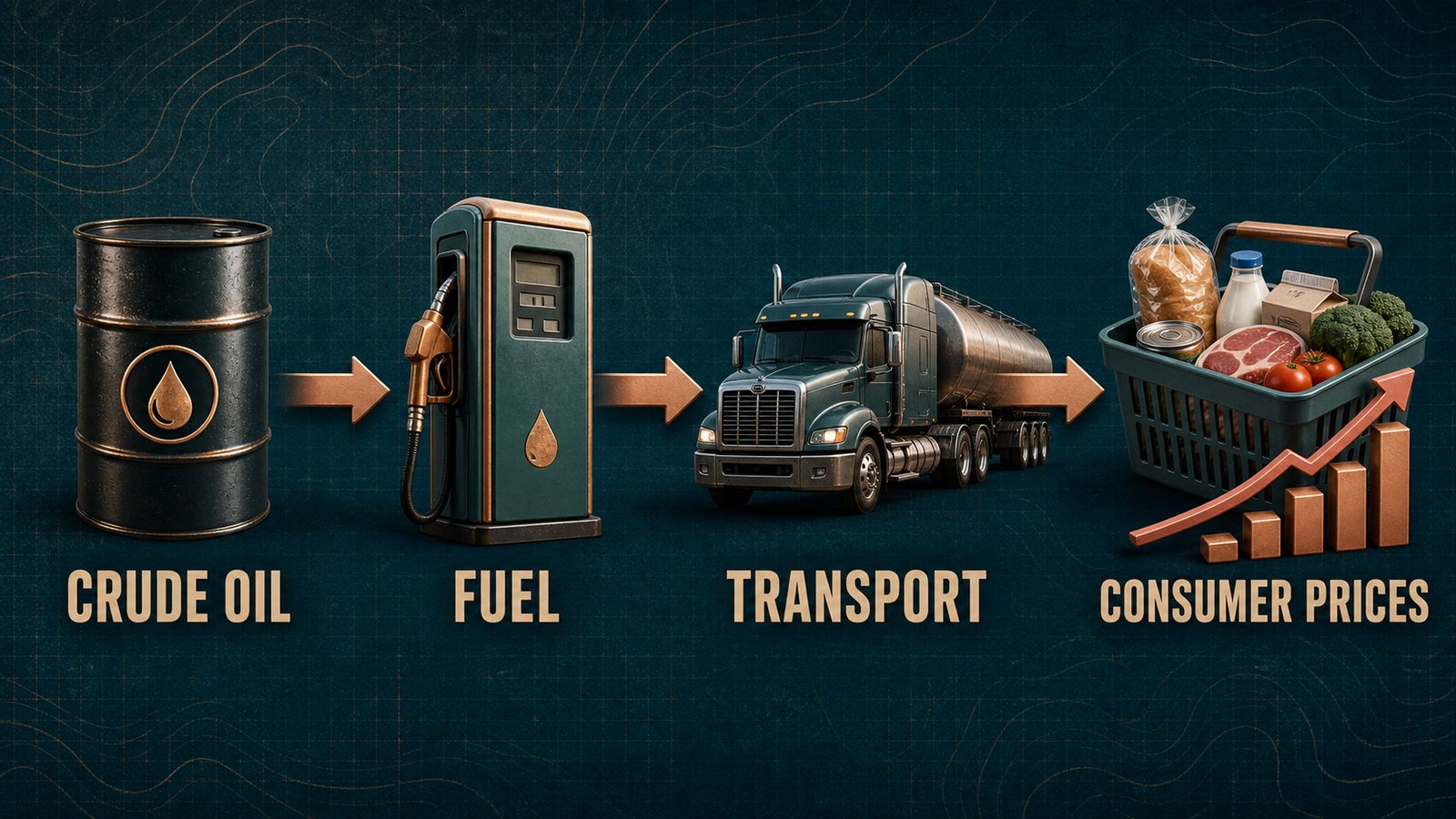
The first link is straightforward. Crude oil is refined into gasoline, diesel, jet fuel, heating oil, and other petroleum products. When crude becomes more expensive, refiners and distributors may eventually charge more, although taxes, refining capacity, inventories, seasonal demand, and local competition affect the final price.
The second link is broader. Trucks, ships, aircraft, farms, factories, and delivery networks consume energy. A company may absorb a modest increase, improve efficiency, or pass part of the cost to customers. The result depends on contracts and pricing power, which is why a 10% oil move does not produce a mechanical 10% increase in consumer prices.
The U.S. Energy Information Administration explains that crude and petroleum-product prices emerge from transactions across the entire supply chain. Its framework highlights global supply, consumption, inventories, spare capacity, geopolitics, and financial markets. These forces make oil volatile and make the timing of pass-through uncertain.
Direct and Indirect Inflation Effects

The Direct Effect
Consumers see the direct effect in gasoline, heating fuel, and airline fares. These categories can move quickly and visibly. Because energy is included in headline measures, a sudden gasoline change can make the monthly Consumer Price Index look dramatically hotter or cooler.
That volatility is why economists also study core inflation, which excludes food and energy. Core does not claim that fuel is unimportant to household budgets. It helps analysts see whether price pressure has spread into less volatile categories.
The Indirect Effect
The indirect effect travels through business costs. Diesel powers freight, jet fuel affects travel and air cargo, petrochemicals are used in plastics and packaging, and energy supports production. Companies with thin margins may raise prices sooner than businesses with strong margins or long-term fuel contracts.
This channel can take longer and is harder to measure. A retailer may face higher shipping costs while a manufacturer pays more for materials. Yet weak consumer demand can prevent either from passing the full increase along. Inflation depends on both cost pressure and the ability to charge customers.
Why One Oil Spike Does Not Guarantee Lasting Inflation
Duration matters more than a dramatic headline. If a geopolitical scare sends oil higher for several days and supply risk quickly fades, gasoline prices may rise temporarily and then retreat. The annual inflation rate can still change because of base effects, but the shock may not become broad or persistent.
A lasting disruption is different. Months of elevated fuel and freight costs give companies more opportunities to reset prices. Workers may seek higher wages to recover purchasing power. Households and businesses may begin to expect further increases. Those second-round effects can make inflation harder to reverse.
Federal Reserve research finds that oil’s pass-through into core inflation is generally much smaller than its immediate effect on headline inflation. That is reassuring, but not a reason to ignore oil. The risk grows when demand is strong, supply is constrained, expectations are unsettled, or the shock lasts long enough to influence wage and price decisions.
Oil, the Federal Reserve, and Interest Rates
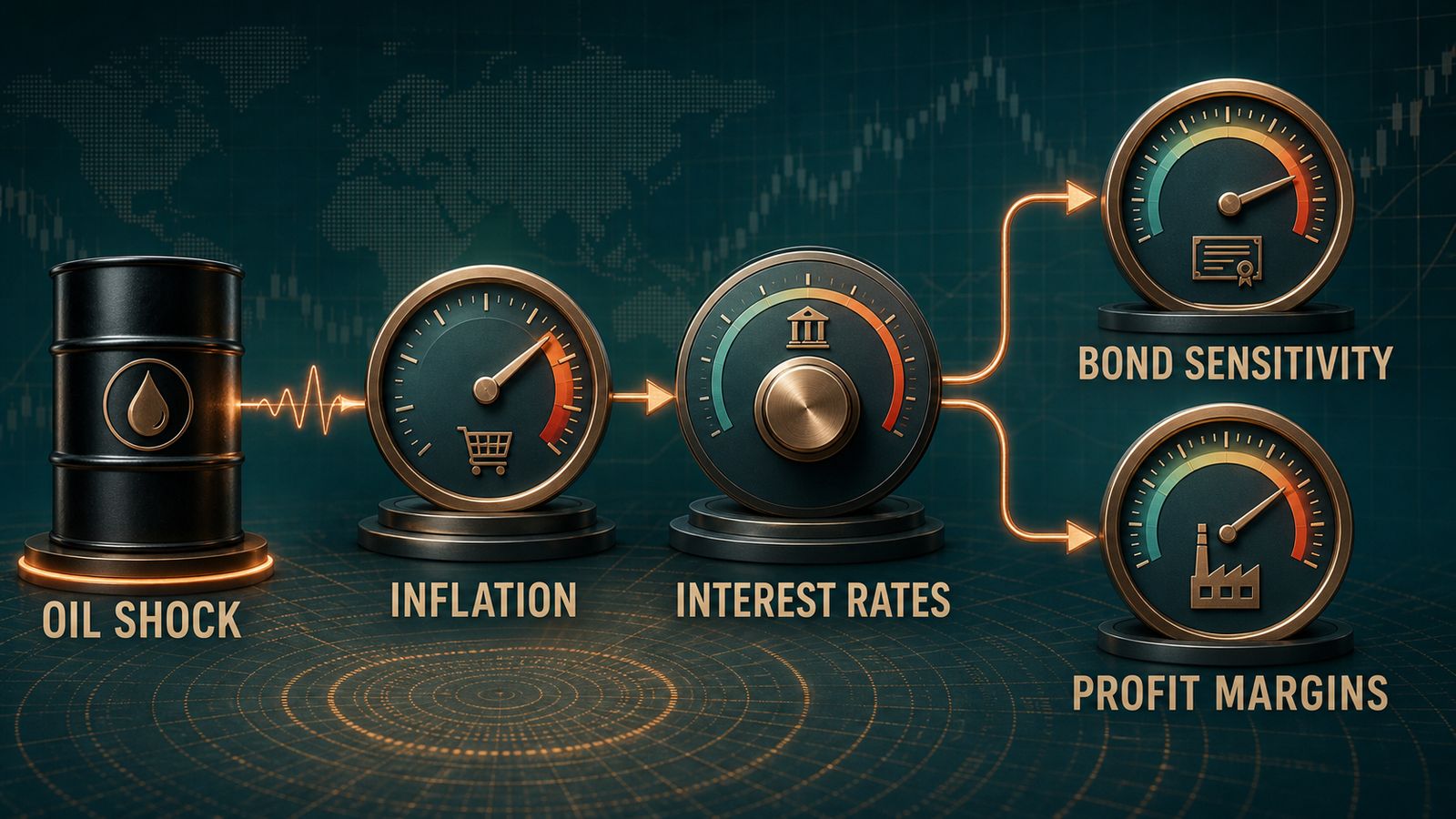
Central banks face an uncomfortable trade-off when oil rises. Higher fuel prices weaken household purchasing power and can slow growth, but they also raise near-term inflation. Raising rates cannot create crude oil or reopen a shipping route. It can only restrain demand and reduce the chance that the initial shock spreads.
Policymakers therefore ask whether the increase is temporary, whether expectations remain anchored, and whether services inflation and wages are also accelerating. The distinction is central to understanding inflation and interest rates.
Markets may react before official policy changes. Traders can demand a higher yield on bonds if expected inflation rises or rate cuts look less likely. That repricing affects mortgages, business borrowing, and equity valuations. GSV’s guide to interest rates and stocks explains the valuation channel.
What Higher Oil Prices Mean for Investments
Bonds
Unexpected inflation reduces the future purchasing power of fixed payments. If market yields rise, existing bond prices generally fall. Longer-duration bonds tend to be more sensitive, although the outcome also depends on growth expectations and the starting yield. Understanding bond duration is more useful than assuming every bond reacts equally.
Stocks
Oil is a cost for many businesses and revenue for energy producers. Airlines, delivery companies, chemical manufacturers, and consumer businesses can face pressure, while some producers and service companies may benefit. Even within one industry, hedging, debt, pricing power, and operational efficiency create different results.
Higher rates can also reduce the present value investors assign to future earnings. However, stocks do not automatically fall whenever oil rises. Strong growth, improving productivity, or a short-lived supply scare can offset the pressure. The key question is whether earnings expectations and valuation assumptions change.
Household Portfolios
Households experience an oil shock twice: through current expenses and through market volatility. A larger fuel bill may reduce the amount available to invest. Investors who then make concentrated bets on the latest commodity winner can add a third risk. Broad diversification and a suitable emergency reserve are more dependable than forecasting the next geopolitical headline.
Five Indicators Investors Should Watch
| Indicator | What It Reveals | Why It Matters |
|---|---|---|
| Brent and WTI crude | Global and U.S. benchmark prices | Shows the initial commodity shock |
| Gasoline and diesel | Refining and retail pass-through | Closer to household and freight costs |
| Inventories and spare capacity | Supply cushion | Helps judge whether a shock may persist |
| Headline versus core inflation | Breadth of price pressure | Separates energy volatility from wider inflation |
| Inflation expectations | Consumer and market beliefs | Signals risk of second-round effects |
Do not use crude alone. Refined fuels can diverge because refinery outages or seasonal demand change the spread between crude and retail prices. Likewise, a falling oil price does not guarantee immediate relief if distributors are still working through expensive inventory.
A Practical Investor Checklist
- Check persistence. Compare daily headlines with weekly and monthly averages.
- Identify the cause. A supply disruption has different implications from demand driven by strong global growth.
- Measure breadth. Look beyond energy to services, shelter, wages, and expectations.
- Review portfolio sensitivity. Examine duration, company margins, debt, and sector concentration.
- Avoid binary forecasts. Prepare for several paths rather than betting everything on inflation or disinflation.
An oil shock can contribute to stagflation risk when it raises costs while weakening growth, but the label requires much more evidence than high crude prices. Growth, employment, and broad inflation must be evaluated together.
Official Sources
- U.S. Energy Information Administration: Oil Prices and Outlook
- U.S. Energy Information Administration: Short-Term Energy Outlook
- Federal Reserve: Oil Price Pass-Through Into Core Inflation
- U.S. Bureau of Labor Statistics: Consumer Price Index
Final Thoughts
Oil prices and inflation are linked through both household energy bills and the hidden costs embedded in transportation and production. The size of the effect depends on persistence, refining conditions, demand, company pricing power, and expectations. Investors gain more from tracing those channels and managing portfolio sensitivity than from reacting to one barrel-price headline.
Frequently Asked Questions
Do higher oil prices always cause inflation?
They usually raise direct energy costs, but the broader effect varies. A brief increase can fade, while weak demand may stop businesses from passing all higher costs to consumers.
Why does core inflation exclude energy?
Energy prices are volatile. Excluding food and energy helps analysts see the underlying trend, although households still experience those costs.
Can lower oil prices reduce inflation?
Yes, especially headline inflation, but the effect may arrive with a delay. Services, wages, shelter, and other categories can keep overall inflation elevated.
Are energy stocks an inflation hedge?
Not a guaranteed one. Energy-company returns depend on production costs, reserves, debt, regulation, valuation, and how long commodity prices remain favorable.
Continue Learning
Build the rest of your macro investing framework with these guides.
Educational disclaimer: This article is for general educational purposes only and is not personalized financial, tax, or legal advice. Consider your objectives, time horizon, financial situation, and risk tolerance before investing.