

Stagflation is an unusually painful economy with high inflation, weak growth, and a softening labor market at the same time. It worries investors because the usual policy fixes conflict: stimulating growth can worsen inflation, while fighting inflation can weaken jobs and output.
The term has returned to financial headlines as energy shocks and persistent price pressure collide with growth concerns. In July 2026, the latest U.S. data did not prove that the country was in stagflation: June consumer prices were 3.5% higher than a year earlier, while first-quarter real GDP had still grown at a 2.0% annual rate. The useful question is not whether a scary label fits today, but which signals would confirm the risk and how a diversified plan responds.
Key Takeaways
- Stagflation combines persistent inflation with weak economic growth and deteriorating employment.
- Supply shocks, falling productivity, policy errors, or an inflation psychology can help produce it.
- It is difficult for central banks because raising rates may damage growth while cutting rates may sustain inflation.
- Stocks, long-term bonds, and cash can each face different pressures; no asset is guaranteed to protect a portfolio.
- Investors should monitor inflation breadth, real growth, hiring, wages, margins, and inflation expectations rather than react to one report.
What Is Stagflation?
Economists normally expect inflation to strengthen when demand and employment are strong, then cool when growth weakens. Stagflation breaks that simple relationship. Prices keep rising even as businesses produce less, consumers become cautious, and job opportunities deteriorate.
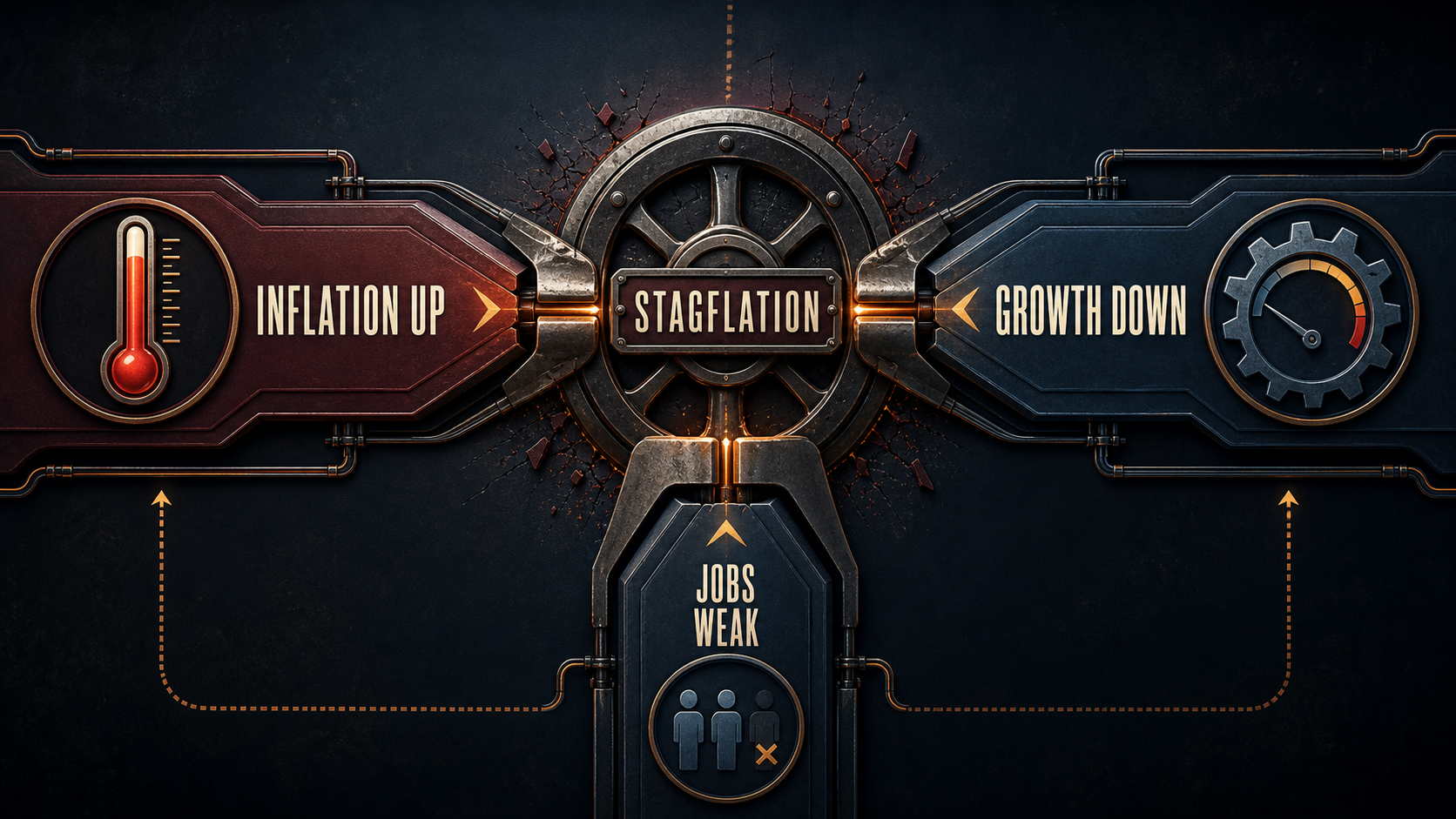
The word combines “stagnation” and “inflation.” There is no single official threshold that declares the economy has crossed into it. Analysts look for a sustained combination across several data series rather than one bad month.
Three ingredients matter. Inflation must be broad or persistent enough to reduce purchasing power. Real economic activity must slow substantially or contract. The labor market must weaken through slower hiring, reduced hours, rising unemployment, or some combination. GSV’s guide to the Consumer Price Index explains one widely followed measure of the first ingredient.
What Causes Stagflation?
A Supply Shock
A sudden increase in energy, food, transportation, or essential input costs can raise prices while reducing production. Businesses face higher expenses and may pass some costs to customers. Consumers then have less money for other purchases, weakening demand elsewhere.
The oil shocks of the 1970s are the classic example, but supply trouble can also come from war, trade barriers, natural disasters, labor shortages, or a breakdown in critical supply chains. The precise trigger changes; the economic squeeze is similar.
Weak Productivity or Productive Capacity
An economy can grow without creating excessive inflation when workers and businesses produce more per hour. If productivity slows while demand continues, supply cannot keep pace. Prices rise even though real output disappoints.
Policy That Stays Too Loose or Tightens Too Late
If households and businesses come to expect persistent inflation, they may set wages and prices accordingly. A central bank that responds late may then need tighter policy for longer, increasing the risk of weak growth. Fiscal policy can add demand without solving supply constraints, producing the same tension.
This is why understanding inflation and interest rates matters. Inflation is not caused by one variable, and the appropriate remedy depends on whether the pressure comes mainly from demand, supply, or expectations.
Why Stagflation Is Hard to Fix
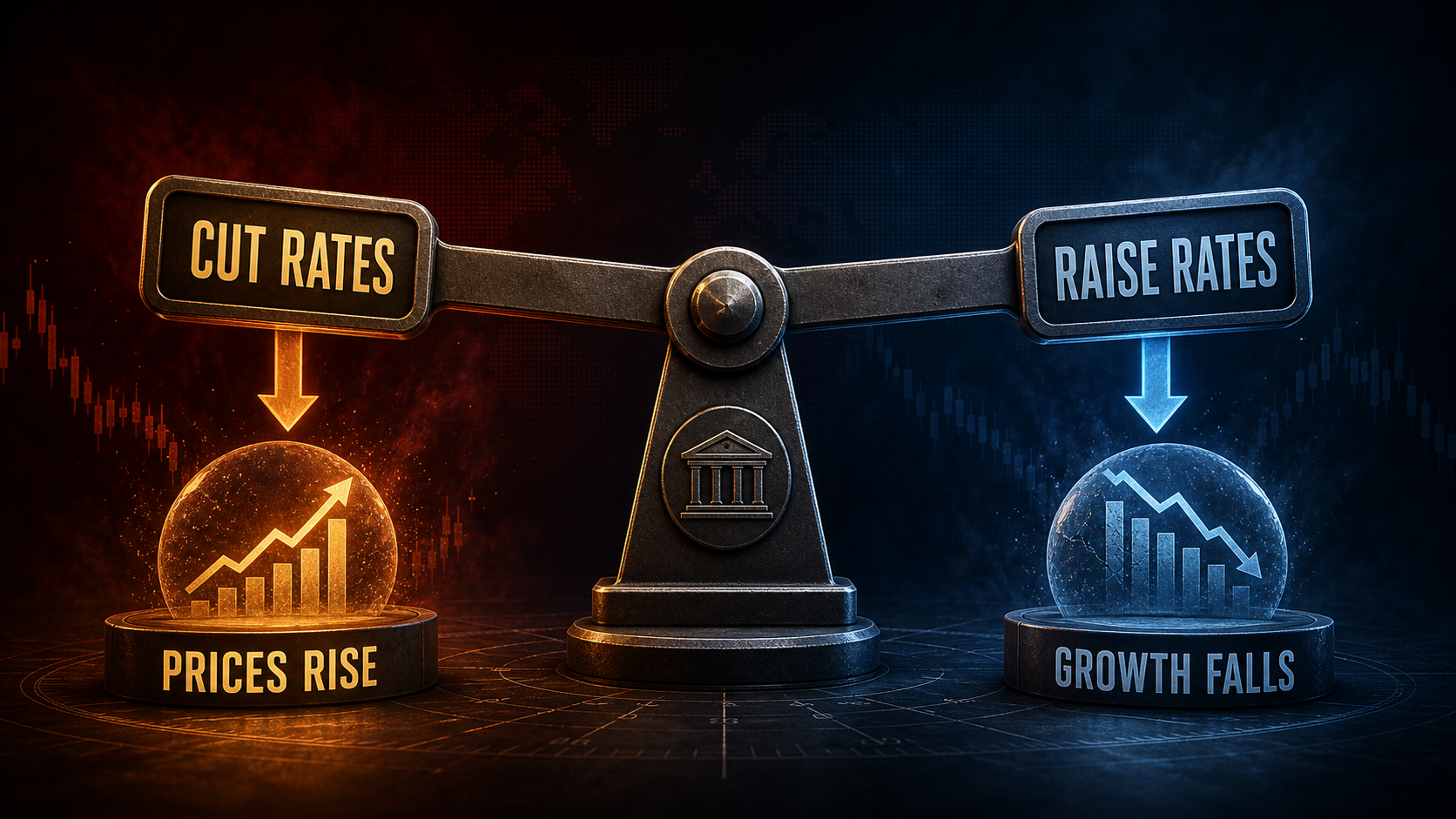
During an ordinary recession, a central bank can often cut interest rates to encourage borrowing, investment, and spending. During an inflation surge with strong growth, it can raise rates to cool demand. Stagflation creates both problems at once.
Cutting rates may support employment and output, but it can also keep demand and inflation expectations too strong. Raising rates may slow price growth, but it can make mortgages, business loans, and refinancing more expensive while an already weak economy loses momentum.
Monetary policy also cannot directly produce oil, repair a supply chain, or create skilled workers. If a supply shock is the main cause, policymakers may have to accept some short-term economic pain while supply adjusts. GSV’s guide to how interest rates affect stocks explains why these choices quickly reach financial markets.
How Stagflation Affects Investments
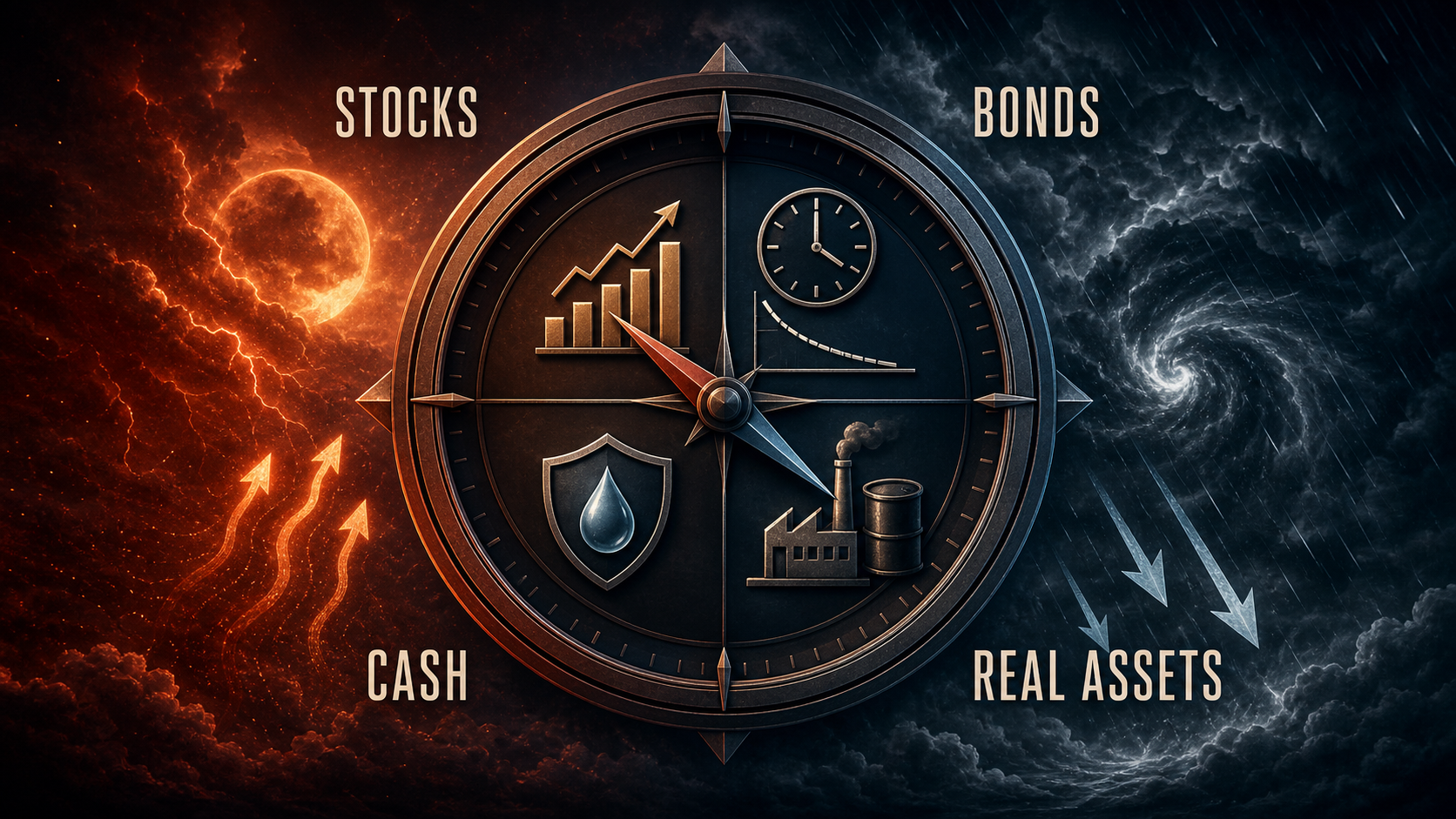
There is no universal stagflation winner. Outcomes depend on starting valuations, the source and duration of inflation, policy, and the strength of each business or borrower.
Stocks
Companies may face slower sales and higher wages, materials, energy, and financing costs. Those forces can compress profit margins. Businesses with essential products, low debt, strong balance sheets, and genuine pricing power may be more resilient, but even strong companies can fall if investors paid too much.
A weak economy can eventually become a bear market, but the labels are not interchangeable. Stagflation describes economic conditions; a bear market describes a price decline of at least 20% from a recent high.
Bonds
Unexpected inflation reduces the real purchasing power of fixed interest payments. If market yields rise, existing fixed-rate bond prices usually fall. Longer maturities are generally more sensitive, which is why bond duration is important when evaluating interest-rate risk.
Shorter-term securities may adjust to new rates faster, while inflation-linked securities have different mechanics. Neither eliminates risk: real yields, taxes, liquidity, and the purchase price still matter.
Cash
Cash can reduce market volatility and provide liquidity, but inflation erodes its purchasing power when the yield does not keep up. The result can feel stable in account value while becoming weaker in real terms.
Real Assets and Commodities
Energy, materials, infrastructure, and other real assets may benefit when commodity prices drive inflation. That relationship is not guaranteed. Commodities can be volatile, produce no operating cash flow, and fall sharply if demand weakens or supply recovers.
Six Signals Investors Should Monitor
| Signal | What to Watch | Why It Matters |
|---|---|---|
| Inflation | Headline, core, services, shelter, and energy trends | Shows whether price pressure is narrow or broad |
| Real growth | GDP and real final sales | Separates weak output from nominal price increases |
| Labor market | Payrolls, unemployment, hours, and job openings | Reveals whether weakness is reaching workers |
| Wages | Pay growth relative to productivity and inflation | Indicates purchasing power and cost pressure |
| Business margins | Input costs, pricing power, and interest expense | Connects the economy to corporate earnings |
| Expectations | Consumer, business, and market inflation expectations | Persistent expectations can reinforce price setting |
One report should not drive a portfolio decision. In June 2026, the Bureau of Labor Statistics reported that headline CPI fell 0.4% during the month because energy declined sharply, yet the 12-month inflation rate remained 3.5%. That mix demonstrates why monthly direction, yearly level, and category details all matter.
The latest available first-quarter GDP release also showed positive 2.0% annualized real growth, not stagnation. Economic data are revised and arrive at different speeds, so an investor should look for a multi-month pattern before concluding that stagflation has arrived.
How Investors Can Prepare Without Predicting
First, avoid building a portfolio around one macroeconomic forecast. A dramatic prediction can be wrong in timing, magnitude, or direction. Diversification spreads exposure across companies, sectors, maturities, and asset types, although it cannot prevent every loss.
Second, review debt and refinancing risk. Highly leveraged businesses and households have less room when borrowing costs and everyday expenses rise together. For individual stocks, compare interest expense, debt maturity, cash flow, and pricing power rather than relying on a broad sector label.
Third, keep an emergency reserve appropriate for your circumstances. It prevents a market decline or job disruption from forcing the sale of long-term investments at an unfavorable time.
Finally, rebalance instead of chasing whichever asset recently performed best. A plan built around goals and risk tolerance is more durable than a portfolio assembled from headlines about the next economic regime.
Official Sources
- U.S. Bureau of Labor Statistics: June 2026 CPI
- U.S. Bureau of Labor Statistics: June 2026 Employment Situation
- U.S. Bureau of Economic Analysis: First-Quarter 2026 GDP
- Federal Reserve: Monetary Policy
Final Thoughts
Stagflation is dangerous because inflation damages purchasing power while weak growth threatens earnings and jobs. Current inflation concern does not automatically prove that this regime exists. Watch several economic signals together, understand how each holding earns cash, control concentration and debt exposure, and keep a portfolio that can survive more than one forecast.
Frequently Asked Questions
Is stagflation the same as a recession?
No. A recession involves a broad decline in economic activity. Stagflation combines weak or stagnant growth with persistent inflation and typically a weakening labor market.
Does high inflation alone mean stagflation?
No. Inflation can occur during strong growth and employment. Stagflation requires the unusual combination of persistent price pressure and meaningful economic weakness.
Are stocks always bad during stagflation?
No. Results vary by company, sector, valuation, and the source of inflation. Businesses with pricing power and strong balance sheets may be more resilient, but none is guaranteed to rise.
Is gold guaranteed to protect against stagflation?
No. Gold can respond to inflation, real interest rates, currency moves, and investor demand, but its price is volatile and it produces no business earnings.
Continue Learning
Ready for the next step? Explore these related investing guides.
Educational disclaimer: This article is for general educational purposes only and is not personalized financial, tax, or legal advice. Consider your objectives, time horizon, financial situation, and risk tolerance before investing.