
When people talk about investing in AI, which company comes to mind first? For many investors it is NVIDIA. I own NVIDIA, Microsoft, and Meta, and I also follow Samsung Electronics and SK hynix because memory has become such an important part of the AI buildout. For a while, I thought mainly about the companies whose names appeared in the headlines.
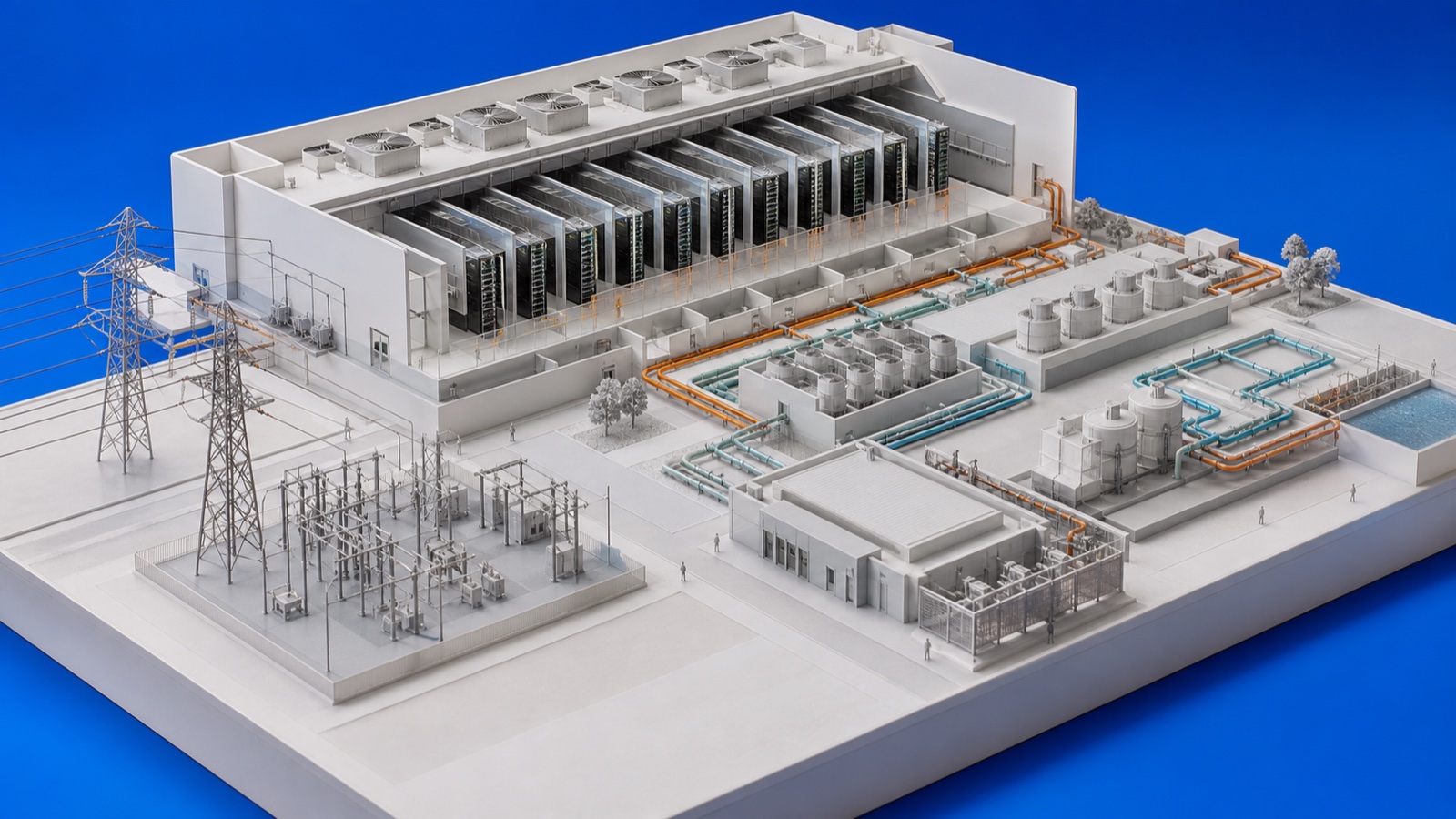
Then the bigger question became hard to ignore: where does all that computing actually happen? AI is software, but it runs inside very physical facilities filled with chips, memory, networking equipment, cooling systems, and an extraordinary amount of electrical infrastructure. A powerful server is useless if the building cannot supply enough power or remove enough heat.
That is what makes AI data centers interesting—and dangerous—from an investor’s point of view. The boom may benefit chipmakers, memory suppliers, cloud companies, utilities, cooling specialists, and construction businesses. It does not guarantee that every company attached to the AI label will earn attractive returns.
The topic is especially hot in 2026 because electricity is becoming a binding constraint. Gartner forecasts worldwide data-center electricity consumption will grow 26% this year, while the U.S. Department of Energy expects data centers to take a much larger share of national power demand by the end of the decade. Before buying the exciting name, it helps to understand the whole system and ask which layer can turn demand into durable profit.
Key Takeaways
- AI data centers use dense clusters of accelerators and require much more power and cooling than conventional facilities.
- The investment chain includes chips, servers, networking, electrical equipment, cooling, construction, utilities, and real estate.
- Power availability—not simply demand for chips—can determine when capacity becomes usable.
- Large capital spending creates opportunities but also raises depreciation, debt, utilization, and obsolescence risks.
- Investors should evaluate contracts, margins, customer concentration, power access, and return on invested capital.
What Are AI Data Centers?
Traditional data centers store websites, databases, business software, and cloud workloads. AI facilities do those jobs too, but their defining feature is concentrated accelerated computing. Thousands of GPUs or custom chips work together to train large models or answer user requests through inference.
That density changes the physical design. More electricity enters each rack, more heat must leave it, and high-speed networking must keep chips exchanging data. A server cannot generate revenue if the facility lacks a grid connection, transformers, cooling capacity, or fiber.
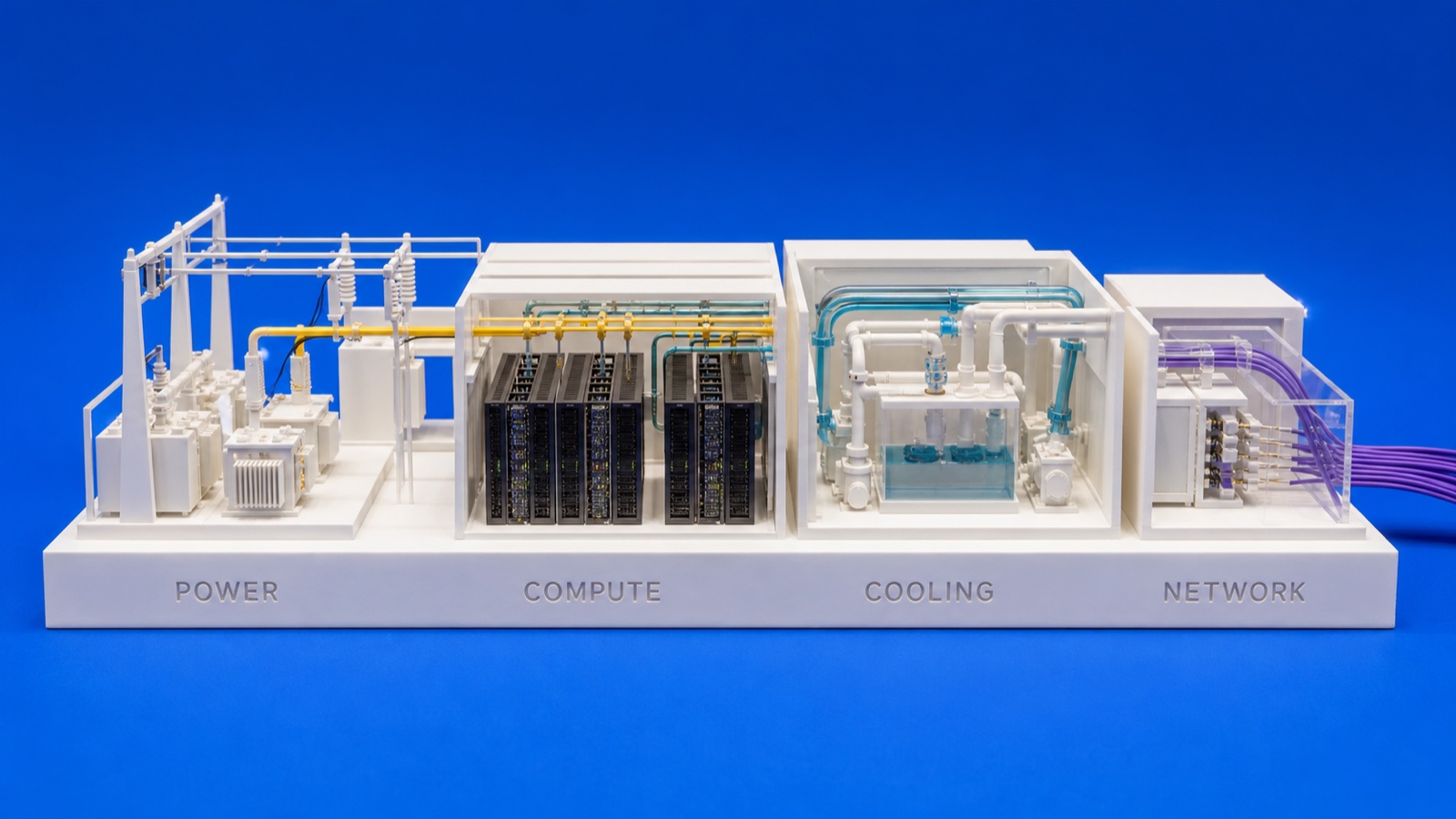
The four essential flows are power, compute, cooling, and network. Electricity passes through substations and power-distribution equipment. Servers perform calculations. Cooling systems move heat away. Network links connect machines inside the facility and users outside it. Weakness in any one layer can limit the entire campus.
GSV’s guide to HBM memory explains one critical chip component. Memory bandwidth helps accelerators access data quickly, but even the best chip still depends on the surrounding facility.
Why AI Data Centers Use So Much Power
AI workloads involve vast numbers of calculations. Training a model can keep large accelerator clusters operating for extended periods. Inference may use less power per request, but millions of users and always-on services can produce enormous aggregate demand.
Gartner projects global data-center electricity use will reach 565 terawatt-hours in 2026, up from 447 TWh in 2025. It also expects AI-optimized servers to account for 31% of data-center power use this year. Those figures are forecasts, not guaranteed outcomes, but they show why electricity has become central to the AI investment debate.
The Department of Energy says data centers could consume up to 9% of total U.S. electricity demand by 2030. Lawrence Berkeley National Laboratory scenarios cited by DOE place the decade-end share in a wider 9.5%–15.3% range. Location matters because national generating capacity does not guarantee a particular site can connect quickly.
Utilities must plan generation, transmission, substations, and local distribution. A proposed campus may announce impressive capacity but wait years for grid equipment or permits. Some developers pursue on-site generation, batteries, long-term power contracts, or campuses near existing energy resources.
The AI Infrastructure Investment Stack
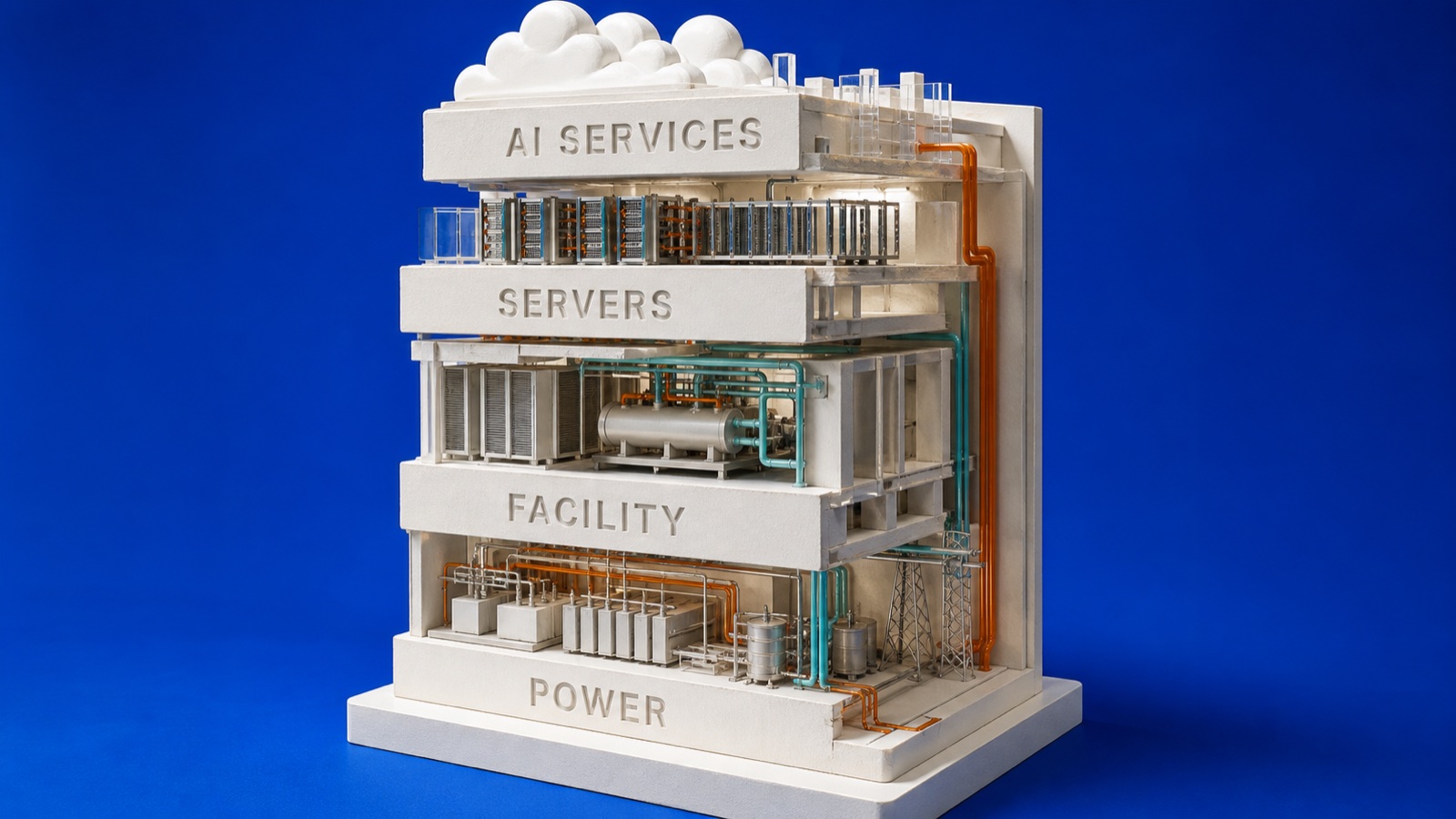
Power and Grid Equipment
Generation, transmission, transformers, switchgear, backup systems, and energy storage form the base. Companies in this layer can benefit from rising demand, but regulated returns, permitting, construction timelines, fuel costs, and ratepayer politics affect economics.
Buildings and Cooling
Developers, data-center landlords, engineering firms, and cooling suppliers create the physical facility. High-density racks increasingly require liquid cooling, pumps, heat exchangers, and careful water management. A landlord’s lease length and customer quality matter as much as square footage.
Servers, Chips, and Networking
Accelerators receive the most attention, yet servers also need memory, processors, optical components, switches, storage, and power supplies. Suppliers can grow quickly during a buildout, but product cycles are short and customers may design their own hardware.
Cloud and AI Services
Cloud providers rent compute and sell AI services. Their financial question is whether customer revenue and utilization justify the capital invested. High demand can still produce poor shareholder returns if depreciation, electricity, and financing costs grow faster than profitable revenue.
That distinction connects directly to the broader AI stocks universe. A company can participate in AI without owning a data center, and two businesses in the same layer can have very different margins and competitive advantages.
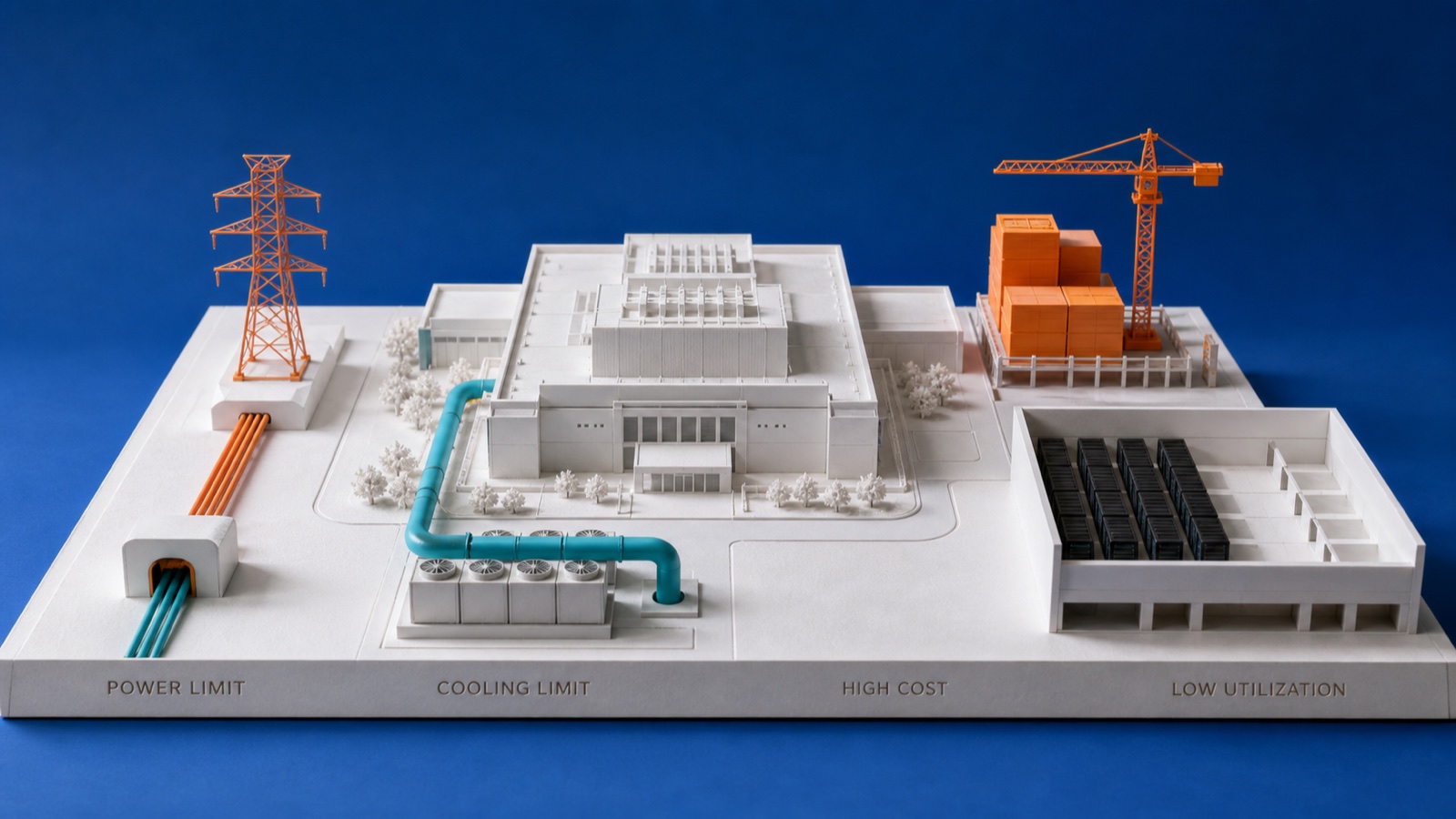
Four Major AI Data Center Risks
1. Power Constraints
A project is not operational merely because land has been purchased. Interconnection queues, transformers, transmission lines, generation, and local opposition can delay service. Power scarcity can raise costs or force capacity into less desirable locations.
2. Cooling and Water
Dense racks create intense heat. A cooling design that works for conventional servers may not handle future accelerator generations. Water availability, climate, energy efficiency, and equipment reliability influence operating cost and community acceptance.
3. Capital Cost and Financing
Facilities, chips, power equipment, and networks require billions of dollars before full revenue arrives. Debt can magnify returns when utilization is strong and magnify losses when projects are delayed. Higher interest rates also raise the hurdle rate for long-lived infrastructure.
GSV’s explanation of interest rates and stocks shows why expensive financing can affect both company earnings and valuation.
4. Low Utilization and Obsolescence
Announced capacity is not the same as rented, powered, revenue-producing capacity. If model efficiency improves, customer demand slows, or a new chip generation arrives quickly, older equipment may earn less than expected. The largest risk is not always too little demand; it can be paying too much for capacity that becomes outdated.
How to Evaluate AI Data Center Investments
| Question | Stronger Evidence | Warning Sign |
|---|---|---|
| Is power secured? | Executed agreements and clear timelines | Power described only as planned |
| Who are the customers? | Creditworthy, diversified contracts | One speculative customer dominates |
| Is capacity utilized? | Contracted or active workloads | Announced megawatts without tenants |
| Are returns improving? | Revenue and cash flow outpace invested capital | Capex grows faster than monetization |
| Can equipment adapt? | Flexible power and cooling design | Facility tied to one hardware generation |
Read capital-expenditure guidance together with depreciation, lease commitments, debt, free cash flow, and customer concentration. A company reporting rapid revenue growth may still destroy value if each dollar of growth requires even more capital.
For landlords, examine development pipelines, preleasing, rent escalators, power procurement, and tenant credit. For equipment suppliers, study order backlogs, cancellations, margins, and competition. For utilities, distinguish load growth from shareholder return because grid spending may be regulated and politically sensitive.
A diversified fund can reduce single-company risk, but it may own several businesses exposed to the same capital-spending cycle. Review holdings, overlap, and fees using GSV’s guide to ETF expense ratios.
AI Data Centers vs the AI Bubble Debate
Real infrastructure does not prove that every investment is fairly priced. Railroads, fiber networks, and internet infrastructure created lasting value while some owners and investors still lost money. Useful assets can be overbuilt, overleveraged, or purchased at unrealistic valuations.
Likewise, an AI bubble can exist in particular stocks or financing structures even if long-term computing demand remains strong. Investors should separate three questions: Is the technology useful? Will the company earn attractive returns? Is the current stock price reasonable?
Market concentration adds another risk. Several large technology companies fund much of the buildout and hold substantial weights in major indexes. Owning individual suppliers alongside broad index funds may create more AI exposure than an investor realizes. Diversification requires looking through fund names to the actual economic drivers.
Common Investor Mistakes
- Buying every company near the theme. Not every supplier has pricing power.
- Counting announced capacity as revenue. Projects can be delayed, resized, or canceled.
- Ignoring electricity and cooling. Chips cannot operate without physical infrastructure.
- Focusing on growth without returns. Revenue may not outrun depreciation and financing costs.
- Assuming demand eliminates valuation risk. A great industry can contain overpriced stocks.
Official Sources
- U.S. Department of Energy: Data Center Electricity Demand
- U.S. Department of Energy: Artificial Intelligence and Power
- International Energy Agency: Energy and AI
- Gartner: 2026 Data Center Electricity Forecast
Final Thoughts
I understand why investors want exposure to AI data centers. I feel that pull too when companies I own are at the center of a powerful trend. But a great industry story and a great stock purchase are not automatically the same thing.
Before investing, trace the chain from electricity to chips, memory, networking, cooling, and paying customers. Then ask who has pricing power, who must keep spending, and whether the current valuation already assumes years of perfect growth.
The AI buildout may be enormous without making every participant a winner. I would rather own a strong business I understand than chase an unfamiliar small company simply because “AI data center” has appeared in its description.
Frequently Asked Questions
Why do AI data centers need more electricity?
Dense clusters of accelerators perform large numbers of calculations and create substantial heat. The servers, networking, and cooling systems all consume power.
Are data-center stocks guaranteed to benefit from AI?
No. Returns depend on valuation, financing, contracts, utilization, competition, operating costs, and execution.
What is the biggest AI data-center bottleneck?
It varies by site, but grid interconnection and available power are increasingly important. Cooling equipment, permitting, capital, and skilled construction can also delay projects.
Can AI data centers become obsolete?
Buildings may remain useful, but servers and facility designs can lose competitiveness as chips, cooling requirements, and model efficiency change.
Continue Learning
Ready for the next step? Explore these related investing guides.
Educational disclaimer: This article is for general educational purposes only and is not personalized financial, tax, or legal advice. Technology and infrastructure investments can lose value. Consider your goals, time horizon, financial situation, and risk tolerance.