
Have you ever opened an ETF page, seen a long list of companies, and wondered what you were actually buying? I did. My first ETF was the SPDR Portfolio S&P 500 Growth ETF (SPYG). I later added the Schwab U.S. Dividend Equity ETF (SCHD) and the JPMorgan Equity Premium Income ETF (JEPI) as my interest expanded from growth stocks to dividends and income.
Here is the honest part: when I started, I looked at the companies inside the ETF before I paid much attention to the expense ratio, trading volume, or even how its distributions worked. I liked the idea that one purchase could spread my money across businesses I recognized. That instinct was not entirely wrong, but it was incomplete. Two ETFs can sound similar and still behave very differently.
So, what is an ETF? It is a fund that holds a basket of investments and trades through a brokerage account like a stock. This guide explains that idea in plain English—what you own, how a trade works, which costs are easy to miss, and what I now check before buying. The funds named above are examples from my own experience, not recommendations.
Key Takeaways
- An ETF pools money from many investors and uses it to hold a portfolio of assets.
- ETF shares trade throughout the market day, so the price can move from one trade to the next.
- Some ETFs are broadly diversified; others are narrow, complex, or highly concentrated.
- The expense ratio is only one cost. Bid-ask spreads, brokerage policies, taxes, and tracking differences can matter too.
- A good ETF is not simply the one with the highest recent return. It is the one whose holdings, risks, and costs fit the job you need it to do.
What Is an ETF?

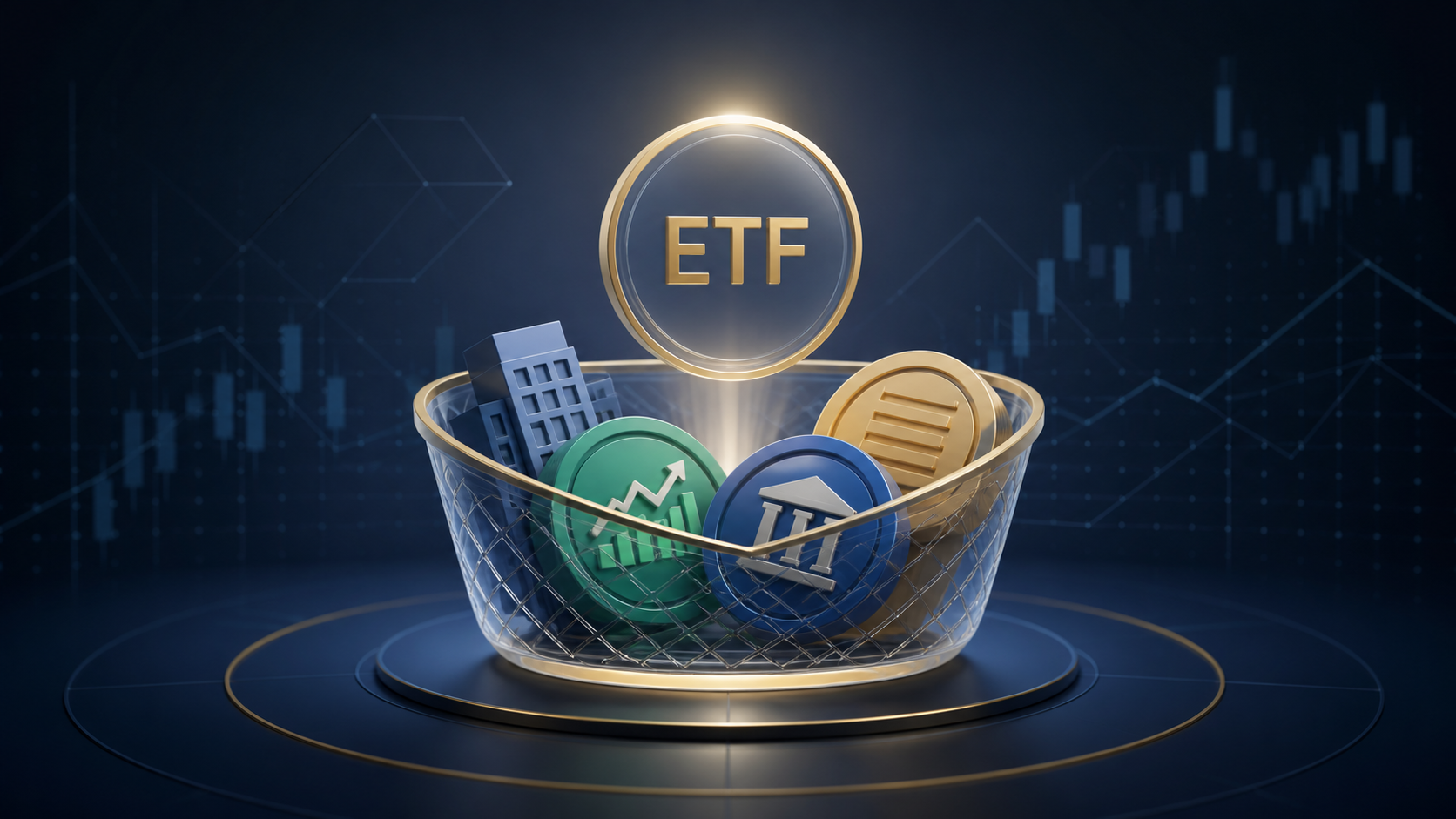
Think of an ETF as one shopping basket with many items inside. The fund owns the basket, and the share is the small piece of that fund that you can trade. If a broad-market ETF owns 500 companies, you will not see 500 separate stocks in your account. You will see one ETF position whose value moves with that collection of companies.
This was the part that first appealed to me. I already owned some individual stocks, but an ETF let me keep adding money without having to choose just one company every time. I was not blindly trusting the word “index.” I was looking through the fund and asking whether I trusted the businesses inside it.
This pooled structure is useful because it can make diversification much simpler. Instead of researching and buying dozens of securities one by one, an investor may be able to get broad exposure with a single trade. But the word “ETF” does not promise diversification. A fund that owns 25 semiconductor companies is still concentrated in one industry, and a single-stock ETF may be concentrated in one company.
Most people buy ETF shares through a brokerage account. The account is where you place the order and hold the shares. The ETF is the investment inside that account. Keeping those two layers straight makes many beginner questions easier to answer.
A simple basket example
Imagine a fictional ETF that holds 60% stocks and 40% bonds. If you invest $100, you have roughly $60 of stock exposure and $40 of bond exposure before accounting for price changes and fund costs. You have not bought each holding directly, and the mix will not stay exactly 60/40 every second. You have bought a share in a fund that manages that basket according to its stated strategy.
That strategy is described in the prospectus and summarized on the fund’s website. Some ETFs follow an index. Others are actively managed by a portfolio team. Some distribute dividends or interest, while others may hold assets that produce little income. The label tells you how the fund trades, not what it owns.
How Do ETFs Work?
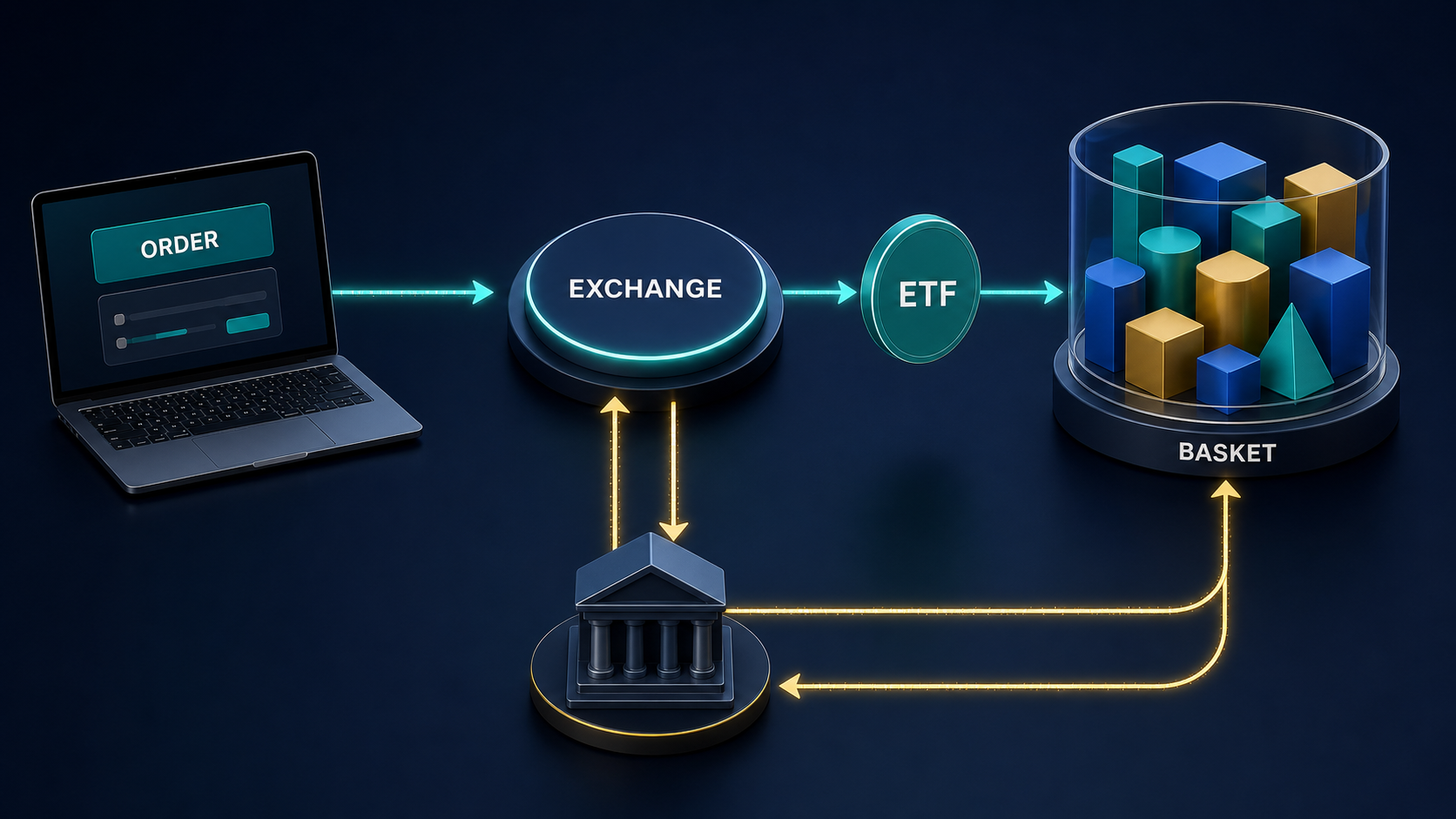
For an everyday investor, buying an ETF is straightforward: choose the ticker, decide how many shares or how much money to invest, select an order type, and submit the trade. Your order is matched with a seller on the exchange. Once it fills, the ETF appears in your account.
The market price is determined by buyers and sellers. That price usually stays close to the fund’s per-share net asset value, or NAV, but it does not have to match exactly. Trading above NAV is called a premium; trading below it is called a discount. GSV’s guide to ETF premiums and discounts explains why that gap can widen.
The primary and secondary markets
Two connected markets keep the system running:
- Secondary market: This is where most investors trade existing ETF shares with one another on an exchange.
- Primary market: Large financial institutions known as authorized participants can assemble a specified basket of securities and exchange it for a large block of new ETF shares. They can also return ETF shares to the fund and receive the underlying basket.
This creation-and-redemption process helps increase or reduce the supply of ETF shares. When a meaningful price gap appears, trading firms may have an incentive to buy the cheaper side and sell the more expensive side. That activity can pull the ETF’s market price back toward the value of its holdings, although it is not a guarantee that premiums or discounts will disappear.
Market orders, limit orders, and the spread
A market order prioritizes getting the trade completed, not the exact price. A limit order gives you control over the worst price you are willing to accept, but it may not fill. The difference between the highest current bid and the lowest current ask is the bid-ask spread. A wide spread raises the effective cost of entering and leaving a position.
For a heavily traded ETF, the spread may be small under normal conditions. For a thinly traded or specialized fund, it can be wider. The underlying holdings matter as well: an ETF that owns hard-to-trade assets can face more pricing friction even if its own ticker appears active.
Why Investors Use ETFs—and What Can Go Wrong
ETFs are popular because they can combine broad exposure, transparent trading, and relatively low operating costs. One share may provide access to a market that would be awkward to build security by security. Many brokers also support fractional ETF shares, which can lower the amount needed to start, although availability depends on the broker.
The risks are just as real as the conveniences:
- Market risk: If the holdings lose value, the ETF can lose value.
- Concentration risk: A theme, sector, country, or single-stock fund may move sharply when one narrow bet goes wrong.
- Liquidity and pricing risk: Spreads and premiums or discounts can widen during fast or stressed markets.
- Tracking risk: An index ETF may lag its benchmark because of fees, trading costs, sampling, taxes, or portfolio decisions.
- Strategy risk: Products such as leveraged ETFs can behave very differently from a plain long-term index fund.
The important point is simple: the ETF wrapper does not make a risky portfolio safe. You still need to inspect what is inside.
How to Compare an ETF Before You Buy
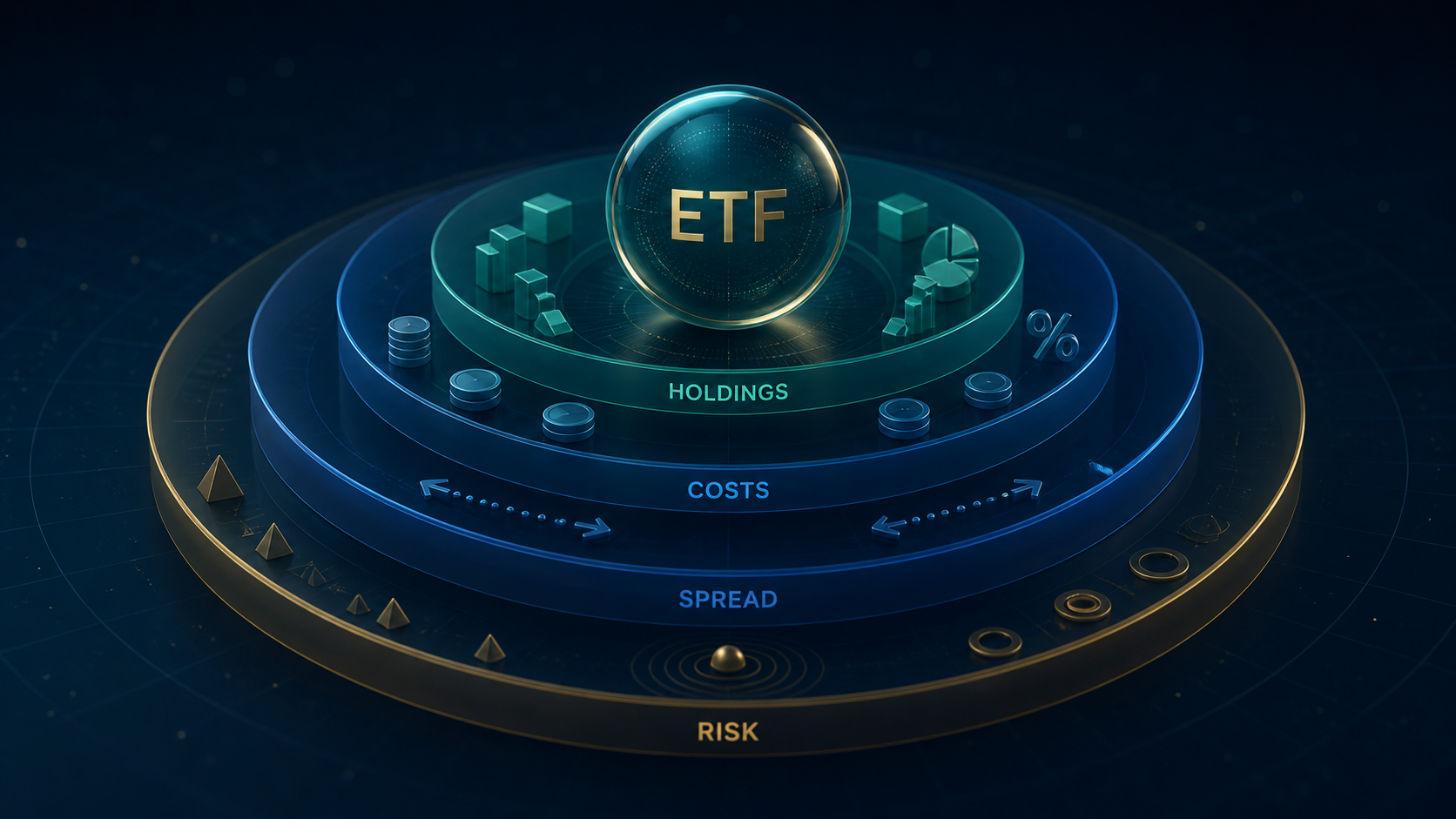
A ticker and a performance chart are not enough. I learned this in reverse: holdings came first for me, while fees, distributions, and trading conditions came later. If those terms still feel annoyingly technical, do not worry. Start with four ordinary questions.
1. What does the fund actually own?
Read the investment objective, top holdings, sector weights, country exposure, and index methodology when there is one. Two funds with similar names can hold meaningfully different portfolios. Check how often the fund rebalances and whether a small number of holdings drive most of the risk.
2. What will it cost to hold and trade?
The annual management cost is summarized by the ETF expense ratio. In simple terms, it is the fee charged for running the fund. You do not receive a separate bill; the cost is taken from fund assets. Also check the bid-ask spread, possible brokerage fees, and taxes. I did not compare all of these when I bought my first ETF. Now I know that a small-looking annual fee can keep reducing returns for as long as I hold the fund.
3. Does it do what it says?
For an index fund, compare its return with the stated benchmark over matching periods. A small difference is normal because funds have expenses and operational frictions. A persistent or unusually large gap deserves a closer look. That gap is the subject of GSV’s ETF tracking error guide.
4. Can you explain its role in one sentence?
“This is my broad U.S. stock holding” is a clear job. “This went up the most last year” is not. Decide whether the ETF is meant to be a core holding, a bond allocation, an international diversifier, or a small satellite position. If its purpose is vague, it will be harder to know when to buy more, hold, or sell.
ETF vs Stock vs Mutual Fund
An ETF is not automatically better than the alternatives. It solves a different problem. Here is the practical comparison:
| Feature | ETF | Individual stock | Mutual fund |
|---|---|---|---|
| What you own | A share of a pooled portfolio | A stake in one company | A share of a pooled portfolio |
| When it trades | Throughout the market day | Throughout the market day | Usually once daily at NAV |
| Diversification | Depends on the holdings | None within that one position | Depends on the holdings |
| Price control | Market and limit orders are available | Market and limit orders are available | Transaction occurs at end-of-day NAV |
| Typical use | Convenient portfolio exposure | Company-specific ownership | Pooled investing and automatic contributions |
If you are choosing between pooled funds, the deeper comparison is not simply “ETF good, mutual fund bad.” Account type, minimum investment, automatic purchase features, expenses, taxes, and the specific portfolio all matter. See ETF vs mutual fund for that decision.
A Sensible First-ETF Process
- Write down the market exposure you need.
- Find a few funds that provide that exposure.
- Compare holdings, concentration, expense ratios, spreads, size, and trading history.
- Read the prospectus summary and recent shareholder information.
- Choose an order type you understand and avoid assuming the last traded price is guaranteed.
- Review the fund occasionally, but do not turn a long-term plan into constant ticker shopping.
This process is deliberately boring. That is a feature. It keeps the decision tied to the portfolio job instead of a catchy name or a recent burst of performance.
Official Sources
Final Thoughts
So, what is an ETF? It is a tradable fund with a specific job. When I began with SPYG, I was mostly interested in the companies inside it. SCHD and JEPI later made me pay more attention to dividends, income, fees, and the different jobs an ETF can perform. That progression taught me something useful: understanding ETFs does not mean memorizing every technical term before your first purchase. It means knowing enough to ask better questions as your money grows.
Before you buy, pause and ask yourself: What does this fund own, why do I want it, what will it cost me, and can I explain its role in one sentence? If you cannot answer yet, sigh, close the order screen for a moment, and read the fact sheet again. Missing one trade is far less painful than holding a fund you never really understood.
FAQ
What is an ETF in simple terms?
An ETF is a fund that holds a portfolio of investments and trades on an exchange. Buying one ETF share gives you an interest in that portfolio rather than direct ownership of every security inside it.
How do ETFs work when I buy one?
You place an order through a brokerage account, and the order is matched on an exchange at the current market price. Behind the scenes, large authorized participants can create or redeem blocks of ETF shares to help supply stay aligned with demand.
Can an ETF lose money?
Yes. An ETF can fall when its holdings decline, and specialized funds may add concentration, leverage, liquidity, currency, or tracking risks. The ETF structure does not protect an investor from market losses.
Do ETFs pay dividends?
Some do. If securities in the portfolio pay dividends or interest, the ETF may pass that income to shareholders as a distribution. The amount and schedule depend on the fund and its holdings.
Is an ETF better than a mutual fund?
Not automatically. ETFs offer intraday trading and often have low minimums, while mutual funds can be convenient for automatic investing and transactions at end-of-day net asset value. Costs, taxes, holdings, and account features matter more than the label alone.
Continue Learning
Ready for the next step? Explore these related investing guides.
Article disclaimer: This article is for general financial education only. It is not personal financial, tax, legal, or investment advice. ETFs can lose value, and fund costs, holdings, trading conditions, and tax treatment can change. Review current fund documents and consider professional guidance before investing.